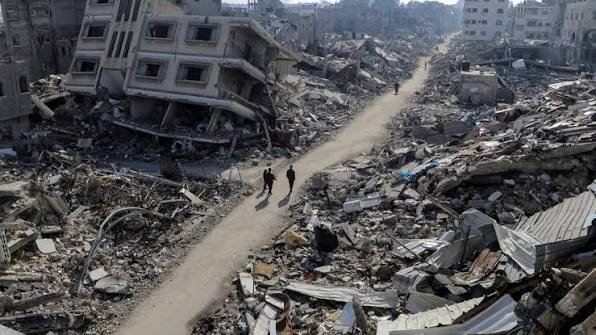
Gaza Herald — In the middle of the night on al-Sinaa Street in western Gaza City, a six-story residential building gave way. The Al-Saada structure, already cracked, fractured, and tilted after sustaining direct hits during prior bombardments, collapsed silently while its occupants were asleep. By morning, first responders had recovered at least 20 bodies, including five children. Another 100 people, mostly women and young children from ten displaced families, remain buried underneath tons of shattered concrete.
The families sleeping inside were not unaware of the danger. Neighbors had noted for weeks that stones were chipping off the façade, and that the structure had already partially settled into the earth from structural fatigue.”People had warned them,” one neighbor recounted as he watched rescuers attempt to clear debris.
“But they said, ‘Where else can we live?'” Torn Tents or Fractured Concrete: The Illusion of Choice. The collapse of the Al-Saada building lays bare the impossible reality forced upon Gaza’s displaced population. For millions, survival has become a continuous negotiation between two lethal environments: the harsh exposure of overcrowded tent encampments or the precarious shelter of bomb-damaged concrete. After months of surviving torrential rain, flooding, and extreme heat under canvas sheets, many families choose to return to cracked multi-story buildings.
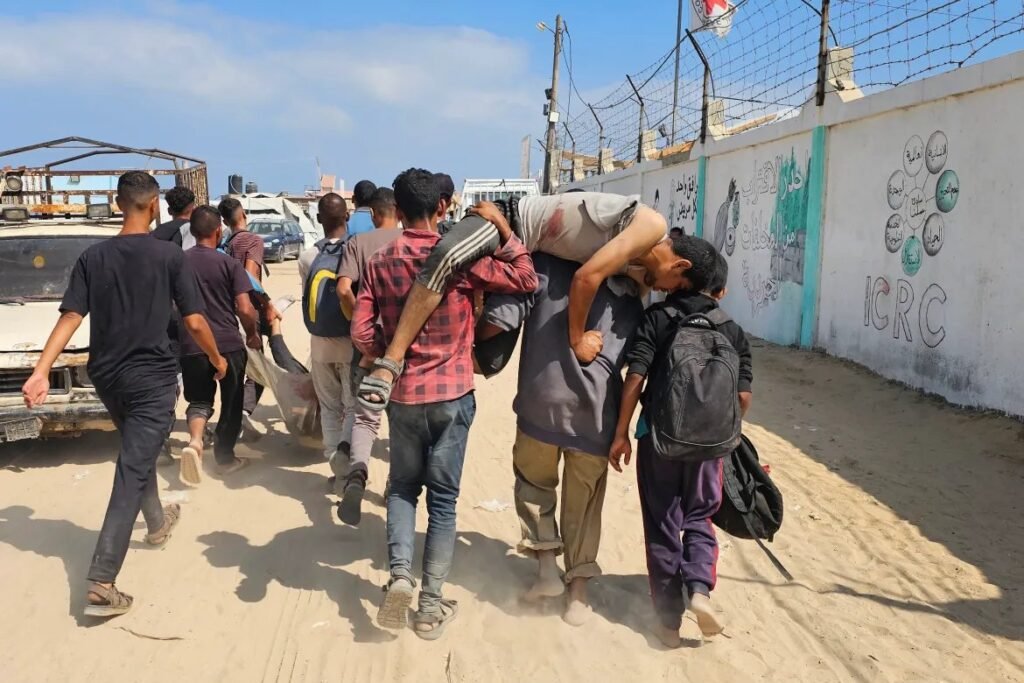
The concrete offers temporary relief from wind and rain, but transforms into an active hazard the moment structural integrity fails. “Buildings at risk of collapse are becoming graves for their residents,” noted Abdullah al-Majdalawi of Gaza’s Civil Defense. “The only difference is the timing”. Digging with Bare Hands. As the hours pass, the rescue operation at al-Sinaa Street has slowed to a crawl. Under the rubble, first responders can still hear the cries of trapped children calling out for help. Yet, without heavy excavators, cranes, or concrete-cutting equipment most of which have been destroyed or blocked from entering the enclave, rescuers are forced to move slabs of stone using hand shovels, crowbars, and their bare fingers.
Emergency crews, supported by municipal workers and local volunteers, are pulling victims out one by one, often finding them still tucked beneath their sleeping mattresses. Without specialized machinery to lift multi-ton load-bearing walls, the probability of reaching living survivors grows slimmer with every passing hour. An Unfolding Crisis on the Eve of Winter. Municipal officials and emergency services warn that the tragedy in western Gaza City is an early indicator of a far larger crisis. Across the Gaza Strip, an estimated 2,000 damaged residential buildings remain inhabited simply because there are no alternative housing options or mobile homes available.
As the winter season brings heavy rains, rising water tables, and strong winds, water will continue to penetrate exposed rebar and unmaintained foundations. Civil Defense officials have called on international bodies and ceasefire guarantors for the immediate entry of heavy rescue machinery and temporary shelters. Without them, thousands of families remain trapped inside homes that could collapse at any moment.