Gaza Herald —For Palestinians in Gaza surviving under the weight of an ongoing genocide, an unyielding illegal blockade, and total devastation, the announced election is not a mere exercise in standard bureaucracy. After years of relentless Israeli aggression, mass displacement, and the systematic destruction of life, political legitimacy cannot be measured by Western-style parliamentary procedure.
For families living in tents amidst the ruins of their bombed neighborhoods, the only meaningful mandate for any national leadership is the power to break the siege, resist occupation, force open the borders, and secure the fundamental right of Palestinians to remain on and rebuild their land.
The Palestinian Authority has set November 28, 2026, for legislative elections, the first in two decades. While international observers frame the vote through the lens of governance, Gazans view it as an opportunity to unify the national front against the occupation, dismantle the criminal siege, and reclaim collective agency after decades of enforced fragmentation.
An Election Measured Against the Reality of Israeli Enforced Displacement
For hundreds of thousands of Palestinians forcibly displaced by Israeli military violence, the core question is not who holds political office, but when the siege will be broken so life can resume.
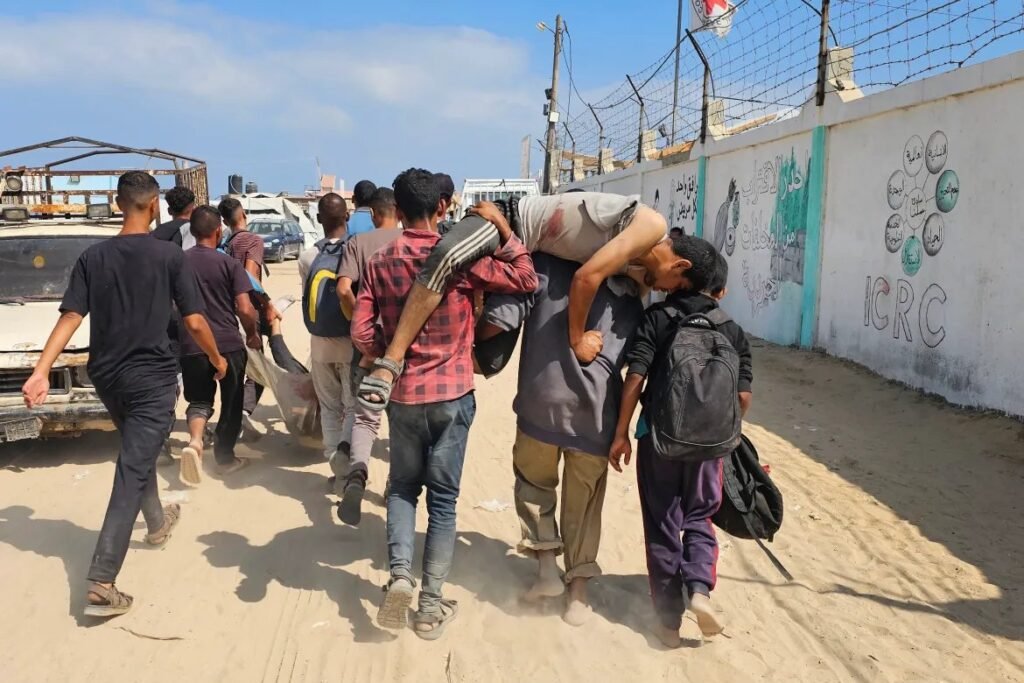
Families whose homes were targeted and destroyed by occupation forces remain trapped in makeshift tents, facing harsh elements without adequate protection. Abdul Rahman Younis, a resident of Gaza, stresses that elections are meaningless if they do not directly serve the people’s steadfastness (Sumud). Hundreds of thousands have lost everything to Israeli bombardment, making immediate relief, dignified shelter, and full-scale reconstruction an absolute national duty rather than a political promise.
Younis emphasizes that temporary housing and emergency aid are urgent rights, not charitable concessions. Political legitimacy is directly tied to a leadership’s commitment to ending the humanitarian catastrophe inflicted by the occupation and ensuring that displaced families can return to their communities.
Dismantling the Siege: The Crossings as a Battleground for Sovereignty
The demand to open Gaza’s crossings is a demand to end collective punishment, a war crime imposed by the Israeli occupation with international complicity.
Palestinians demand the immediate, unrestricted movement of people, medical cases, students, and vital supplies. The severe restrictions on medicine, fuel, and construction materials are seen not as logistical delays, but as intentional acts of violence designed to make Gaza uninhabitable. A unified Palestinian leadership must confront this reality directly, asserting Palestinian sovereignty over their borders rather than administering the terms of their own blockade.
Furthermore, Gazans reject any attempt to sever the Strip from the rest of historic Palestine. Mahmoud Ziad, another Gaza resident, points out that any future administration must actively resist Israeli policies aimed at isolating Gaza from the West Bank and occupied Al-Quds (East Jerusalem). Despite the constant threat of Israeli persecution and the routine arrest of elected Palestinian officials, the next government must defend the national identity and territorial integrity of all Palestine.
Reconstruction as an Act of National Resistance
Rebuilding Gaza is not simply an economic task; it is an act of survival and defiance against an occupation that seeks to erase Palestinian presence.
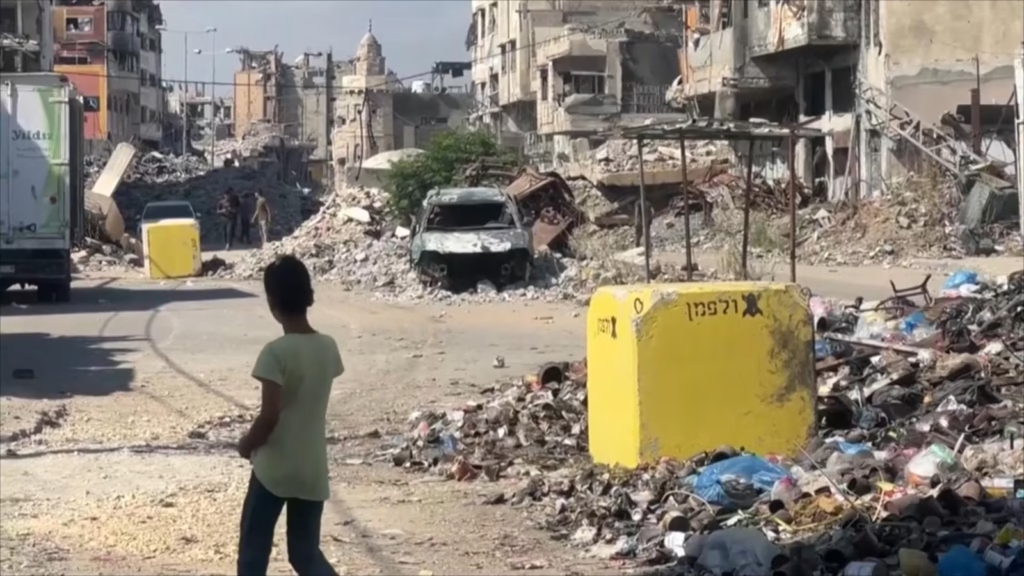
Every bombed hospital, leveled school, and targeted home represents an attempt to destroy Palestinian society. Full-scale reconstruction cannot happen while the occupation controls the entry of cement, steel, and basic materials. Younis notes that a unified government must aggressively challenge these restrictions, secure unconditional international aid, and transparently direct resources to restore Gaza’s productive sectors, healthcare, and infrastructure.
Access to clean water, electricity, and basic human rights are fundamental demands. The people of Gaza are not looking for passive administration under occupation; they demand a leadership capable of making Gaza livable, self-sufficient, and resilient against continued aggression.
Ending Political Division to Confront the Occupation
The prolonged internal political division has only served to weaken the Palestinian national movement, playing directly into the strategy of the occupation to divide and conquer.
For Gazans, the upcoming vote must mark the definitive end of factional paralysis. The priority is a unified, steadfast national leadership that represents the collective will of the people across Gaza, the West Bank, Jerusalem, and the Diaspora. Unity is demanded not as a diplomatic gesture, but as a necessary shield to protect Palestinian rights, lift the siege, and advance the liberation struggle.
International Accountability and the Right to Self-Determination
Suleiman al-Haddad stresses that no Palestinian government can succeed in a vacuum while the international community remains complicit in Israeli aggression. Real change requires immediate international pressure to enforce an end to the blockade, stop foreign military aid to the occupation, and ensure that the democratic choice of the Palestinian people is respected—a liberation struggle, unlike in 2006, when the international community responded to democratic results with sanctions and isolation.
The demands from Gaza are clear and unyielding: an immediate end to deliberate starvation and siege, open borders, full reconstruction, and the right to live with dignity on their native land.
The Real Mandate is Liberation and Return
A ballot paper alone cannot clear the rubble left by occupation airstrikes, nor can a parliamentary seat automatically lift a blockade. But a unified political mandate, grounded in the resilience of the Palestinian people, can serve as a vital instrument to demand justice, resist oppression, and rebuild what war attempted to erase.
For Palestinians surviving in tents, the true test of this election will be whether it brings them closer to liberation, justice, and a future where Gaza is free, rebuilt, and fully connected to a liberated Palestine.