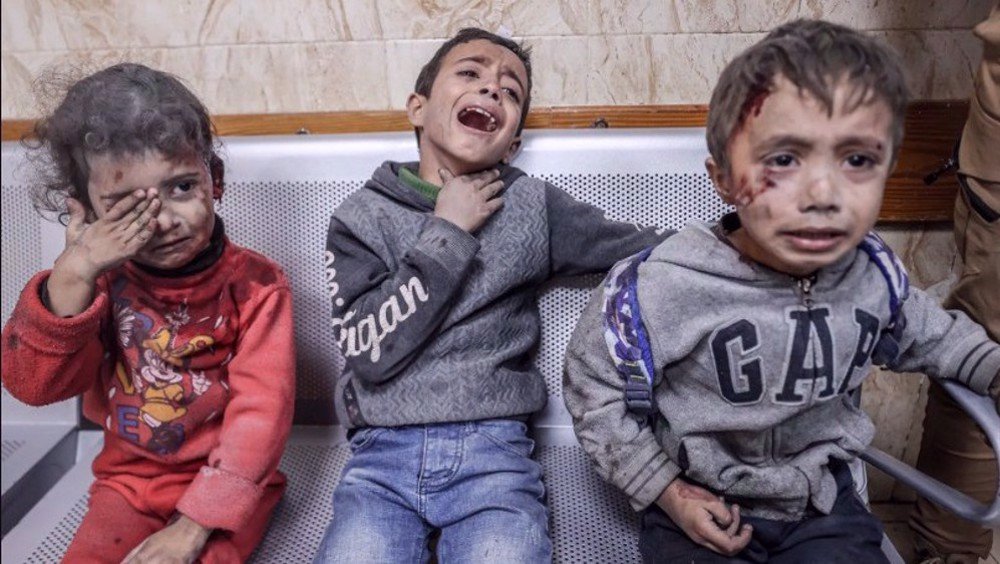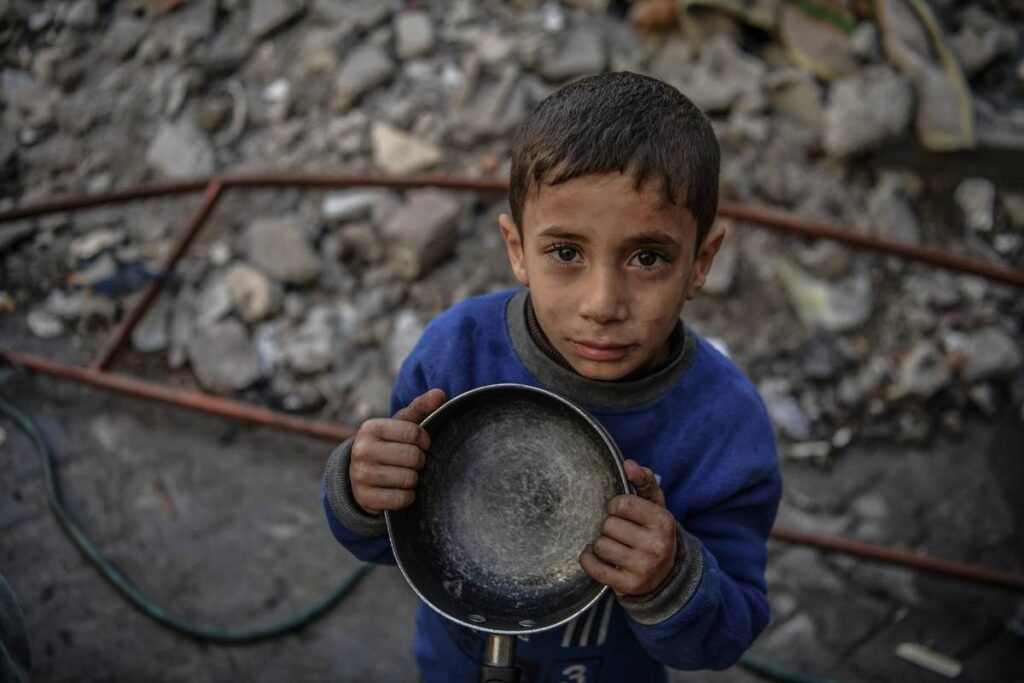
Gaza Herald — Gaza is entering another dangerous phase of hunger, one less visible than the scenes of empty flour warehouses and mass starvation that previously shocked the world but still embedded in a system that leaves Palestinians unable to feed themselves reliably.
Nearly a year after the October 2025 ceasefire, food is entering Gaza, markets are operating in parts of the Strip and humanitarian kitchens continue to distribute meals. Yet beneath this appearance of improvement, the foundations of food security remain shattered. Israeli restrictions continue to constrain the entry of essential goods and materials, local agriculture has been devastated, prices remain extraordinarily high, and much of the population survives only because humanitarian organisations continue to provide food.
The latest UN figures illustrate how fragile that survival has become. Between September 1 and 7, humanitarian organizations distributed food assistance to more than 205,000 Palestinians. Still, each family received only one food parcel and a 25-kilogram bag of flour, enough to cover approximately half of minimum caloric requirements.
At the same time, inflation in Gaza remains around 200% above pre-October 2023 levels, making even food available in markets inaccessible to many families. Humanitarian organizations have repeatedly warned that availability on a shop shelf means little when families have lost their incomes and cannot afford what is being sold.
Hunger Without Empty Shelves
This is what makes Gaza’s current hunger crisis particularly dangerous. Starvation does not require every market to be empty. Food can exist while remaining economically or physically beyond the reach of the people who need it.
Gaza’s ability to feed itself has been systematically devastated. Agricultural land, greenhouses, wells, livestock, fishing infrastructure, warehouses and transportation networks have suffered enormous destruction, leaving Palestinians increasingly dependent on supplies entering through crossings controlled by Israel.
That dependence gives restrictions at the crossings enormous consequences. Kerem Shalom remains the only operational cargo crossing, while humanitarian agencies continue to report restrictions on essential materials, agricultural inputs, spare parts and engine oil required to keep food distribution and other basic services functioning.
The composition of commercial imports has also raised concern. UN humanitarian reporting shows that more than a quarter of commercial truckloads entering Gaza during a recent reporting period carried non-essential goods, while humanitarian agencies continue calling for greater entry of wheat flour, cooking gas, vegetables, fruit, dairy products and animal proteins.
For a population struggling to afford even basic necessities, the presence of profitable consumer products cannot substitute for a functioning food system.
A Population Kept Dependent on Aid
The deeper crisis is that Gaza has been stripped of much of its ability to produce food, generate income and sustain ordinary economic life.
The latest Integrated Food Security Phase Classification assessment projects that approximately 1.4 million Palestinians, 67% of Gaza’s population, will face Crisis-level or worse acute food insecurity between July and December 2026. Around 212,000 are projected to remain in emergency conditions, one level below catastrophe.
The situation would be dramatically worse without humanitarian assistance. Around 1.9 million people — roughly 90% of Gaza’s population — could face high levels of acute food insecurity without continuing food assistance, demonstrating how dependent survival has become on an aid system whose supplies and operations remain vulnerable to restrictions and disruption.
This is not food security. It is managed survival.
A population cannot be considered food secure when millions depend on humanitarian parcels, community kitchens and subsidized bread simply to eat; when families have little or no income; and when the land, infrastructure and economy that once allowed them to sustain themselves have been devastated.
From Famine Headlines to “Silent Starvation”
The danger now is that the world mistakes a reduction in the most visible signs of famine for recovery.
Gaza’s hunger crisis has changed form, but it has not disappeared. Community kitchens are still producing hundreds of thousands of meals every day and humanitarian bakeries continue operating, yet these systems are compensating for the destruction of normal Palestinian life rather than restoring it.
Even relatively small interruptions can therefore have enormous consequences. If food deliveries decline, crossings close, kitchens run out of supplies, or humanitarian funding collapses, hundreds of thousands of people have little economic or agricultural capacity to fall back on.
This is the architecture of what can be described as silent starvation: not necessarily the complete disappearance of food, but a population kept permanently close to hunger by the destruction of its means of survival and by restrictions affecting what can enter, what can be produced and what people can afford.
The international community should therefore stop measuring Gaza’s hunger solely by the number of trucks crossing the border. The real measure is whether Palestinian families can obtain sufficient, nutritious food consistently and with dignity.
Today, for a huge proportion of Gaza, they cannot.
The danger facing Gaza is not simply another temporary food shortage. It is the normalisation of a system in which Palestinians remain dependent on an externally controlled humanitarian lifeline while the economic and agricultural foundations that could free them from that dependence remain devastated.