Gaza Herald – Buyers and traders told Reuters that Saudi Arabia’s oil reserves designated for export will run out if it does not resume operations on its main pipeline to the Red Sea within days. Traders warned that up to four percent of global supplies could be lost due to the stoppage.
Any further decline in Saudi flows would exacerbate a global supply shortage that has already pushed fuel prices to record highs, increased inflation worldwide, and raised US bond yields to their highest levels since the 2008 financial crisis.
Since drone attacks forced the kingdom to close the massive East-West pipeline on Friday, Riyadh has not provided full details on the extent of damage or how long the line will remain offline. Sources speaking to Reuters offered varying estimates regarding repairs.
One source stated that fixing the damage might take between five and six weeks. Another source mentioned that the line could be repaired sooner and that partial pumping operations might resume during repair work. Neither the Saudi government communications center nor the Ministry of Energy responded to requests for comment.
Over the past six months, the pipeline running through the desert across the Arabian Peninsula allowed Saudi Arabia to avoid the brunt of the Hormuz Strait closure caused by the war, which paralyzed exports from neighboring countries.
Saudi Arabia, the world’s largest oil exporter, used the pipeline to divert approximately four million barrels per day, equaling about four percent of global supplies, to the Yanbu port on the Red Sea.
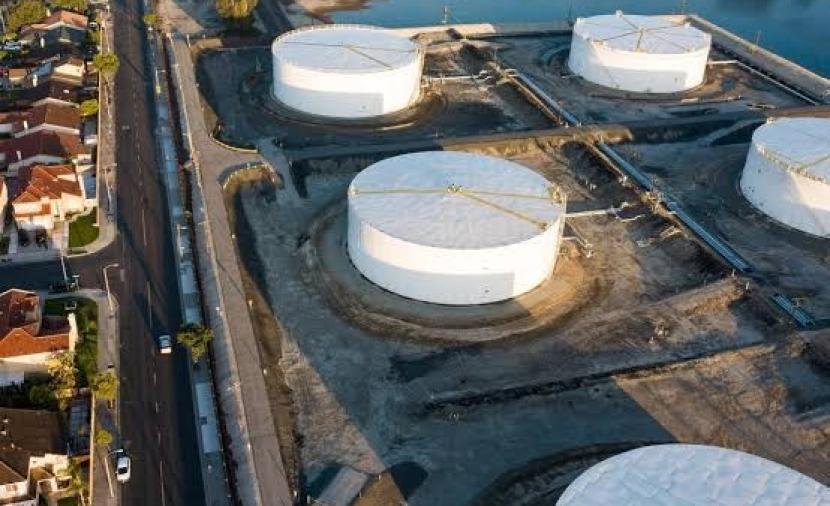
Three sources familiar with the sector told Reuters that with the pipeline offline, there is now only enough stock at Yanbu to maintain exports for five to seven days. A fourth source noted that Saudi Arabia also holds stocks sufficient to supply customers for several days from the Ain Sokhna port on the Red Sea and Sidi Kerir on the Mediterranean in Egypt.
Industry estimates indicate that storage capacity at Yanbu is around 35 million barrels, while 18 million barrels can be stored at Ain Sokhna and 20 million at Sidi Kerir. The four sources indicated that tanks are not full and will eventually run out unless the East-West pipeline resumes operations.
The International Energy Agency said on Friday that Saudi oil supplies had already fallen in August to their lowest level in over three decades due to reduced flows through the Hormuz Strait and the Red Sea.
The agency, which coordinates energy policies among Western nations, stated that global oil supplies will fall this year by 5.7 million barrels per day, or about six percent. In addition to the pipeline attack, Yemen’s Houthis, who threaten Saudi oil shipments, seized an island at the entrance to the Red Sea on Friday.
The Middle East was supplying the world with approximately 22 million barrels per day before the war. Industry sources indicate that flows through the Hormuz Strait have slowed to between six million and nine million barrels per day.
Saudi Arabia informed OPEC last week that its oil production dropped to only 6.2 million barrels per day in August, compared to 10.9 million barrels per day in February before the war erupted.
This report was produced in the Gaza Herald newsroom.