Gaza Herald- For nearly three years, Western governments have watched Gaza being devastated while insisting that they are concerned about civilian suffering. They have called for restraint, demanded humanitarian access and repeatedly invoked international law. Yet behind this diplomatic language lies a reality that deserves far greater scrutiny: some of Israel’s closest Western allies have continued providing the weapons, military technology and political protection that enabled its war.
Germany stands at the center of that contradiction.
Berlin presents itself internationally as a defender of human rights and a guardian of the rules-based international order. But when those principles have collided with Germany’s commitment to Israel, Palestinians have repeatedly paid the price.
The numbers tell a story that diplomatic statements cannot conceal.
German government figures show that Berlin authorized military exports to Israel worth approximately €326.5 million in 2023, almost ten times the amount approved the previous year. Another €161 million was approved in 2024. Between October 2023 and mid-May 2025 alone, Germany approved approximately €485 million worth of military exports to Israel.
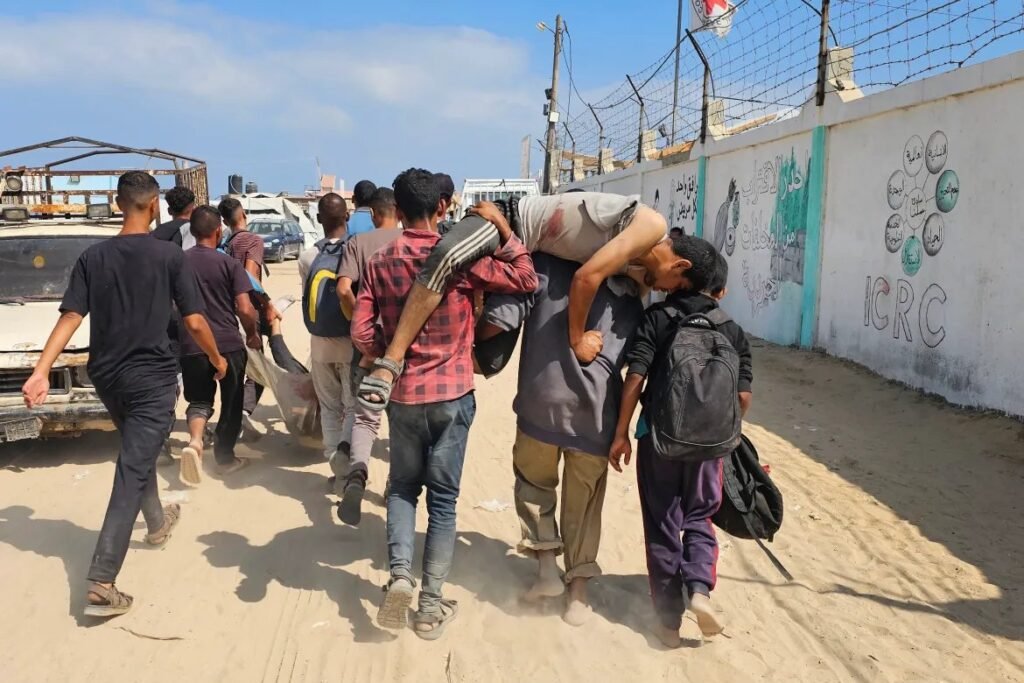
These were not decisions made before anyone understood what was happening in Gaza. Many were taken while images of destroyed neighborhoods, hospitals, schools and Palestinian families were already circulating around the world.
The Arsenal Was International
Germany is not alone. The United States remains by far Israel’s largest weapons supplier.
According to the Stockholm International Peace Research Institute, the United States accounted for 68% of Israel’s imports of major conventional arms between 2021 and 2025, while Germany supplied another 31%.
Together, the two Western allies accounted for approximately 99% of Israel’s major arms imports during that period.
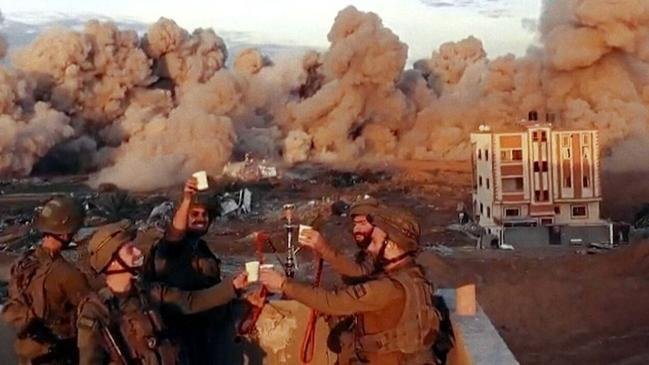
The United States supplied aircraft, guided bombs, missiles and armored vehicles. Germany’s major transfers have included frigates, torpedoes and engines for armored vehicles. SIPRI has specifically noted that German-supplied Sa’ar 6-class warships and armored-vehicle engines have been used in the Gaza war.
That reality creates an uncomfortable question for Western governments: at what point does supplying the machinery of a war create responsibility for what that machinery enables?
It is not enough for governments to say that Israel alone decides how weapons are used. Arms-exporting states also have legal obligations. Once there is a serious risk that exported weapons could facilitate violations of international humanitarian law or the Genocide Convention, continuing those transfers becomes more than a political choice. It becomes a matter demanding legal scrutiny.
They Cannot Say They Did Not Know
The argument that Western governments lacked sufficient warning has become increasingly difficult to sustain.
UN bodies and experts, international humanitarian organizations, and human rights groups have documented allegations of unlawful killings, starvation, torture, arbitrary detention and the destruction of civilian infrastructure. International courts have also become involved. The International Criminal Court has issued arrest warrants alleging war crimes and crimes against humanity, while proceedings concerning genocide remain before the International Court of Justice.
Germany therefore cannot claim that the legal risks surrounding Gaza were invisible when it continued approving military exports.
Indeed, Germany itself is now defending its conduct before the ICJ.
Nicaragua has accused Berlin of breaching its international obligations by supplying arms to Israel despite the risk that they could facilitate genocide or serious violations of international humanitarian law. Germany rejects the accusation and argues that its arms exports are carefully reviewed and comply with international law.
The final legal responsibility remains for the Court to determine. But the importance of the case extends beyond Germany. It raises a question that should apply equally to every government that continued supplying Israel: what responsibility does an arms supplier bear when warnings of grave crimes are repeatedly placed before it?
Germany’s Historical Responsibility Cannot Stop at Israel
Germany frequently explains its exceptional commitment to Israel through the responsibility created by the Holocaust. The horror of Germany’s crimes against European Jews unquestionably imposes a profound historical responsibility.
But historical responsibility cannot legitimately mean unconditional support for another state regardless of its conduct.
“Never again” cannot mean “never again” for one people, while Palestinians are treated as an exception. If Germany’s historical memory is to have universal moral meaning, it must reinforce opposition to mass killing, forced displacement, starvation and collective punishment wherever they occur.
Otherwise, memory risks becoming selective: a justification for protecting a state rather than a principle for protecting human beings.
This contradiction has become increasingly visible even within Germany. In 2025, as criticism of Israel’s conduct intensified, a large majority of Germans surveyed supported tighter restrictions on arms exports to Israel. Berlin eventually announced a temporary restriction on exports of military equipment that could be used in Gaza, but it later resumed arms exports.
That raises the obvious question: why did it require such catastrophic destruction before even limited restrictions were considered?
Accountability Must Extend Beyond Those Who Pull the Trigger
When investigations into Gaza eventually examine responsibility, they should not stop at the battlefield.
They should follow the supply chains.
Who manufactured the weapons? Who authorized their export? Which governments continued deliveries after warnings of civilian harm? What legal assessments were conducted? What evidence was available when licences were approved? Were conditions attached to the weapons, and were violations investigated when those conditions were breached?
These questions matter because modern wars are rarely conducted by one state in isolation. Bombs require suppliers. Aircraft require components and maintenance. Armored vehicles require engines. Militaries depend on software, intelligence, spare parts, ammunition and enormous financial support.
The destruction of Gaza therefore cannot be understood solely through Israeli military decisions. It must also be examined through the international system that sustained Israel’s ability to wage the war.
The United States and Germany deserve particular scrutiny because of the extraordinary scale of their role as Israel’s principal suppliers. Other governments that authorized military equipment, components or services should face the same examination.
Accountability should mean independent investigations of export decisions, full disclosure of licenses and actual deliveries, suspension of transfers where there is a substantial risk of serious violations, and legal consequences where evidence establishes that officials or companies knowingly facilitated international crimes.
Gaza Must Change the Cost of Arming Atrocity
Western governments cannot simultaneously claim to defend international law and treat arms exports to allies as exempt from its consequences.
The credibility of the entire international legal system depends on whether its rules apply to powerful Western states and their allies with the same seriousness demanded of their adversaries.
Germany cannot undo what has already been supplied. Washington cannot retrieve bombs after they have exploded. No parliamentary investigation can rebuild a Palestinian family home or restore a child killed beneath it.
But accountability can determine whether governments are allowed to supply weapons amid overwhelming warnings of atrocities and later hide behind the argument that someone else pulled the trigger.
Gaza should establish a principle that should have existed long before this war: those who knowingly arm states in the face of a clear risk of grave international crimes cannot automatically wash their hands of what those weapons help make possible.
Israel waged the war. But the arsenal that sustained it was international.
The Palestinians buried beneath Gaza’s rubble deserve accountability not only for those who carried out unlawful attacks, but, where the evidence and law establish responsibility, for those who helped provide the means to carry them out.