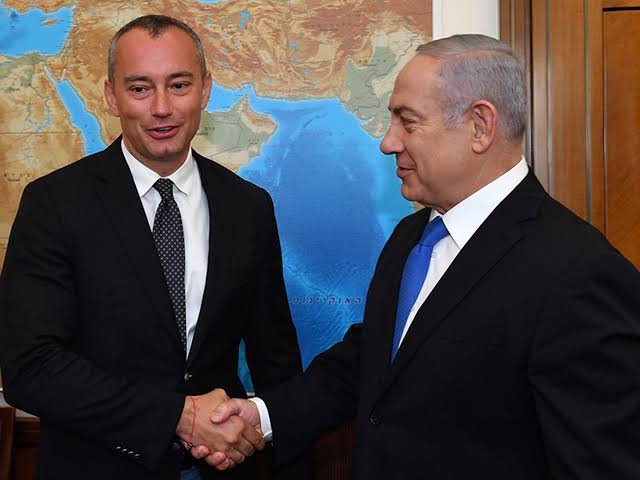
Gaza Herald _At a time when international efforts should be focused on consolidating the ceasefire and preventing a return to fighting in the Gaza Strip, remarks by Nikolay Mladenov, the High Representative of the “Board of Peace,” about the possibility of renewed war have sparked widespread controversy.
Speaking on Al Jazeera’s The Interview, Mladenov warned that failure to implement the council’s proposed “roadmap” could lead to the collapse of the truce and a return to military escalation.
He said that failing to carry out the roadmap “means that war could return,” while also acknowledging the important roles played by Qatar, Egypt, and Türkiye in advancing the agreement with Hamas. Mladenov expressed hope that the National Committee would soon assume its responsibilities in Gaza.
But Mladenov went beyond warning about the possible collapse of the ceasefire. He also revealed that $7 billion in reconstruction pledges had been secured and said that the operational framework and deployment locations of an international stabilization force in Gaza had already been determined.
His comments suggested that arrangements for Gaza’s postwar phase are now directly tied to the implementation of the proposed roadmap.
What drew particular attention, however, was that the warning about a possible return to war came in the context of urging the implementation of the plan. This has raised serious questions about whether Mladenov is acting as a mediator seeking to protect the ceasefire or whether the prospect of renewed war is being used as leverage to pressure Palestinians into accepting the conditions being presented.
A “Point of No Return”
Mladenov had previously warned the UN Security Council that Gaza could reach a “point of no return” if the ceasefire collapses and the Strip is once again dragged into a major escalation.
He said Gaza “cannot afford another catastrophe,” warning that if the ceasefire breaks down, there would be no roadmap left to return to, no governing framework to implement, and nothing on the ground from which reconstruction could begin.
Such a collapse, he said, would not simply represent another setback but could become “a point of no return for everyone.”
In separate remarks, Mladenov emphasized that his warning about the collapse of the ceasefire was directed at both Palestinians and Israelis. He said a return to war would be devastating and maintained that failure to follow the roadmap could threaten the survival of the truce.
That framing, however, has drawn criticism from analysts who argue that placing both sides in the same category ignores significant differences in their positions toward both the proposed plan and the ceasefire agreement itself.
Palestinians Facing a Threatening Equation
Israeli affairs expert Muhannad Mustafa described Mladenov’s remarks as “extremely dangerous,” saying they effectively suggest that war could return unless Palestinians accept what Israel wants.
Mustafa said the danger also lies in Mladenov’s treatment of both sides as equally responsible, despite Hamas having accepted the roadmap while Israel publicly rejected it, including through statements by Prime Minister Benjamin Netanyahu.
According to Mustafa, Mladenov overlooked Israel’s rejection of the roadmap even though it partially incorporates one of Israel’s main objectives: the disarmament of Hamas.
He also said Mladenov failed to hold Israel responsible for what Palestinian observers describe as continued violations of the ceasefire and the expansion of Israeli control inside parts of the Gaza Strip.
Mustafa argued that Mladenov’s language could amount to an implicit green light for Netanyahu to return to war because the warnings are not directed at Israel with the same level of pressure. Instead, he said, Palestinians—who overwhelmingly do not want another war—are being presented with the consequences of failing to meet the proposed conditions.
He also questioned the significance of the announced $7 billion in reconstruction pledges, noting that Netanyahu recently stated that Gaza would not be rebuilt unless Hamas was completely disarmed.
Reconstruction Conditional on Disarmament
Mladenov’s comments coincided with a joint statement from Netanyahu and Israeli Defense Minister Israel Katz, who said they had not issued any instructions to open the Erez, or Beit Hanoun, crossing to commercial goods.
The Israeli statement made clear that reconstruction in Gaza would not proceed before Hamas is disarmed and all weapons in the Strip are dismantled.
Katz also said Israel would not allow Hamas or any other group to again threaten communities in southern Israel, referring to the events of October 7, 2023, and warned that anyone attempting to do so would face what he called a “heavy price.”
This is where Mladenov’s statements appear to intersect with the core of the Israeli position: linking reconstruction and the transition beyond the current phase to the issue of weapons, arguably the most sensitive element of the proposed roadmap.
“Frightening and Shocking Statements”
Ibrahim al-Madhoun, director of the Palestinian Media Institution, described Mladenov’s remarks as “frightening” and “shocking” from a Palestinian perspective.
He said Palestinians view the statements as a form of threat despite their commitment to the terms of the agreement and their acceptance of Mladenov’s proposed plan.
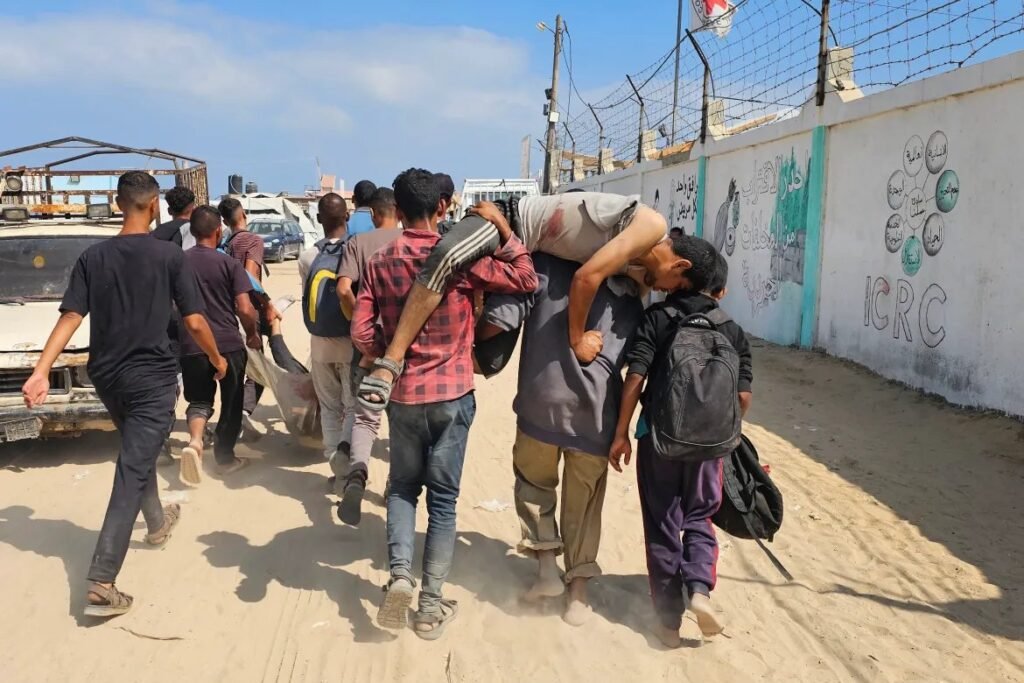
Al-Madhoun argued that the war in Gaza has not truly stopped and that talk of a “return to war” overlooks the continuation of Israeli attacks. He warned that the current situation could pave the way for a renewed campaign of mass killing, displacement, and expanded Israeli control over the Gaza Strip.
According to al-Madhoun, the issue of weapons is being used as a justification for the possibility of resuming the war, despite Hamas signing the Board of Peace document that includes provisions related to disarmament.
He also criticized the way the issue is being managed, saying Israel continues to treat Gaza as though it were an internal Israeli matter and does not consistently abide by commitments it has made, even in arrangements involving the United States.
Meanwhile, he said, the parties involved have yet to establish an effective mechanism capable of compelling Israel to fulfill its obligations.
Mladenov, al-Madhoun argued, should have clearly identified which party is obstructing the plan and distinguished between those who have complied with the agreement and those who have not, rather than issuing broad warnings that could create political space for Netanyahu to take steps serving his own interests.
Is Mladenov a Neutral Mediator?
Political analyst Ahmed al-Tanani similarly described Mladenov’s warnings as “extremely dangerous,” arguing that they contradict the fundamental role expected of an international official.
That role, he said, should be to prevent a return to war—not to present the possibility of war as a consequence hanging over the parties.
Political analyst Mohammed Halsa offered a similar assessment, saying Israel appears confident that Mladenov will not move beyond the limits of its conditions.
Halsa argued that Mladenov is attempting to present himself as neutral before Arab parties while avoiding a direct confrontation with Israel’s position.
According to Halsa, Israel accepted certain U.S.-backed arrangements tactically to ease international criticism and reduce its growing isolation while continuing military operations and killings on the ground in a manner that allows it to maintain that it has not formally violated the ceasefire.
He argued that Mladenov’s approach largely adopts the Israeli narrative and makes even the most basic Palestinian rights conditional on the issue of disarmament.
The danger of this language, he said, is that it allows Israel to argue that disarmament is not merely an Israeli demand but also an American and international requirement.
The Dispute Is Not Limited to Palestinians and Israel
Professor Paul Davis of the Institute of World Politics offered a different reading, arguing that the central problem lies in the gap between Israel’s agenda in Gaza and that of the United States.
Bridging that gap, he said, is necessary if the various parties are to move forward.
Davis argued that Israel could effectively exercise veto power over developments after an agreed mechanism is established and an international force enters Gaza. For that reason, he said, Israel must be informed of the details of the proposed arrangements and agreements and its approval must be secured.
At the same time, Davis placed responsibility on Hamas for the continuing dispute over weapons, saying the movement has resisted surrendering its arms. If Hamas is serious about its stated position, he argued, it should follow through, potentially in exchange for guarantees that its leaders would not be targeted or killed after disarmament.
Israel’s Expanding Conditions
Events on the ground, however, add another dimension to the equation.
The proposed framework reportedly calls for a gradual Israeli withdrawal from Gaza in exchange for Palestinian steps, including disarmament. Yet reports indicate that Israel has not fulfilled other aspects of the arrangements, including allowing the entry of sufficient humanitarian aid, commercial goods, medicines, and equipment.
Israel has also continued expanding its presence in areas inside the Gaza Strip.
According to information presented by Al Jazeera, Israel has also refused to allow the entry of the technocratic committee expected to oversee Gaza’s administration and provide essential services ranging from food and clean water to security, health care, education, and eventually reconstruction.
The dispute, therefore, does not appear to be limited to the weapons of Palestinian factions.
It also extends to the future administration of Gaza, the nature and timeline of an Israeli withdrawal, the role of an international stabilization force, the future of reconstruction, and ultimately who will hold political and security authority in the Strip.
The Threat as Part of the Equation
Ultimately, Mladenov’s statements illustrate how the ceasefire process has entered an exceptionally sensitive phase.
The question is no longer simply whether the truce can be preserved. It is increasingly about the conditions that must be met to maintain it and move into the next stage.
But linking the potential collapse of the ceasefire to the failure to implement the roadmap places Palestinians before a harsh equation: proceed with arrangements centered heavily on disarmament or face the possibility of another war.
That is the central contradiction.
An international official whose primary responsibility should be preventing renewed fighting is speaking about war as the possible consequence of the failure of a political plan. At the same time, Israel continues to impose its own conditions regarding reconstruction and withdrawal while maintaining military and political pressure on the Gaza Strip.
While Mladenov announces billions of dollars in reconstruction commitments and preparations for the deployment of an international stabilization force, a more urgent question remains:
Will these arrangements become genuine guarantees capable of protecting the ceasefire, or will the threat of renewed war become a tool for imposing the conditions of Gaza’s next phase on Palestinians?
The dispute is no longer only about ending the war.
It is about what Gaza will look like after it ends.
Who will control weapons? Who will govern the Strip? When will Israel withdraw? And who can guarantee that a “ceasefire” will not remain merely a temporary pause, suspended on conditions that could pull Gaza back into the cycle of war at any moment?