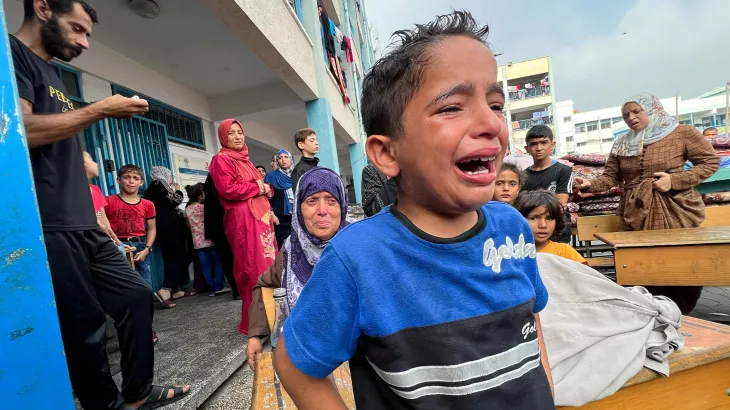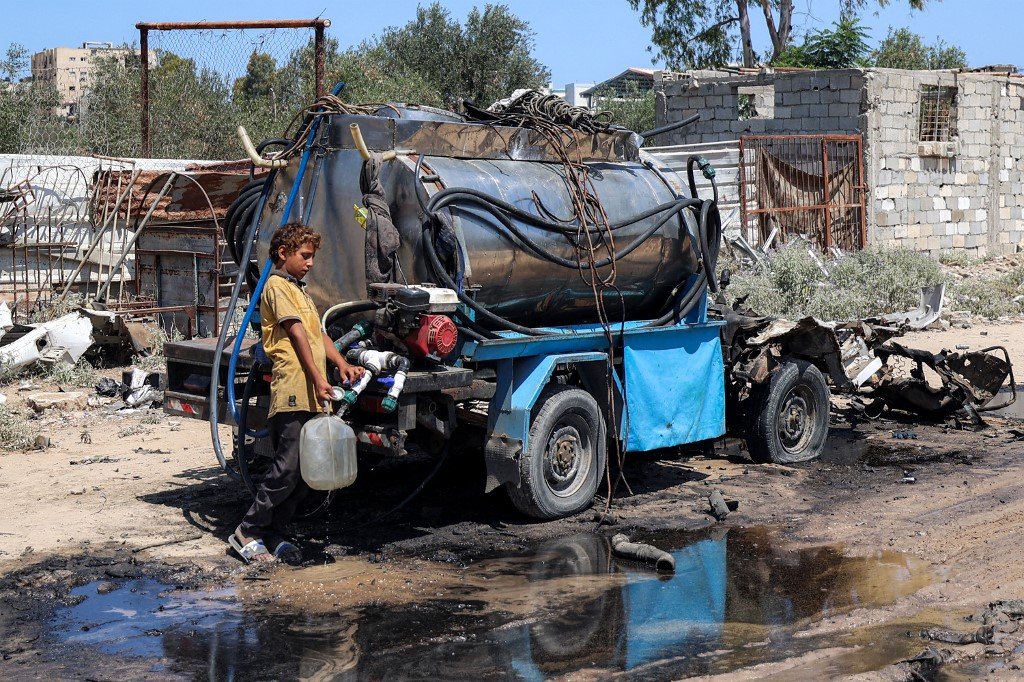
Gaza Herald _ As temperatures continue to soar during the summer months, residents of the Gaza Strip are enduring one of the harshest heatwaves amid the ongoing electricity crisis. For thousands of families, something as simple as drinking a glass of cold water or running a fan for a few hours has become an unattainable luxury.
The power outage no longer affects only household lighting. It has disrupted nearly every aspect of daily life.
Refrigerators can no longer keep water and food cold, while fans and air conditioners sit idle without electricity. Families spend long hours in sweltering heat inside displacement tents or partially damaged homes with little protection from the summer sun.
Thirst in the Summer Heat
Umm Mohammad, a displaced mother living in a tent west of Gaza City, says her children’s greatest struggle is no longer hunger alone, but thirst under the scorching summer heat.
“My children ask for cold water,” she told our correspondent. “All I can offer them is warm water heated by the weather. Sometimes we leave bottles in the shade for hours, hoping they’ll cool down a little, but it makes almost no difference.”
Abu Ahmad, a father of five, said the electricity crisis has stripped his family of even the most basic comforts.
“We haven’t turned on a fan in a long time,” he said. “The children can’t sleep because of the heat. We spend the nights trying to cool them with pieces of cardboard or towels.”
Dehydration and Heat Exhaustion
Doctors warn that prolonged exposure to extreme temperatures can lead to dehydration and heat exhaustion, particularly among children, older adults, and people with chronic illnesses, as Gaza’s healthcare system continues to struggle with severe fuel and energy shortages.
Dr. Ahmad al-Saadi, a general practitioner, said soaring temperatures combined with the lack of cooling systems significantly increase the risk of heat-related illnesses.
“Children are especially vulnerable because they lose fluids more quickly,” he explained. “Older adults and patients with chronic diseases also need suitable living conditions and adequate hydration, both of which are extremely difficult to maintain under the current circumstances.”
A Humanitarian Crisis
Samer al-Khatib, an engineer specializing in energy issues, said Gaza’s electricity crisis has evolved beyond a service disruption into a full-scale humanitarian emergency affecting every sector of society.
“The absence of electricity disrupts the operation of water wells and desalination plants, compromises the storage of food and medicine, and places even greater burdens on people’s daily lives,” he said.
At local markets, vendor Abu Yousef said demand for ice and chilled water surges whenever limited quantities become available.
“But supplies never meet the needs of the population,” he said. “For many families, finding cold drinking water has become increasingly rare.”
As the heatwave continues, Gaza’s residents search for any way to cope with the intense temperatures. Some sit in the shade whenever possible, others rely on handheld fans, while many pour water over their children’s bodies in an attempt to keep them cool.
The scenes reflect the daily hardships facing the territory.
While much of the world responds to summer heat by expanding access to cooling and comfort, Gaza’s residents face a very different reality. Electricity has become a distant hope, a working fan a luxury, and a sip of cold water a simple wish that, for many families, may only come true for a few brief hours, if at all.