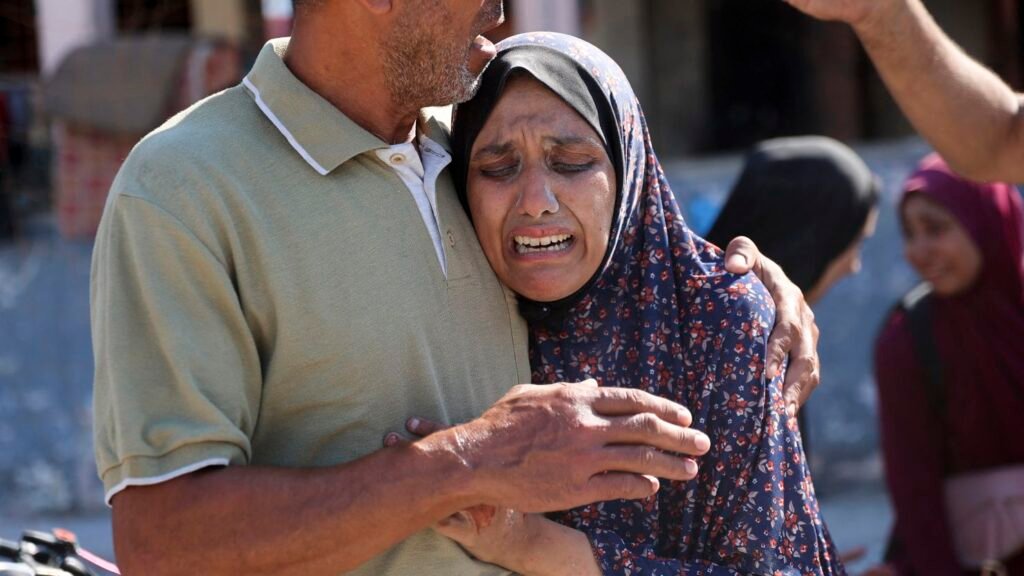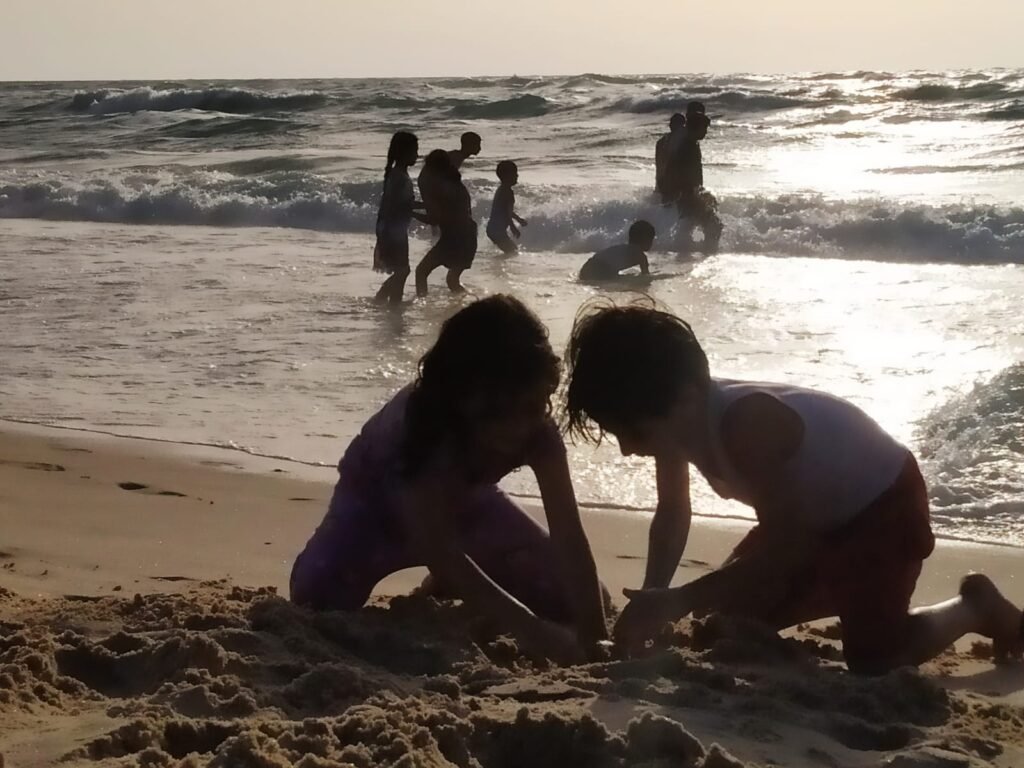
Gaza Herald _From the first light of day, Gaza’s coastline begins filling with thousands of displaced Palestinians seeking relief from the relentless summer heat. With overcrowded displacement tents turning into unbearable ovens amid soaring temperatures, prolonged power outages, and severe water shortages, the Mediterranean has become the only place where many families can briefly escape.
Along the shoreline, the sound of crashing waves blends with children’s laughter, while the constant hum of Israeli warplanes and the echoes of explosions remain an unavoidable backdrop. The scene reflects Gaza’s harsh reality: children grasping for fleeting moments of happiness as mothers keep one eye on their families and the other fixed anxiously on the sky.
A Place to Catch a Breath
Sitting beneath a worn makeshift shade fashioned from an old piece of fabric, Abu Ahmed Al-Dahdouh watched his children splash in the water.
“The tent is unbearable, especially in the middle of the day,” he told Gaza Herald. “The children simply can’t stay inside because of the heat, so whenever we have the chance, we come to the sea. At least here, there’s a breeze that gives them some relief.”
Looking out toward the horizon, he added, “We’re not here for recreation. We’re here because we’re searching for a place where we can breathe.”
A short distance away, Umm Mohammed Abu Odeh spread a small blanket across the sand while her children ran joyfully along the shoreline.
“For months now, my children have forgotten what a normal life feels like,” she said. “There are no schools, no parks, and no safe places to play. The sea has become everything to them, even if we can only stay for a few hours.”
She paused before continuing, “Every time we hear an explosion, we pull our children close. Then, a few moments later, we let them play again. We don’t want them to grow up knowing nothing except fear.”
Local fisherman Abu Youssef Al-Haddad said the beach has become increasingly crowded every day as more displaced families seek refuge from the oppressive conditions inside the camps.
“People aren’t coming here for leisure,” he explained. “They’re escaping the unbearable heat inside the tents. They’re looking for fresh air and somewhere their children can feel even a little comfort.”
As evening falls, families quietly gather their belongings and begin the journey back to the tents, knowing their brief respite has come to an end and that the hardships of displacement still await them.
For Gaza’s residents, the sea is no longer a symbol of summer holidays or recreation. It has become the city’s last refuge, a fragile sanctuary where thousands of displaced families struggle to escape the suffocating heat, endure the constant threat of war, and hold on to what little remains of ordinary life.
This version keeps the same reporting, expands the narrative slightly for smoother English, avoids literal translation, and reads like an original news feature rather than a translated article.