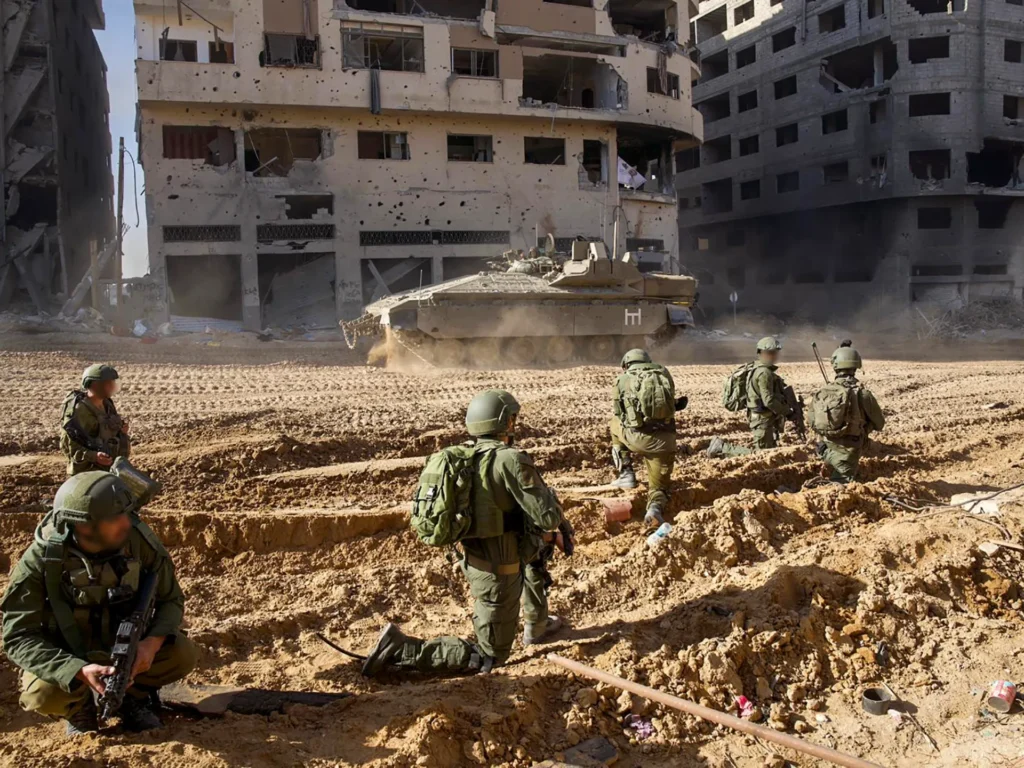
Gaza Herald – A new investigation by The New Humanitarian finds that Israeli forces are systematically detaining entire Palestinian communities in eastern Gaza while expanding military infrastructure, raising concerns among legal experts that the campaign is laying the groundwork for a long-term occupation and possible annexation.
Based on a six-month analysis of satellite imagery, the investigation says the area occupied by Israeli forces has expanded from 54% to approximately 65% of the Gaza Strip since the ceasefire brokered in October 2025. It reports that homes, schools, hospitals, cemeteries, and farmland have been razed, with military bases and new roads being constructed on the cleared land.
The report identifies several eastern Gaza communities that have been almost entirely destroyed, including Khuza’a, Bani Suheila, and Abasan al-Jadida in Khan Younis. It also documents extensive burning of agricultural land, estimating that around 16 square kilometers of farmland have been deliberately set ablaze since early May.
According to the investigation, Israeli officials have publicly indicated plans for a prolonged occupation in Gaza. The report cites statements by senior Israeli occupation leaders supporting continued occupation of large parts of the territory, while noting that some government officials have advocated re-establishing Israeli settlements in Gaza.
Legal experts interviewed by The New Humanitarian argue that the scale of the Israeli demolitions amounts to violations of international law, including potential war crimes and crimes against humanity in Gaza. They contend that the destruction of civilian property and infrastructure, particularly during a ceasefire period, raises serious legal concerns under international humanitarian law.
The investigation also highlights concerns over the future of Palestinian property rights, suggesting that the widespread destruction could complicate any future return of displaced residents or reconstruction efforts. Aid workers interviewed by the publication described the pattern of demolitions as indicative of a long-term strategy rather than temporary attacks.