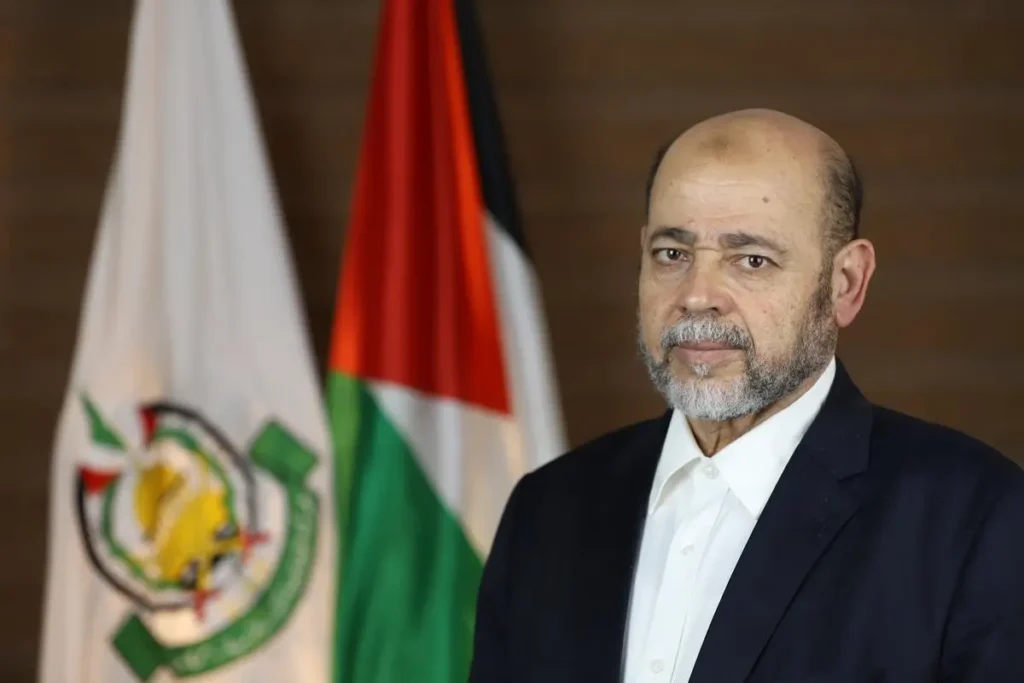
Gaza Herald – Senior Hamas official Mousa Abu Marzouk has said the Movement is prepared to hand over its weapons in Gaza exclusively to a Palestinian authority, whether the Palestinian Authority or a future independent Palestinian state, while rejecting any transfer of arms to Israel, the United States, or any non-Palestinian entity.
Speaking to Russia’s Sputnik news agency, Abu Marzouk said the issue of weapons was among the key topics discussed during recent Palestinian faction meetings in Cairo. He noted that participants reached agreement on 13 of 15 agenda items, while questions surrounding the future of Palestinian weapons remained under discussion.
“The issue of weapons is linked to international law, the nature of the conflict, and the reality of occupation,” Abu Marzouk said, arguing that Palestinians have the right to resist occupation under international law.
He added that Hamas had proposed allowing the Palestinian Authority to return to Gaza and assume administrative responsibilities in the territory, but said the proposal had not gained sufficient support.
According to Abu Marzouk, Hamas’ position is that any future arrangement should lead to “one authority, one law, and one weapon” under a broader political framework that includes a clear path toward Palestinian statehood.
He stressed that Hamas would only hand over its weapons to a Palestinian entity, stating that the Movement would not surrender its arsenal to Israel, the United States, or what he described as “collaborating parties.”
Abu Marzouk also suggested that discussions about Gaza’s weapons do not necessarily involve complete disarmament. Possible options, he said, could include storing heavy weapons, placing them under agreed arrangements, or entering into a long-term truce that would prevent their use.
The Hamas official criticized Israeli calls for disarmament in Gaza, questioning the contradictions in Israeli policy regarding armed groups operating inside the territory.
He further expressed pessimism about the prospects for a final agreement, arguing that current Israeli policies continue to hinder efforts aimed at ending the war and reaching a lasting political settlement.
His remarks come amid ongoing regional and international efforts to secure a durable ceasefire in Gaza and advance discussions on governance, security arrangements, and post-war reconstruction.