
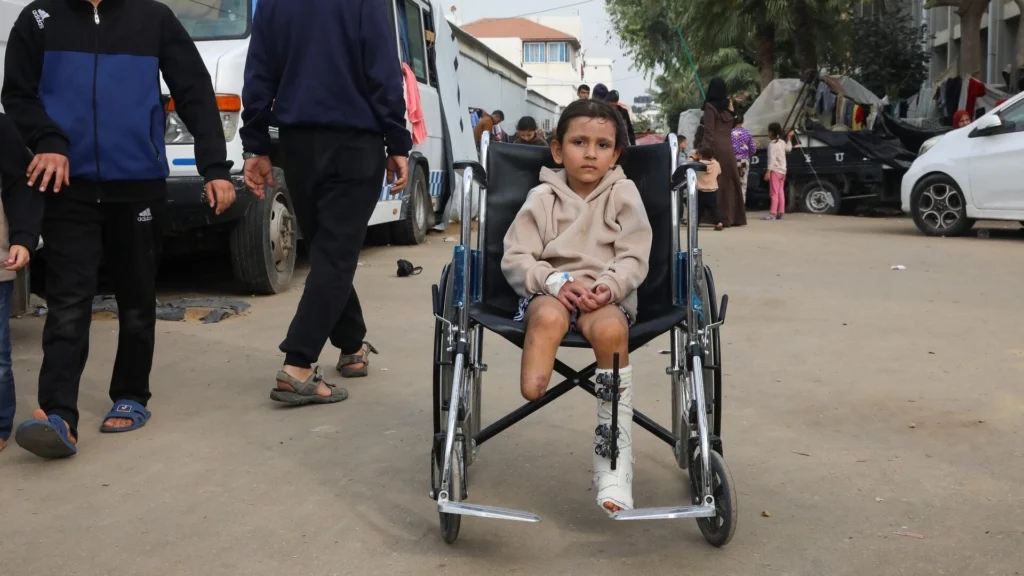
Gaza Herald _Before the war changed his life, Ahmed dreamed of earning a degree in architecture and building a future through design and creativity. Today, like thousands of other Palestinians in Gaza who lost limbs during the conflict, his focus has shifted from pursuing ambitions to adapting to a dramatically altered reality.
For many amputees across Gaza, surviving devastating injuries was only the beginning of a much longer struggle. They now face a daily battle against physical pain, limited medical care, psychological trauma, and an overwhelmed healthcare system unable to provide the rehabilitation many desperately need.
Thousands of Life-Altering Injuries
Medical estimates and reports from international organizations indicate that the war left thousands of Palestinians with severe injuries requiring the amputation of arms or legs to save their lives.
Doctors often performed these procedures under extraordinary circumstances, amid shortages of surgical supplies, sterilization equipment, medication, and functioning hospital facilities. With much of Gaza’s healthcare infrastructure damaged or forced out of service, medical teams frequently worked under conditions far below normal standards.
Difficult Decisions and Serious Risks
The challenges begin immediately after amputation surgery.
With limited hospital capacity, shortages of antibiotics, and overcrowded medical centers, many patients face significant risks of infection and post-operative complications. In some cases, severe infections at the amputation site can force surgeons to perform additional amputations at higher levels to prevent the spread of gangrene and other life-threatening conditions.
An orthopedic surgeon who recently returned from a field hospital in southern Gaza described the difficult choices medical teams faced.
“At times, we had to prioritize patients and perform emergency amputations using basic equipment and inadequate anesthesia simply to save lives,” he said. “But the greatest challenge now is what happens after surgery.”
A Shortage of Prosthetics and Rehabilitation
Once wounds begin to heal, another challenge emerges: helping amputees regain mobility and independence.
Thousands of survivors require prosthetic limbs, yet access remains extremely limited. Children face additional difficulties because their bodies continue to grow, requiring repeated adjustments and replacements.
Specialists point to several major obstacles. Gaza’s only prosthetics center suffered extensive damage during the war and is operating at only a fraction of its previous capacity. At the same time, restrictions affecting border crossings have limited the entry of essential raw materials and technological components needed to manufacture and maintain both traditional and advanced prosthetic devices.
The shortage extends beyond equipment. Successful rehabilitation often requires weeks of physical therapy, psychological support, and specialized care. In Gaza’s current circumstances, many healthcare professionals describe such services as increasingly difficult to provide.
The Invisible Wounds
Medical experts say the suffering experienced by amputees goes far beyond the loss of a limb.
Many patients endure what is known as phantom limb pain, a condition in which the brain continues sending signals that create the sensation that the missing limb remains present and painful. These physical symptoms are often accompanied by severe psychological distress, depression, and emotional trauma.
For many individuals, the loss of mobility also means losing the ability to work, support family members, or carry out everyday tasks independently.
These challenges are compounded by living conditions throughout Gaza, where many displaced families remain in tents or temporary shelters that are largely inaccessible to people with disabilities.
Hope Beyond the Crossings
Despite the immense challenges, amputees, their families, and medical professionals continue to hold onto one hope: sustained access through Gaza’s crossings and the ability for patients to travel abroad for specialized treatment.
Doctors stress that many amputees, particularly children whose bodies are still developing, urgently need advanced prosthetic limbs and long-term rehabilitation services unavailable inside Gaza.
Families fear that prolonged delays could transform treatable injuries into permanent disabilities that will affect survivors for the rest of their lives.
For Ahmed and thousands like him, recovery is about more than replacing a lost limb. It is about reclaiming independence, restoring dignity, and preserving the possibility of a future that war threatened to take away.

