
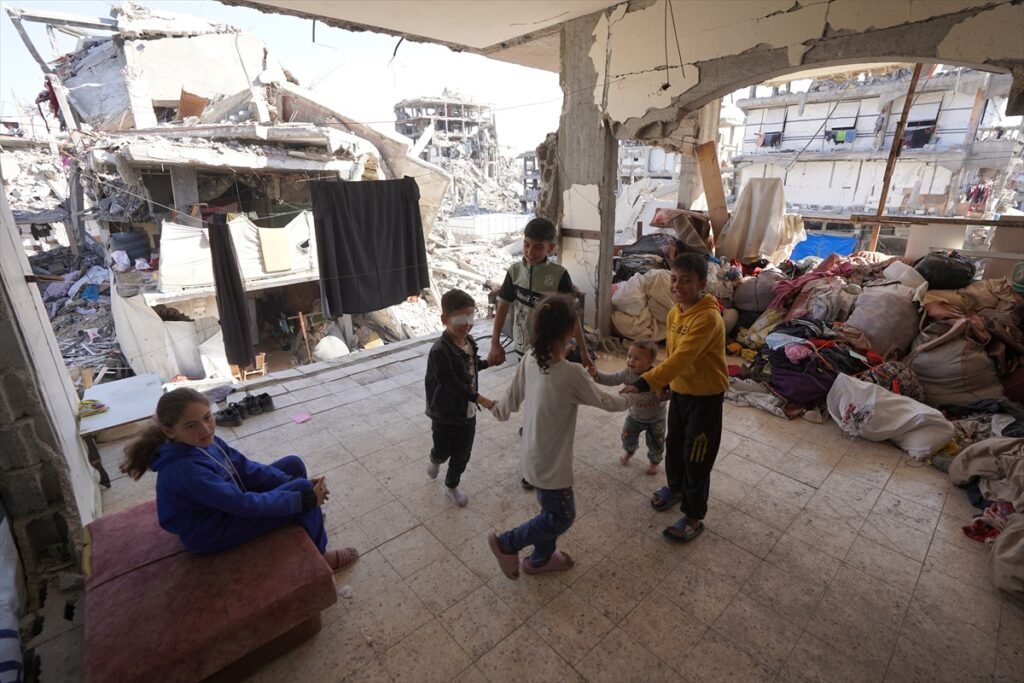
Gaza Herald _As Israel’s ongoing assault continues to reshape every aspect of life in Gaza, even the simplest moments of childhood have become rare. Amid widespread displacement, destruction, and loss, a grassroots initiative is using something as simple as bubbles to offer Palestinian children brief moments of joy, comfort, and emotional relief.
Humanitarian Aid With a Different Purpose
When the Global Sumud Flotilla attempted to challenge the blockade on Gaza in May, it carried a range of humanitarian supplies, including food, drinking water, infant formula, and medical equipment. Among the cargo were also bubble-making kits designed specifically for children living through conflict.
The kits were created by Bubbles Not Bombs (BNB), an initiative focused on supporting children affected by war and displacement through play. Made from basic materials such as soap, water, rope, and wooden sticks, the kits can be assembled and used almost anywhere.
Originally launched by the Welsh toy company Dr Zigs, which has spent years promoting play as a tool for emotional recovery in crisis zones, the project has now evolved into an independent nonprofit organization dedicated to children living in conflict-affected areas.
Protecting a Child’s Right to Play
Paola Dyboski, the founder of both Dr Zigs and BNB, believes that play is not a luxury but a fundamental right that should remain accessible to every child, regardless of circumstances.
While acknowledging the urgent need for food, medicine, and other life-saving supplies in Gaza, she stresses that emotional well-being is equally important for children who have endured war, displacement, and profound loss.
Until physical shipments can safely reach Gaza and other conflict-affected regions, the organization has been distributing simple online instructions to help families create bubble kits using whatever materials are available locally.
According to Dyboski, bubbles provide more than entertainment. They create opportunities for children to release emotions, manage anxiety, and experience brief moments of freedom in environments dominated by fear and uncertainty.
Creating Joy Amid Displacement
Mohamed Abushbeka, a Palestinian caring for his two nieces after they lost their father during the war, has witnessed the impact firsthand.
Recently, a video of his niece Batool playing with bubbles inside a displacement camp gained attention online after being shared by the initiative.
Abushbeka says the activity offers children a rare escape from the hardships surrounding them, allowing them to laugh, run, and engage in carefree play, even if only for a short time.
He explains that children often improvise their own bubble toys using everyday objects such as cups and plastic tubes, transforming simple materials into sources of happiness.
For families struggling to preserve a sense of normalcy, these moments of play have become increasingly valuable.
Play as a Form of Humanitarian Support
Leigh Evans, a Welsh paramedic and emergency nurse who has participated in several medical missions to Gaza, says children’s emotional and developmental needs should be viewed as a key component of humanitarian assistance.
Drawing on his experiences in Gaza, Evans recalls seeing families work tirelessly to maintain routines and create moments of comfort despite the devastation surrounding them.
He argues that play opportunities help children maintain a connection to childhood in circumstances where daily life is dominated by uncertainty and loss.
Evans has also incorporated bubble activities into solidarity events and peaceful demonstrations supporting Palestinians, using them as symbols of hope and resilience.
Helping Children Process Trauma
Lebanese performer and humanitarian worker Sabine Choucair has similarly embraced the use of bubbles in her work with children living through crises.
With years of experience supporting children in refugee camps and conflict zones, she describes bubbles as powerful tools that encourage imagination, participation, and emotional expression.
One activity she developed invites children to imagine placing their fears inside bubbles before popping them, creating space for feelings of hope and optimism.
According to Choucair, such exercises help children engage with difficult emotions in a way that feels safe and accessible.
Mental Health Cannot Be Ignored
Humanitarian workers and mental health specialists increasingly warn that psychological support must be considered an essential part of emergency response efforts.
Children in Gaza have endured repeated displacement, bombardment, bereavement, and prolonged instability. Many continue to struggle with the emotional consequences of these experiences.
Advocates argue that providing emotional support is just as important as meeting physical needs, particularly for children whose lives have been shaped by years of conflict.
Videos shared by organizations working in Gaza have shown children using bubble activities to express fears related to war, hunger, and separation from loved ones, highlighting the role play can serve in emotional recovery.
Expanding Beyond Gaza
The initiative has already begun reaching children in other crisis-affected regions, including Myanmar and refugee communities in Bangladesh.
Organizers are also working to expand operations into Sudan, the Democratic Republic of the Congo, and Ethiopia’s Tigray region, although logistical challenges continue to complicate delivery efforts.
Supporters of the project say their goal extends beyond helping children survive conflict. They hope to ensure that children retain opportunities to play, learn, and develop despite the difficult realities surrounding them.
As wars and humanitarian crises continue to affect millions of children worldwide, initiatives like Bubbles Not Bombs seek to preserve something often overlooked during conflict: a child’s right to experience joy, imagination, and hope.

