
Gaza Herald – Saba Al-Jaafrawi, 34, had no time to celebrate learning she was pregnant for the first time after a long and painful three-year fertility journey. In September 2023, her first IVF attempt finally succeeded. But her joy was short-lived.
“I didn’t even get the chance to be happy about it,” she says.
 Just days later, war erupted in the Gaza Strip in October 2023. Clinics shut down, medical follow-ups stopped, and the pregnancy she had long waited for turned into daily fear and uncertainty.
She was forced to climb six floors on foot due to power cuts, living under constant bombardment and severe shortages of food and water, while her body tried to hold onto a new life growing inside her.
She later displaced south to Khan Younis, and then to Egypt, where an early scan revealed she was carrying twins. But the hope did not last. Days later, contractions and bleeding began.
She recalls the moment: “Even now, the sound of my screaming and crying in the hospital is still in my ears.”
The pregnancy ended, but the loss was only beginning.
The destruction of thousands of embryos
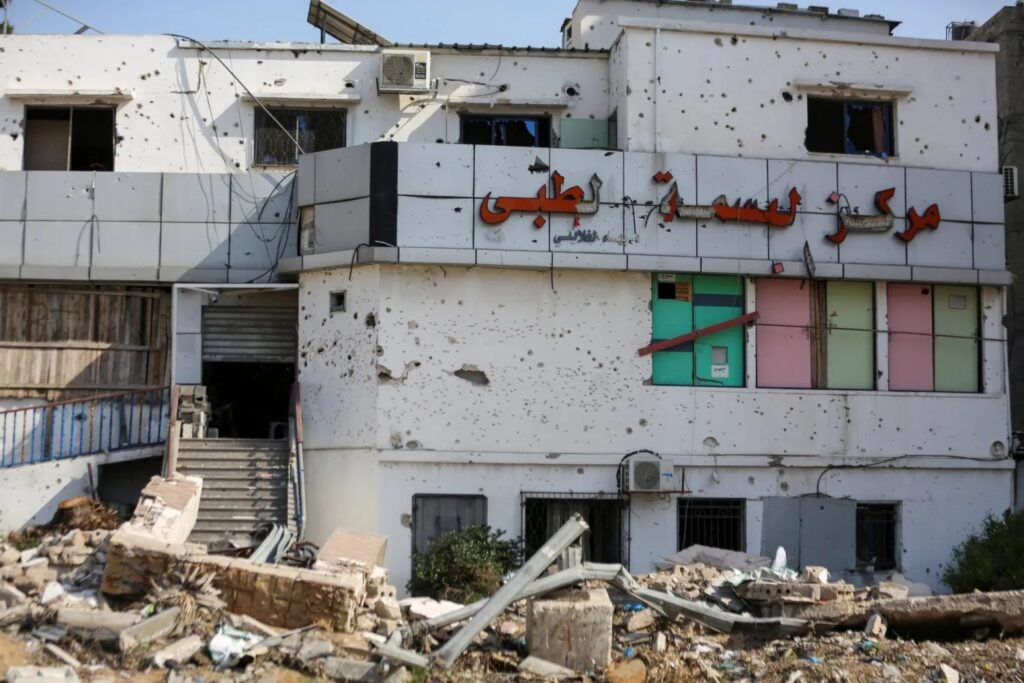
In December 2023, an Israeli strike hit the Al-Basma Fertility Center, the largest IVF clinic in Gaza. The damage was catastrophic.
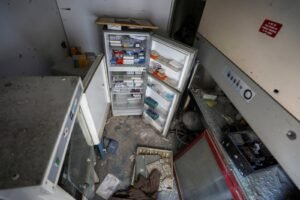
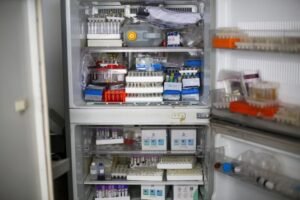 The explosion displaced the nitrogen gas tanks used to preserve embryos. As the liquid nitrogen evaporated, temperatures rose sharply, destroying more than 4,000 frozen embryos, along with around 1,000 sperm and egg samples.
Dr. Bahaa Al-Ghalayini, founder of the center, described the loss: “We know with all our being what these lives meant, five thousand lives, or potential lives, for parents who were waiting.”
His voice reflected deep devastation: “My heart is broken into a million pieces.”
He added: “These embryos were the last hope for hundreds of couples, many of whom may never be able to conceive again.”
A deliberate strike
According to former UN commission head Navi Pillay, the attack was not random.
In an interview with The Guardian, she stated that the strike “appears intended to prevent Palestinian births in Gaza.”
She noted that the fertility clinic was in a separate building from the hospital, which was not hit, and that the shell directly struck the area where embryos were stored in nitrogen tanks.
A laboratory under rubble
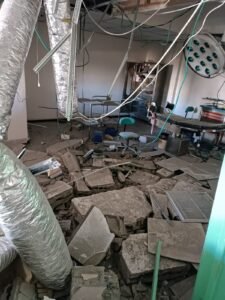 Months later, the IVF laboratory remained buried under debris. Broken equipment, shattered structures, and open nitrogen tanks were still visible.
At the bottom of one tank, a tray containing small colored tubes was found, once holding microscopic embryos, now completely destroyed.
Dr. Al-Ghalayini said: “One shell hit a corner of the center and destroyed the lab, five thousand lives in a single shell.”
The loss of a final chance
Before the war, Al-Basma Center, founded in 1997, treated more than half of Gaza’s IVF patients and stored most of the territory’s embryos.
Despite poverty, couples often sold possessions, from household appliances to jewelry, to afford treatment in a society where having children is central to life.
With the destruction of the center, they lost not just medical samples, but their last chance to build families.
A devastating loss
For Saba, the loss went beyond miscarriage. She had five frozen embryos stored at the center, hoping to return and try again.
She says: “No matter how much I talk about the pain of IVF, only those who lived it can truly understand.”
War crimes allegations
The organization Justice for All stated that the targeting of the fertility center may constitute war crimes under the Rome Statute, including attacks on civilian objects and destruction of property without military necessity.
It called on the International Criminal Court to open a full investigation and hold those responsible accountable.
Silent losses in Gaza
In Gaza, the war has left behind silent tragedies not always captured in headlines: five thousand embryos destroyed, thousands of unborn stories, and dreams that ended before they began.

