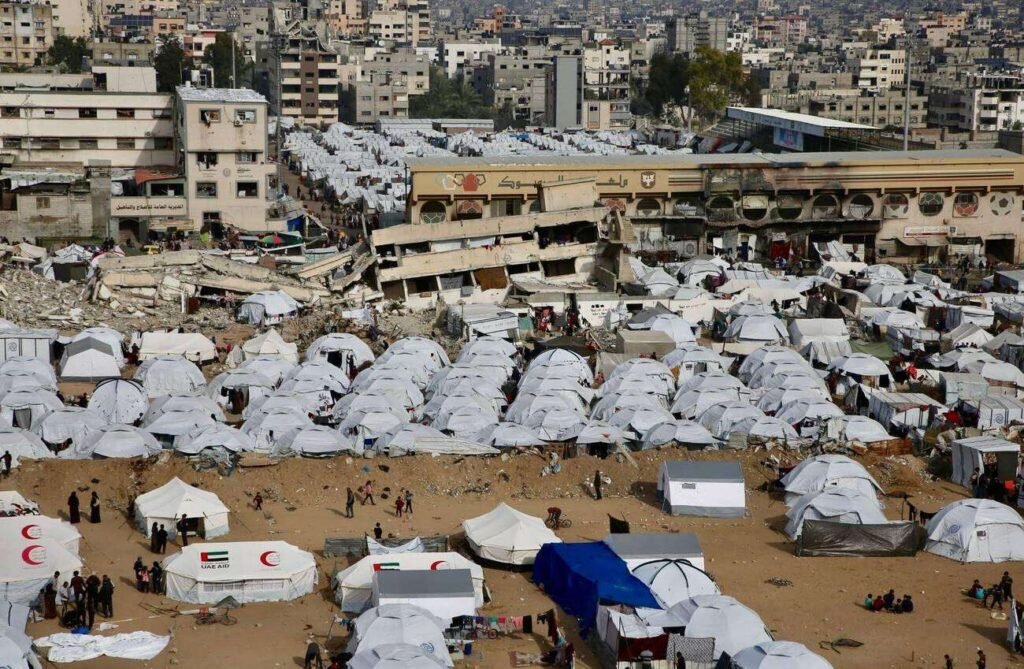
Gaza Herald – With schools destroyed and classrooms gone in the Israeli airstrikes in the last genocide, children across the Gaza Strip are continuing their education inside worn-out tents, where the most basic learning conditions are absent.
Sitting on the ground, often sharing notebooks and pens, students attend improvised lessons in overcrowded shelters that offer little protection from weather or hardship. These makeshift spaces have become the only option after the widespread destruction of educational institutions during the war.
Teachers, many working voluntarily, are striving to keep the learning process alive despite severe limitations. They continue to deliver lessons in challenging environments, driven by a sense of responsibility to prevent a generation from losing access to education.
Hundreds of children are receiving lessons under these conditions, as families attempt to maintain some form of normalcy amid displacement and instability. At the same time, many students are balancing education with daily survival responsibilities, including helping support their families in fetching water or waiting in line for a meal from the community kitchen.
The situation reflects a broader collapse of the education system in Gaza, where the vast majority of schools have been damaged or destroyed. As a result, thousands of students have been forced into alternative learning arrangements that lack structure, materials, and stability.
According to estimates, more than 95% of educational institutions in Gaza have been destroyed during the war, forcing thousands of students into temporary alternatives like tents.
In this context, education has become more than just learning; it has turned into an act of resilience, as children persist in pursuing knowledge despite the extreme challenges surrounding them.