Gaza Herald – Getting to work or visiting family in the Gaza Strip is no longer routine; it has become a daily ordeal marked by uncertainty, exhaustion, and rising costs as a deepening transportation crisis reshapes everyday life.
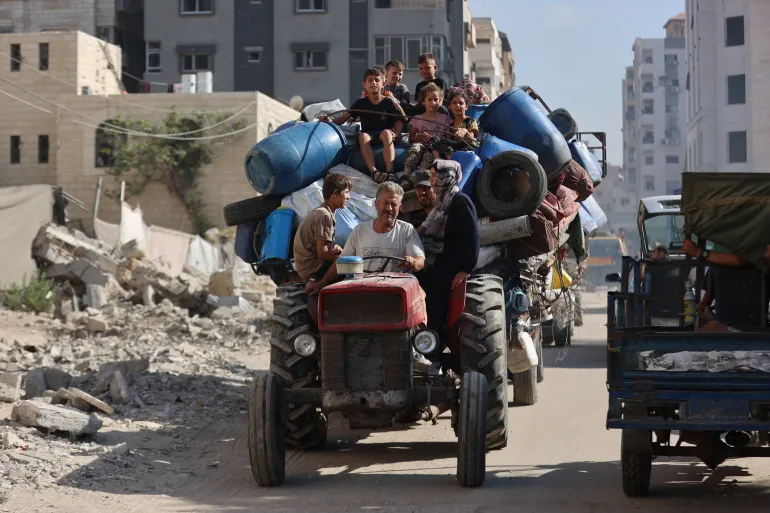
Across shattered roads littered with rubble and craters, residents move through the aftermath of war searching for increasingly scarce transport. With tens of thousands of vehicles destroyed or out of service and repair options extremely limited, people are forced to rely on improvised means such as tuk-tuks and animal-drawn carts, options that are unreliable and often unsafe.
For many, walking long distances has become the default. Commuters routinely spend hours on foot, not by choice but out of necessity, as available transport is either unaffordable or simply nonexistent. Even short trips can turn into physically draining journeys under harsh conditions.
The crisis extends beyond passengers. Drivers themselves are struggling to remain operational in a collapsing system. The cost of maintaining vehicles has surged dramatically due to severe shortages of spare parts, most of which are either unavailable or sold at inflated prices. Many vehicles remain idle for days or weeks over minor mechanical issues that can no longer be easily fixed.
The limited supply of parts has also created a distorted market, where non-original and low-quality components dominate. This has increased the frequency of breakdowns and raised serious safety concerns, particularly as vehicles operate on heavily damaged roads without proper maintenance.
At the same time, fuel shortages and soaring prices have added another layer of pressure, forcing drivers to raise fares just to cover basic costs. For many residents, transportation has shifted from a basic service to an unaffordable luxury.
Estimates suggest that Gaza has lost a significant portion of its transport capacity since the war began, leaving a system that can no longer meet even minimal demand. The result is a fragmented, unreliable network that fails both commuters and operators.
What is unfolding is not just a transportation crisis but a reflection of a broader economic and humanitarian collapse, where movement itself has become a struggle, and every journey carries the weight of survival.