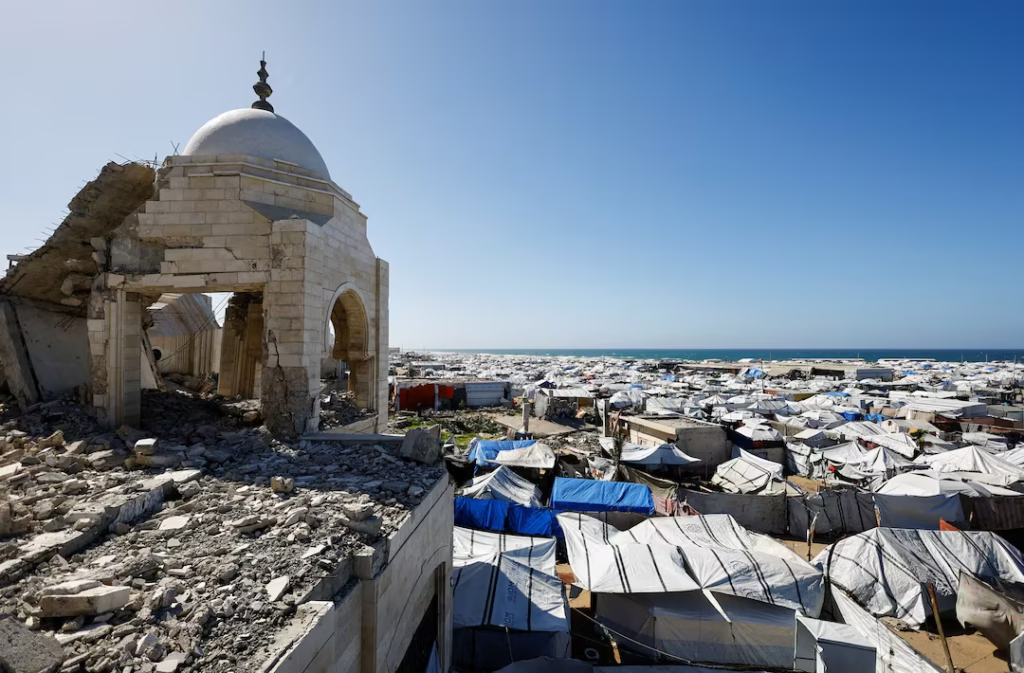
Gaza Herald – Even Gaza’s oldest landmarks have not withstood the devastation of war. The Grain Market, a centuries-old commercial hub in Khan Younis, now stands largely deserted after extensive destruction caused by Israeli airstrikes amid the ongoing genocide.
For generations, the market was the city’s economic heart, where families gathered to shop, especially ahead of Eid. Visitors once passed by the historic Barquq Castle, built in 1387, before entering bustling alleys filled with spices, food supplies, and traders. Today, those same streets lie in silence, reduced to rubble.
Nahed Barbakh, a 60-year-old trader who has worked in the market for decades, described the transformation: “This place used to be full of life, especially during Eid. Now it’s completely empty… even history itself has been struck.”
The destruction has not only damaged buildings but shattered livelihoods. Many traders were killed, while others have been financially devastated, leaving most shops closed. The market now lies near the so-called “yellow line,” making it a dangerous area that residents fear approaching due to the risk of gunfire.
According to Gaza’s Ministry of Tourism, the Grain Market is one of more than 200 heritage sites damaged since October 2023. The loss reflects a broader collapse of economic life across the Strip amid ongoing restrictions and destruction.
Standing beside a nearly empty vegetable stall, residents said there used to be a wide variety of goods, but now there is almost nothing left. Even those who can afford to buy find little available in the markets.
Despite the devastation, civilians are trying to restore fragments of normal life. Some returned to the market to buy ingredients for traditional Eid sweets such as ka’ak and maamoul, hoping to bring a sense of joy to their families.
Yet rebuilding remains out of reach. Local officials say the market requires comprehensive restoration, but ongoing restrictions have prevented even basic construction materials from entering Gaza. Once a symbol of endurance for centuries, the Grain Market now stands as a stark reminder of a city struggling to survive amid destruction.