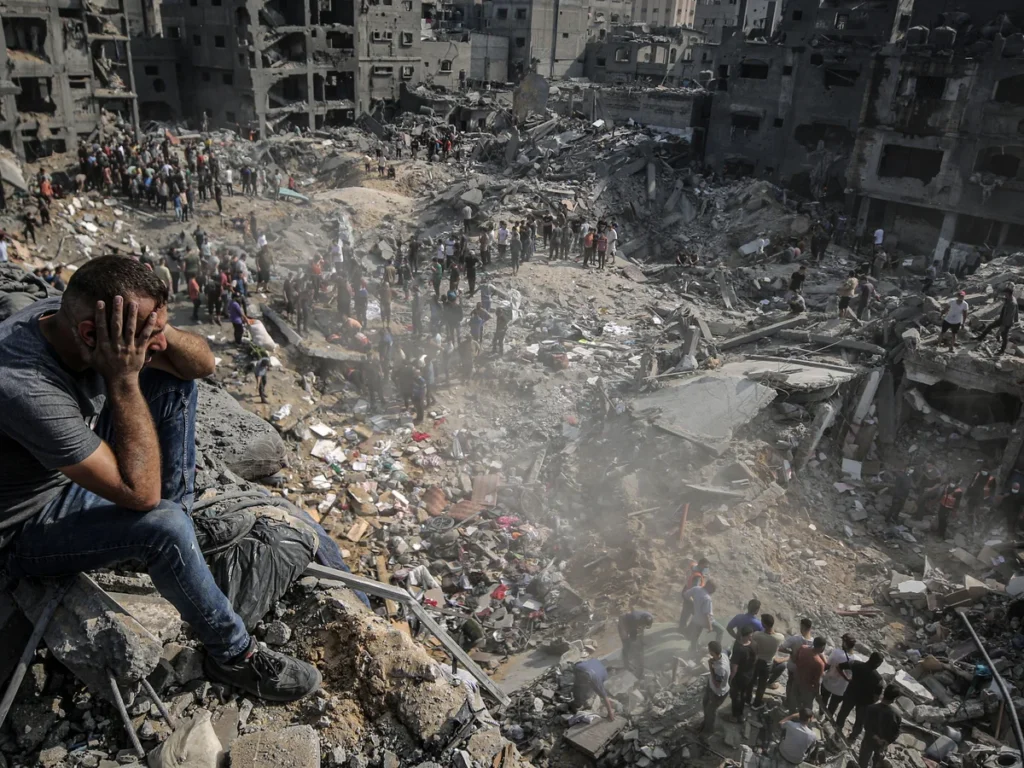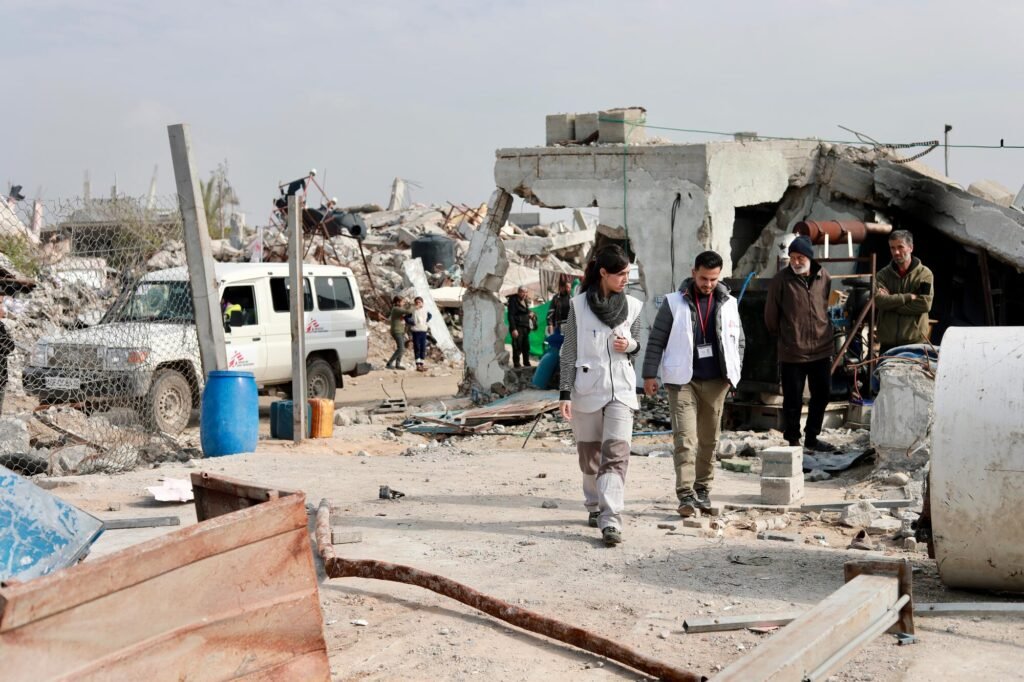
Gaza Herald — Freedom of movement is not a privilege; it is a fundamental human right protected under international law. Yet in Gaza, movement has been deliberately transformed into a mechanism of domination. What Palestinians face today is not a temporary security arrangement, but a calculated system of control that governs who may leave, who may enter, who may receive medical care, and who is left to endure suffering behind sealed borders. Israel’s management of Gaza’s crossings, particularly during its ongoing war, reveals how mobility itself has been weaponized against an entire civilian population.
A Siege Disguised as “Security”
International humanitarian law guarantees freedom of movement as inseparable from the rights to life, health, food, and education. In Gaza, however, these protections have been hollowed out by a dense web of roadblocks, permits, closures, and military-controlled crossings. Since October 2023, Israel has fully entrenched its authority over Gaza’s gateways, determining access not only to people, but to aid, medicine, fuel, and basic survival.
What was once framed as a temporary security measure has hardened into a permanent condition of life. Patients seeking treatment abroad, students pursuing education, families separated by borders, and wounded civilians awaiting evacuation all face the same reality: Israeli-controlled crossings that dictate their fate.
The Rafah crossing, long perceived as Gaza’s only opening to the outside world not directly run by Israel, proved no exception. In May 2024, Israel seized operational control of the Palestinian side of the crossing, effectively neutralizing a critical lifeline. Humanitarian convoys stalled, food spoiled in trucks under the sun, and medical evacuations slowed to a trickle during one of Gaza’s gravest crises.
Movement as a Tool of Control
Following Rafah’s closure, Israel selectively allowed limited movement through alternative crossings under strict conditions. Only “pre-approved” goods, small numbers of patients, and humanitarian staff were permitted passage. These access points shifted constantly according to military developments, creating an unstable and unpredictable aid system.
Inside Gaza, movement was further restricted. Roads were closed, corridors cut off, and entire regions isolated from supplies and essential services. Even when aid entered, its distribution depended on Israeli military coordination, forcing humanitarian convoys to navigate opaque approval processes that frequently resulted in delays, denials, or cancellations.
Human rights monitors describe this system not as administrative regulation, but as a deliberate policy of collective punishment, one that uses movement to coerce, manage, and pressure a civilian population already under siege.
Medical Evacuations: Life on Hold
Nowhere is this policy more devastating than in the medical evacuation process. Patients must pass through a labyrinth of referrals, security checks, transfers, and approvals before reaching a crossing—often too late.
Official data exposes the scale of failure. During long periods when Rafah remained closed, only a few hundred patients were evacuated, while tens of thousands remained in urgent need of treatment abroad. When Rafah was briefly reopened, evacuation numbers rose sharply, proving that the crisis was never logistical—it was political.
Today, more than 18,000 patients in Gaza still require life-saving care outside the Strip. Thousands have died while waiting. These deaths are not accidents; they are the foreseeable outcome of policies that place control above human life.
A Longstanding Policy of Collective Punishment
The current restrictions did not begin with the war. Since 2007, Israel has imposed a comprehensive land, sea, and air blockade on Gaza, gradually transforming emergency measures into a permanent system governing every aspect of life for 2.4 million people.
International bodies have repeatedly stated that the blockade constitutes collective punishment, prohibited under international law. Economically, it has dismantled Gaza’s productive capacity, entrenched mass poverty, and forced chronic dependence on humanitarian aid. Socially, it has fractured families, blocked education and employment, and isolated Gaza from the rest of the occupied Palestinian territory.
The war has not created a new policy, it has intensified an old one.
What emerges from Gaza is a stark truth: Israel’s control over movement is not incidental, and it is not defensive. It is a central pillar of a broader system that regulates survival itself, who eats, who heals, who studies, who leaves, and who remains trapped. These policies strike at the core of international law, violating prohibitions against collective punishment, starvation of civilians, and cruel treatment.
As long as freedom of movement remains hostage to military power, Gaza will remain suspended between crisis and catastrophe. Any serious conversation about accountability, reconstruction, or peace must begin by dismantling the machinery of control that has turned borders into weapons and civilian life into a bargaining chip.