Gaza Herald – The reopening of the Rafah border crossing under the second phase of the ceasefire agreement did not signal a meaningful humanitarian breakthrough but rather reflected what analysts described as a “managed opening,” employed by Israel as part of a broader framework of political and security pressure on Gaza, according to a position paper released by the Palestinian Center for Political Studies.
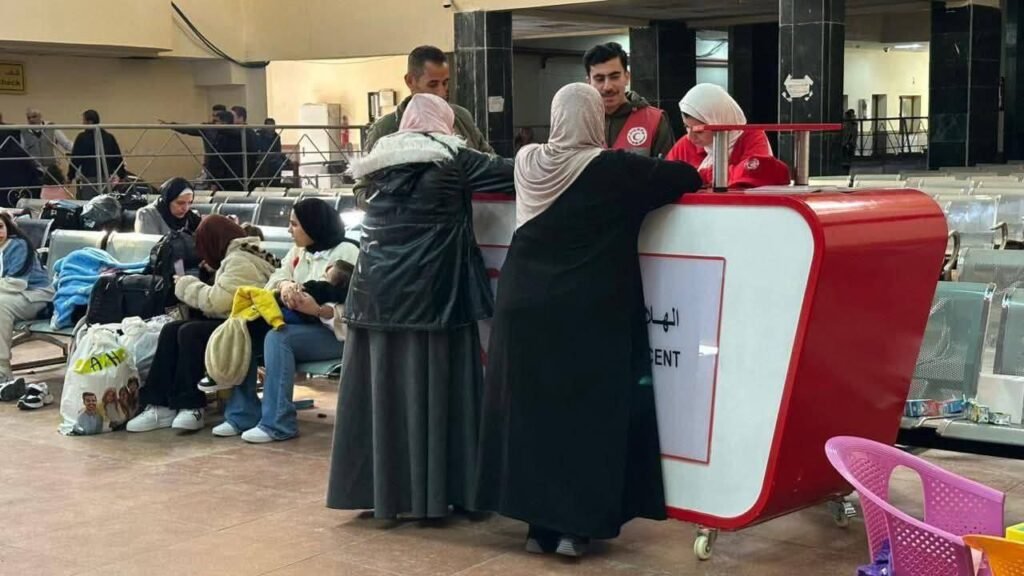
The paper argued that the reopening was carried out in a highly restricted and tightly controlled manner, with severe limitations on the number of travelers and stringent security procedures. Movement through the crossing was subjected to pre-approved lists, extensive screening, and deep inspections, effectively transforming Rafah into a security filtration point rather than a humanitarian lifeline.
Researchers noted that allowing only limited daily crossings, while continuing to bar the entry of goods and essential aid, formed part of a wider Israeli strategy linking humanitarian relief to second-phase political demands, including governance arrangements in Gaza, security conditions, and the future of Palestinian resistance.
The study concluded that Israel sought to leverage the crossing to exert political pressure, reinforce indirect security control, and use humanitarian needs as tools of economic and social coercion, while also encouraging partial or so-called “voluntary” displacement under increasingly unlivable conditions.
The paper warned that Rafah had become an instrument for managing, not resolving, the war, embedding Gaza in a state of fragile stability marked by continuous pressure and unresolved humanitarian collapse. It outlined potential scenarios ranging from limited, conditional expansion to renewed stagnation and deepening crisis, stressing that none guaranteed sustainable humanitarian improvement without treating Rafah as a sovereign and non-negotiable humanitarian right.