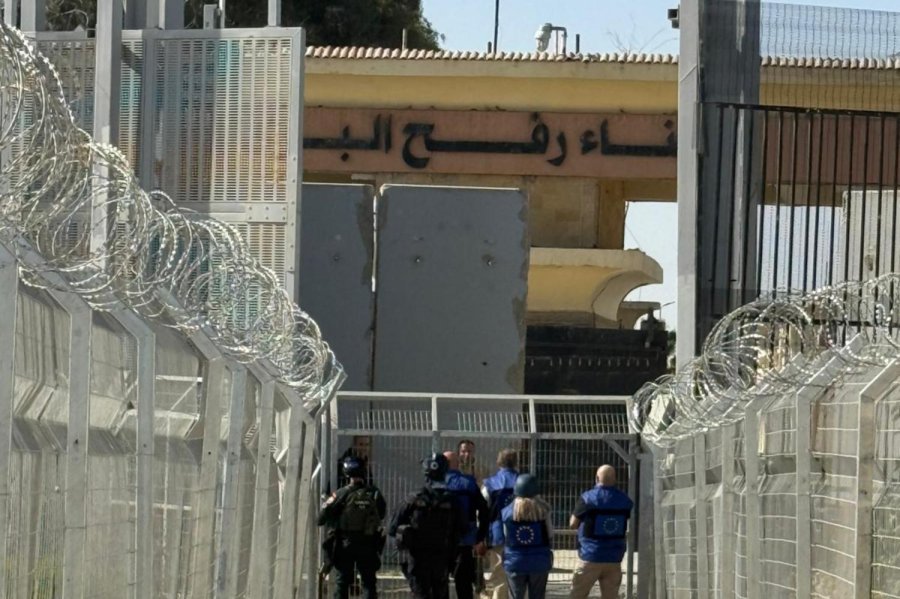
Gaza Herald – News headlines announced that Israel had finally reopened the Rafah border crossing between Gaza and Egypt, raising hopes among wounded Palestinians desperate to access life-saving medical treatment abroad.
Yet the reality on the ground told a very different story. On the first day of the reopening, Monday, Israeli authorities permitted only five patients to exit Gaza through Rafah, leaving hundreds, and likely thousands, of others still waiting with no clear timeline.
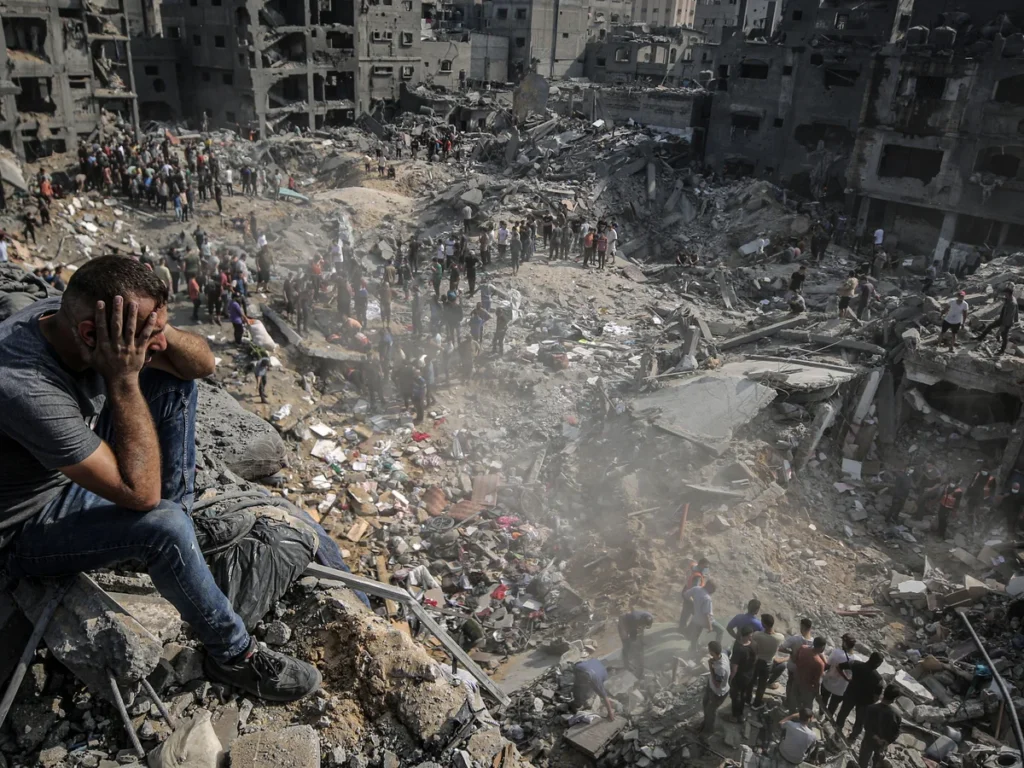
One of those five was Mohammed Abu Mostafa, a 17-year-old boy who travelled with his mother, Randa, first to Khan Younis in southern Gaza and then onward to Rafah. The crossing had remained closed by Israel for two years during its genocidal war on Gaza, a campaign that has killed more than 70,000 Palestinians.
Randa said she received a phone call early Monday morning informing her that Mohammed’s name had appeared on the initial list of wounded patients approved for travel. She was instructed to head immediately to the Red Crescent Hospital in Khan Younis to prepare for departure.
The reopening of Rafah, Gaza’s only land crossing not directly controlled by Israel, has been repeatedly promoted as proof of progress in the second phase of the US-backed Gaza “ceasefire” agreement.
However, what unfolded on Monday exposed a starkly different reality: heavy security controls, complicated procedures, and extremely limited approvals, all falling dramatically short of both public expectations and Gaza’s vast humanitarian needs.
Under Israeli orders, each of the five patients was allowed to travel with only two companions, bringing the total number of people permitted to cross to just 15, according to Gaza’s health authorities.
Mohammad Abu Salmiya, director of Gaza’s al-Shifa Medical Complex, said this was the only group allowed to leave, despite earlier arrangements with the World Health Organization, which coordinates between Egypt and Israel, for 50 patients per day to travel for treatment.
Egyptian officials also indicated that 50 Palestinians had been authorized to return to Gaza via Rafah, though it remains unclear whether they have actually reached the Palestinian side of the crossing.
Ismail al-Thawabta, head of Gaza’s Government Media Office, stressed how insignificant these figures are compared with the scale of need. Around 22,000 Palestinians currently require medical evacuation abroad, he said, while nearly 80,000 people who fled Gaza during the war are still waiting to return.
Eye injury
Mohammed was injured in an Israeli air strike a year and a half ago near al-Mawasi in Khan Younis, where his family had been displaced. He suffered a direct injury to his eye, causing severe damage to his optic nerve and leaving him with significant vision loss.
“My son has been in constant pain since the injury,” Randa said as she waited in the hospital courtyard alongside other patients and their families. “His condition worsened day by day, and there is no treatment available for him inside Gaza.”
Although relieved to finally accompany her son, Randa said the journey was painful in another way. She was forced to leave behind four of her six children, as she was only permitted to take one additional child as a companion.
“What matters to me now is that my son regains his sight and can see again,” she said. “That is my only concern at this moment.”
She added that she hopes to return to Gaza once Mohammed recovers, that the blockade will be lifted, and that all patients will be granted the same chance to travel for treatment.
Israeli restrictions
In the courtyard of the Red Crescent Hospital, dozens of patients listed for travel voiced anger and disappointment over the severe restrictions imposed on Rafah’s first day of reopening.
Patients with amputations and other serious injuries gathered early, hoping they would be allowed to travel to Egypt. Instead, despite arriving with hope at dawn, most were turned away after Israeli authorities refused to approve more than five cases.
This sparked widespread frustration over the rigid and opaque mechanisms governing the crossing’s limited reopening.
The process begins with daily lists of potential travelers being prepared in Gaza and then submitted to Israeli authorities for security screening. No individual is permitted to enter or pass through the crossing without explicit Israeli approval.
The European Union Border Assistance Mission deployed at Rafah plays only a monitoring role, limited to verifying identities rather than making decisions.
Those returning to Gaza face additional inspections at checkpoints located in areas under Israeli military control, even after initial verification at the crossing.
Raed al-Nims, head of media at the Gaza Red Crescent, said the organization was still awaiting updates on whether additional patients would be allowed to travel through Rafah. He noted that another group of patients was transferred to Israel on Monday via the Kerem Abu Salem crossing, in coordination with international health bodies.
Desperate need
Ibrahim Abu Thuraya was another of the five patients permitted to leave Gaza that day. Injured in the early months of the war, he lost his left hand and suffered a serious eye injury, with shrapnel still lodged behind his eye.
“My eye condition worsens every day, and the pain is severe,” he said from Khan Younis before traveling south. “The shrapnel is still there, and Gaza has no medical capacity to treat it. Doctors told me I must go abroad.”
Ibrahim said he was informed on Monday morning that his travel had been approved. He will be accompanied by his wife, Samar, and their son.
“I have endured two full years of suffering just to reach this moment,” he said. “There are thousands of wounded people like me. I hope the crossing will be opened permanently.”