Gaza Herald — What is unfolding in Gaza today is not a sudden breakdown of calm, nor an isolated “security response.” It is a calculated strategy: the use of sustained military violence to impose political outcomes by force, even in moments officially labeled as a ceasefire or transition. For Palestinians, the message is painfully familiar: there is no real pause, only different intensities of siege, bombardment, and coercion.
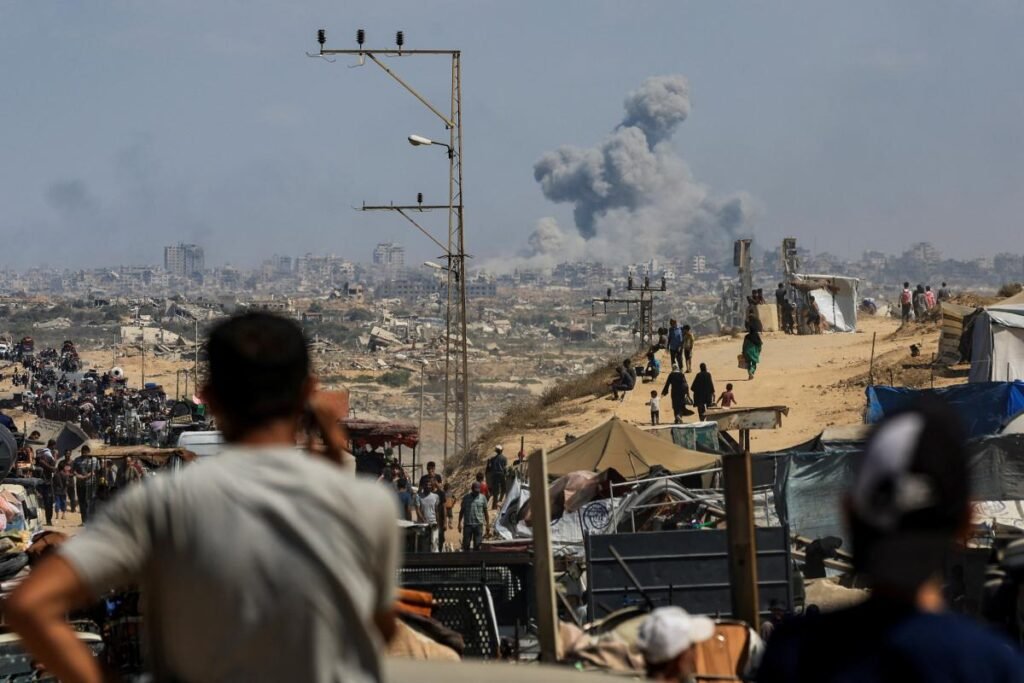
Israeli artillery and airstrikes early Saturday reignited scenes of war across the Gaza Strip, as Palestinians were still reeling from successive rounds of violence that have scarcely paused, amid persistent Israeli violations justified by recurring “security” pretexts.
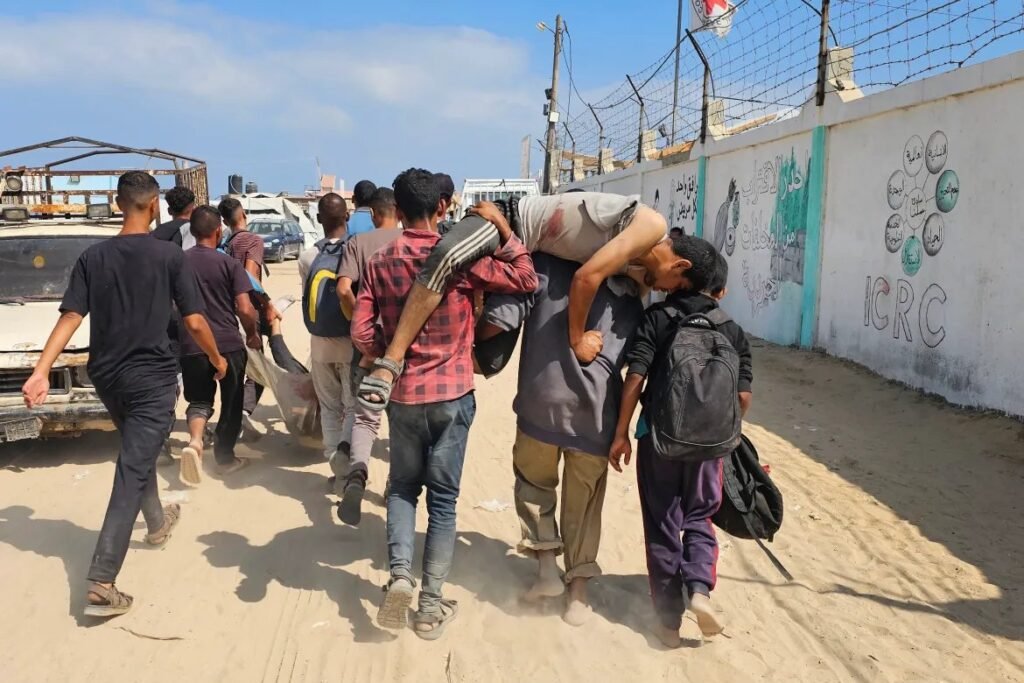
The strikes targeted a residential apartment in Gaza City’s al-Rimal neighborhood, as well as multiple locations in Khan Younis in the south, including displacement tents and a police center. At least 26 Palestinians were killed, among them six children and three women, with dozens more injured and rushed to hospitals already crippled by dire conditions and severe shortages of medical supplies.
The escalation coincided with an Israeli army statement claiming that its latest announcement marked “the end of the current escalation,” a stark contradiction between official military rhetoric and the reality on the ground, where bombardment continues, and a state of permanent instability is being imposed on the enclave.
Escalation Amid Sensitive Political Tracks
The latest assault comes alongside intertwined political and security developments, most notably discussions around reopening the Rafah border crossing under unprecedented security measures and U.S. statements signaling a move toward a “second phase” of proposed arrangements for Gaza, accompanied by renewed references to disarming the Palestinian resistance movement, Hamas.
Israel justified its attacks by claiming that eight resistance fighters attempted to emerge from a tunnel in Rafah, alleging it killed three, arrested one, and is pursuing the others, despite the area being under full Israeli control and Israel’s prior refusal to facilitate efforts to extract fighters trapped in Rafah’s tunnels, with whom contact has been lost for months.
A Systematic Bombing Policy and Enforced ‘Non-Calm’
Military and security analyst Wasif Ereikat argues that the current Israeli escalation cannot be separated from a long-standing strategy aimed at managing the conflict rather than ending it, by keeping Gaza under constant military pressure, even during periods that are ostensibly transitional or preparatory for de-escalation.
In comments to Gaza Herald, Ereikat said Israel is sending multiple messages: first, to Palestinians, that calm is never guaranteed; and second, to regional and international actors, that Israel still holds the military initiative. He added that repeated bombardment is designed to impose new facts on the ground and strip any political track of its humanitarian substance.
Targeting civilians and displacement tents, Ereikat stressed, reflects Israel’s failure to achieve its military objectives and its resort to collective punishment in the absence of meaningful international accountability.
Hamas Response
Hamas condemned the ongoing attacks, saying that Israel’s continued massacres and targeting of displacement tents constitute a dangerous escalation and a deliberate undermining of the ceasefire agreement.
In a statement issued Saturday, the movement said the relentless bombardment of Gaza represents a brutal crime and a blatant, renewed violation of the ceasefire. Hamas added that the continued targeting of families and children in displacement camps confirms that Israel’s government is persisting in a war of extermination against the Strip, nearly four months after signing the ceasefire agreement, exposing its manipulation of the deal and disregard for mediator efforts.
What Israel calls “security operations” increasingly resemble a policy of permanent coercion, one that weaponizes instability to extract political concessions while shielding itself behind diplomatic language and selective ceasefire terms. Gaza is being pushed into submission not through negotiations, but through exhaustion, fear, and sustained violence against civilians.
As long as the international community continues to treat these escalations as isolated incidents rather than part of a deliberate strategy, Israel will remain emboldened to redraw political realities through force. For Palestinians in Gaza, the truth is stark: without accountability, even ceasefires become another front in a war that never truly ends.