Gaza Herald_ Beyond physical destruction, the desecration of cemeteries strikes at the heart of Gaza’s collective identity. By erasing burial sites, families are denied closure, remembrance, and the fundamental human right to mourn.
This systematic violation of the sanctity of the dead represents one of the darkest dimensions of Israel’s war on Gaza, an assault not only on life, but on memory, dignity, and humanity itself.
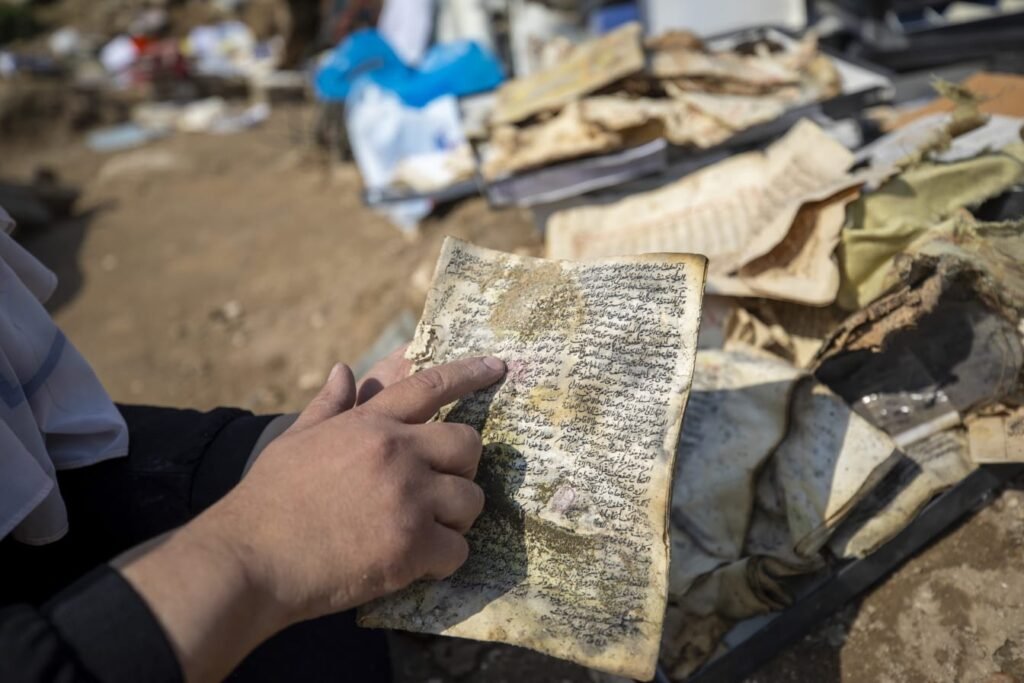
For Fatima Abdullah, the haunting scenes from al-Batsh cemetery in eastern Gaza City remain impossible to forget. This week, Israeli military bulldozers tore through the burial ground in the Tuffah neighborhood while searching for the body of the last Israeli captive, leaving behind shattered graves, scattered bones, and devastated families.
Among the thousands buried there lies Fatima’s husband, Mohammad al-Shaarawi, who was killed in an Israeli drone strike in December 2024. As Israeli forces advanced toward the cemetery, fear overwhelmed her.
“We were terrified,” she told Al Jazeera. “We knew they were excavating the cemetery, and every family feared it would be their loved one’s grave next. I kept imagining the machines approaching my husband’s grave and begging God to stop it.”
Fatima, a mother of three, described the excavation as an assault on the last fragments of dignity left to Gaza’s families. “Even the dead were not spared. They bulldozed graves, scattered remains, threw bones into bags, as if these were nothing.”
During the operation, Israeli forces reportedly excavated around 250 graves in a matter of hours using heavy machinery. Aerial images show widespread destruction, uprooted tombstones, and irreversible alterations to the cemetery’s layout.
Before the war, Fatima regularly visited her husband’s grave with their children. “They didn’t feel sadness there , they felt they were visiting their father,” she said. But following mass displacement and military offensives, access became impossible. Even after the ceasefire, the cemetery remains near a militarized zone, preventing families from returning.
“No one knows what they took, what they returned ,,or if anything was returned at all,” she said. “We were denied the chance to mourn properly, and now they’ve taken away even the graves of our loved ones.”
A Pattern of Systematic Desecration
Human rights organizations say this destruction is part of a broader Israeli pattern. The Euro-Med Human Rights Monitor reports that Israeli forces have damaged or destroyed at least 21 of Gaza’s 60 cemeteries, exhuming remains, mixing bodies, and leaving countless families in anguish over the fate of their relatives.
Historic cemeteries, including Gaza’s War Cemetery that contains graves of British and Commonwealth soldiers from World Wars I and II, have also suffered extensive damage. Similar destruction has been documented in Deir al-Balah and Rafah.
Earlier this month, Euro-Med called for urgent international intervention to halt Israel’s large-scale land destruction in Rafah and to allow forensic teams access to recover bodies and ensure dignified burials. Hamas condemned the mass grave excavations, calling them “illegal and unethical acts that reveal the collapse of international accountability.”
Buried Without Farewell
For Madeline Shuqayleh, the devastation reopened unbearable wounds. Her sister Maram and four-month-old niece Yumna were killed in an Israeli strike in October 2023 and buried in al-Batsh cemetery.
“It took tremendous effort to find her grave,” she said. “When we finally saw it, the pain was overwhelming, but at least we had a place to grieve.” Now, she does not know whether their remains still rest there. “They took that from us too , as if they killed her all over again.”
The family remains unaware of whether the graves were restored or the bodies returned.
‘My Father Has No Grave Today’
Rola Abu Seedo shares a similar tragedy. Her father died in April 2024 after months of medical deprivation under siege. He was buried in a temporary cemetery near al-Shifa Hospital, with the hope of later relocation. But Israeli bulldozers later flattened the area.
“When relatives returned, they couldn’t find his grave. Everything had been erased,” she said.
Despite forensic search efforts, her father’s remains were never recovered. “We don’t know if they took the bodies, mixed them, or relocated them. My father has no grave today.”
A War Against Memory and Dignity
Beyond physical destruction, the desecration of cemeteries strikes at the heart of Gaza’s collective identity. By erasing burial sites, families are denied closure, remembrance, and the basic human right to mourn.
This systematic violation of the sanctity of the dead represents one of the darkest dimensions of the Gaza war , an assault not only on life, but on memory, dignity, and humanity itself.