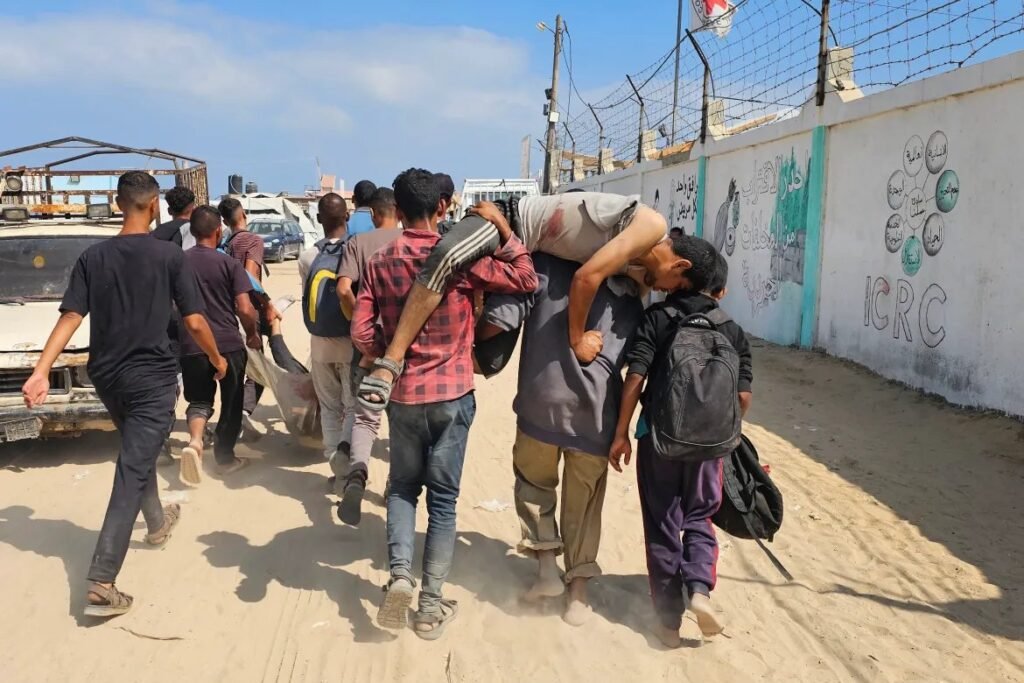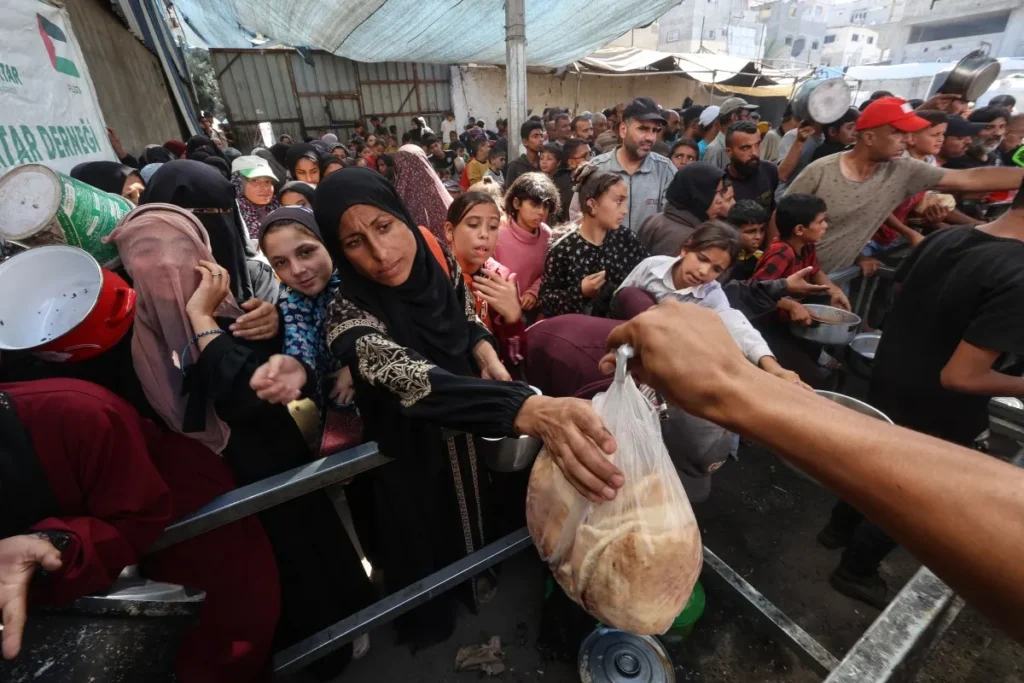
Gaza Herald _The humanitarian reality in the Gaza Strip remains catastrophic in the aftermath of Israel’s genocidal war, with destruction extending across every aspect of civilian life. More than two million Palestinians continue to endure displacement, hunger, disease, and the collapse of essential services, while uncertainty surrounds Gaza’s political and administrative future.
According to Dr. Ramy Abdu, Chairman of the Euro-Med Human Rights Monitor, this reality requires far more than statements of concern or administrative reshuffling. What is needed, he stresses, is collective responsibility and concrete action that places civilian protection and human dignity at the center of any proposed governance framework for Gaza.
Speaking to Gaza Herald, Abdu argues that anybody claiming authority over Gaza, including the recently announced National Committee for the Administration of the Gaza Strip, must operate within clear humanitarian priorities, foremost among them the protection of civilians and the safeguarding of their basic rights, particularly the right to life and dignity.
Civilian Protection as the Central Priority
At this stage, Abdu emphasizes, the issue is not political competition but survival. He stresses that ensuring civilian safety must take precedence over all other considerations, warning against turning governance structures into instruments that manage suffering rather than alleviate it.
He emphasizes the importance of ensuring the unimpeded delivery of humanitarian assistance without discrimination or exclusion. This includes food, safe drinking water, emergency healthcare, and access to dignified shelter. These rights, he notes, are non-negotiable and must not be subordinated to political agendas or security calculations.
Shelter Crisis and the Failure of Temporary Solutions
One of the most urgent challenges facing Gaza’s population is the shelter crisis. With nearly two million people displaced, many are still living in torn and unsafe tents that offer no protection from weather or disease.
Abdu stresses that tents cannot be treated as a viable long-term solution. Instead, he calls for the organization of temporary housing that respects basic standards of human dignity, such as caravans and structured shelter systems, alongside transparent and credible reconstruction plans. Without this, displacement risks becoming permanent, deepening both physical suffering and psychological trauma.
Concerns Over Multiple Councils and Trusteeship Models
Abdu expresses serious concern over the proliferation of councils, committees, and administrative bodies proposed for Gaza, many of which resemble systems of external guardianship rather than genuine Palestinian self-administration.
He warns that the lack of clarity surrounding the mandates, authority, and reference frameworks of these bodies creates confusion and opens the door to arrangements that may conflict with Palestinian national interests. In his view, the current landscape risks reproducing models of control rather than enabling recovery and self-determination.
Gaza Remains an Occupied Territory
Despite international discussions and United Nations mandates, Abdu stresses that Gaza remains an occupied territory under international law. This legal reality places full responsibility on Israel as the occupying power, regardless of any new administrative or international frameworks introduced.
He argues that international involvement must not be used to normalize the occupation or shift Israel’s legal obligations onto Palestinian bodies or international committees. Instead, mediators and international actors must uphold their legal and moral duties by enforcing international humanitarian law and human rights conventions.
From Crisis Management to Accountability
Abdu criticizes the international community’s continued reliance on crisis management and political statements, arguing that such approaches have failed to prevent recurring atrocities. What is required, he says, is real and measurable pressure to ensure an immediate and sustained halt to Israeli military aggression.
This includes the unconditional opening of all crossings to allow the regular flow of humanitarian aid, shelter materials, and reconstruction supplies. Equally important is a shift toward accountability, through activating international mechanisms to hold perpetrators of grave violations responsible and end the culture of impunity.
Rejecting External Guardianship and Political Engineering
Abdu firmly rejects any framework that places Gaza under external guardianship or denies Palestinians their right to self-determination. He warns that administrative models imposed from outside, regardless of their stated intentions, risk entrenching control rather than resolving the root causes of the crisis.
He emphasizes that the occupation itself remains the core problem. Without addressing it, all proposed governance structures will amount to temporary arrangements that manage devastation instead of ending it.
Conditions for Any Credible Administration in Gaza
For any administrative body to function credibly, Abdu stresses the need for full independence from external political agendas. Such a body must operate solely in accordance with Palestinian interests, free from discrimination, exclusion, or political instrumentalization.
He further underscores the importance of providing sufficient financial and humanitarian resources to ensure meaningful responses to urgent needs, without transforming administrative bodies into tools that legitimize the status quo or absolve the occupying power of its responsibilities.
A Call for Genuine International Will
Abdu concludes that rescuing Gaza from its deepening humanitarian catastrophe requires genuine international political will, one that prioritizes human life and rights over narrow geopolitical interests.
Without such commitment, he warns, all newly announced councils, committees, and plans will remain hollow structures, incapable of delivering justice, dignity, or real protection to a population that has already endured unprecedented suffering.