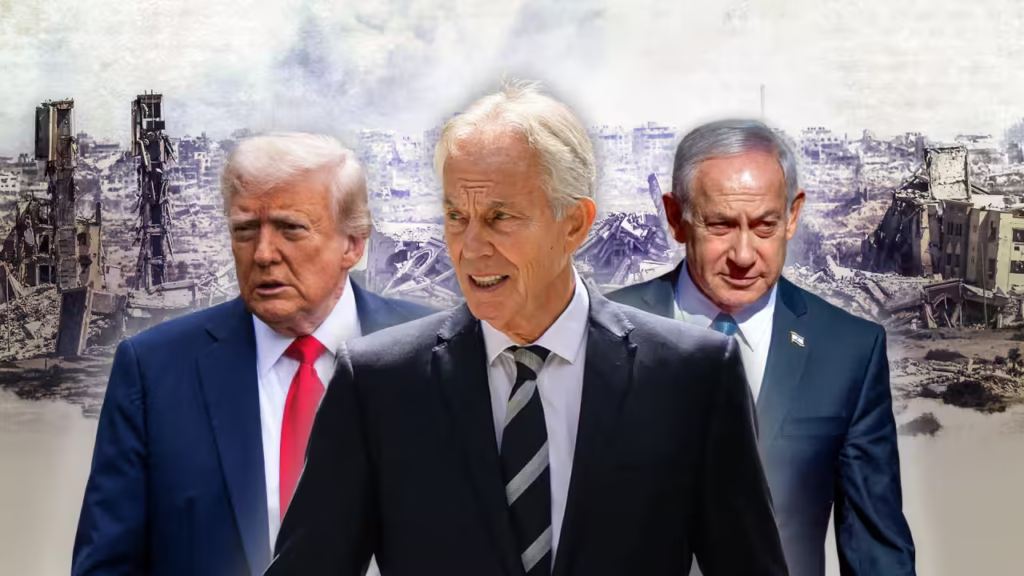
Gaza Herald_Tony Blair’s appointment to Donald Trump’s so-called “Board of Peace” for Gaza has sparked widespread controversy because of his record, his political legacy in the Middle East, and the nature of the plans now associated with Gaza’s future.
Blair is best known in the region for his role as British prime minister during the 2003 US-led invasion and occupation of Iraq, a war launched based on false claims about weapons of mass destruction. That invasion led to the deaths of hundreds of thousands of Iraqis and the long-term destabilization of the country. As a result, Blair is viewed by many across the Arab world , and by significant segments of the British public, as a symbol of Western military interventionism, with critics often describing him as a “war criminal” who has never been held accountable.
Since leaving office, Blair has remained politically active through the Tony Blair Institute for Global Change (TBI). The institute has faced sustained criticism for advising and working with authoritarian and hardline governments, with opponents accusing it of helping to rehabilitate their international reputations while ignoring human rights abuses. This record has raised deep skepticism about Blair’s suitability to play any role in post-war governance or reconstruction efforts, particularly in a context as sensitive as Gaza.
The controversy has intensified following reports linking TBI to Israeli-backed proposals for Gaza’s future. According to reporting by the Financial Times, the institute was connected to a private plan that envisioned transforming Gaza into a commercial and tourism hub, described in internal documents as a “Trump Riviera.” The proposal, reportedly supported by Israeli businessmen and the Boston Consulting Group, framed Gaza’s reconstruction in economic terms while largely sidelining Palestinian political rights and self-determination.
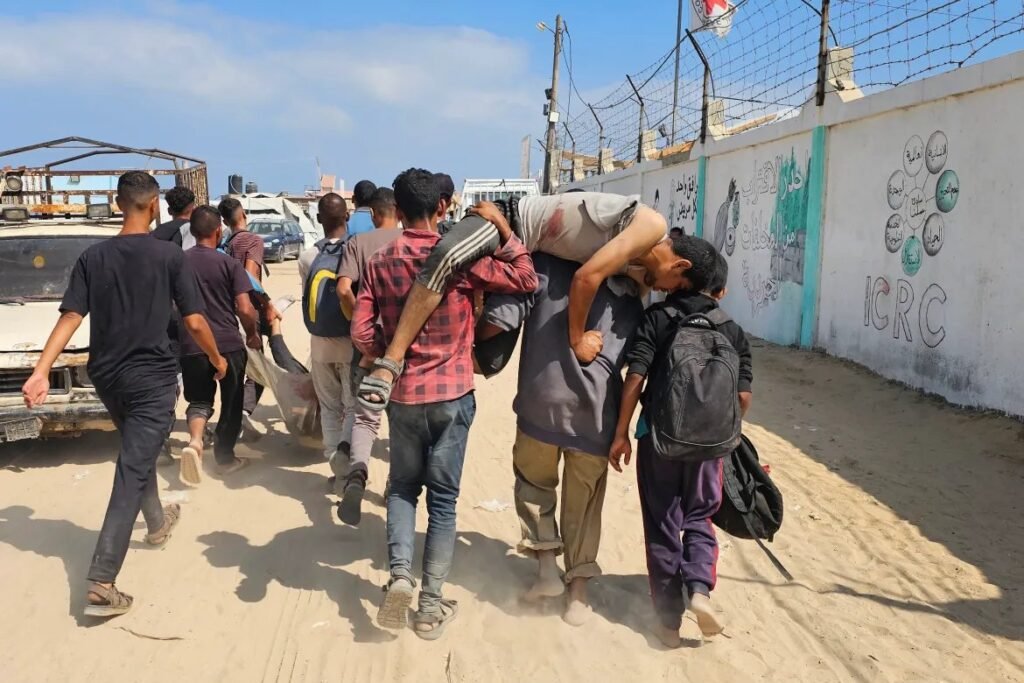
Most alarming to critics, the plan included mechanisms that could incentivize or facilitate the relocation of Palestinians out of Gaza. Human rights advocates and Palestinian groups warn that such ideas risk legitimizing ethnic cleansing under the language of “reconstruction” and “development,” particularly in the aftermath of mass displacement caused by Israel’s military assault.
For many Palestinians and observers, Blair’s appointment reinforces fears that Gaza’s future is being shaped by figures associated with past wars, neoliberal redevelopment schemes, and Western intervention, rather than by the people of Gaza themselves. In this context, his role on a Gaza “peace” board is seen not as a step toward justice or accountability, but as part of a broader attempt to impose externally driven solutions that ignore the root causes of the conflict and the rights of Palestinians.