Gaza Herald_ The announcement of the formation of a so-called “Peace Council” to oversee the administration of the Gaza Strip has sparked widespread anger and rejection among Palestinians, amid growing fears that it represents a new form of external guardianship imposed under the guise of ceasefire and reconstruction. For many, the move does not signal a genuine path toward peace as much as it revives failed historical models of international trusteeship that have consistently ignored the core of the Palestinian cause: the right to self-determination and rejection of foreign rule.
The Peace Council is being presented as an international framework to manage the post-war phase in Gaza, as part of what the United States calls the “second phase” of the ceasefire plan. This phase is framed around a transition from de-escalation to disarmament, technocratic governance, and reconstruction. Yet analysts argue that the proposed model shifts Gaza from direct military assault into a different form of political and security control, without offering any real guarantees of ending the occupation or halting the genocide in its various forms.
Hidden Trusteeship Poses Strategic Risks, Analysts Warn
Political researcher Ahmed Tannani describes the initiative as the creation of a “Friends of Israel Club,” misleadingly branded as a Peace Council. He argues that the council’s composition and underlying agenda require Palestinians, across political lines, to exercise heightened vigilance in confronting the strategic dangers embedded in Trump’s twenty-point plan. According to Tannani, the plan did not truly end the war but rather moved it into a new phase, while Israel’s war objectives remain firmly in place.
Tannani stresses that what is needed nationally is maximum tactical flexibility without compromising core strategic principles, foremost among them the land and the Palestinian people’s right to remain on it. He warns against the dangers of internationalizing Gaza, removing it from the Palestinian political system, or opening the door to displacement, while simultaneously emphasizing the necessity of preserving the ceasefire and preventing a return to full-scale war. The current agreement, he argues, must be transformed into a serious framework to end the genocide and defeat Israel’s war goals.
Writer and political analyst Yasser Al-Zaatra goes further, describing the development as an explicit declaration of a new colonial administration over Gaza. He notes that the creation of a Peace Council, alongside an executive council and the appointment of a figure resembling a “High Commissioner,” recalls the British Mandate—this time in a contemporary American form. Al-Zaatra views this model as part of a broader process aimed at liquidating the Palestinian cause through the imposition of “economic peace,” disarming the resistance, and politically and securitarily reengineering the region in Israel’s favor.
He raises pointed questions about Gaza’s future in the minds of the U.S. administration and its allies: Is it the so-called “Riviera” project? Permanent occupation in a new guise? The division of Gaza into fragmented zones? Or the promotion of displacement? These questions, he argues, remain unanswered as long as Israeli Prime Minister Benjamin Netanyahu continues to serve as the ultimate reference point for such plans.
Saeed Ziad similarly argues that the Peace Council announcement cannot be separated from a direct American trusteeship over Gaza. He notes that nearly all council members are American figures, with minimal exceptions, reflecting a renewed colonial round imposed on the Strip under the banner of international administration.
Gaza’s Reality: A Ceasefire Without Peace
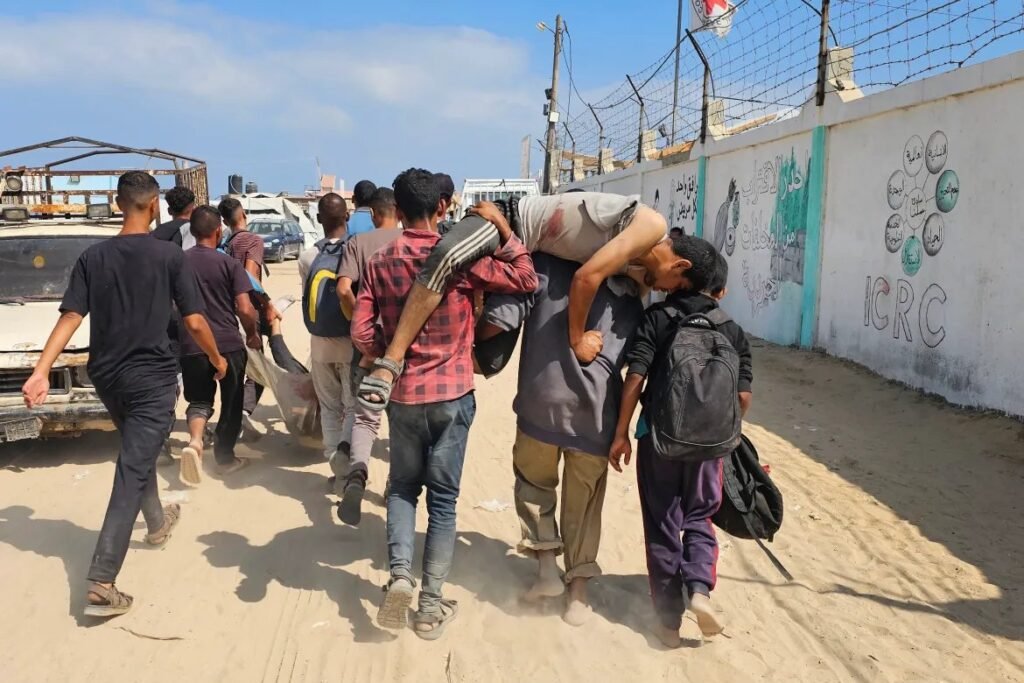
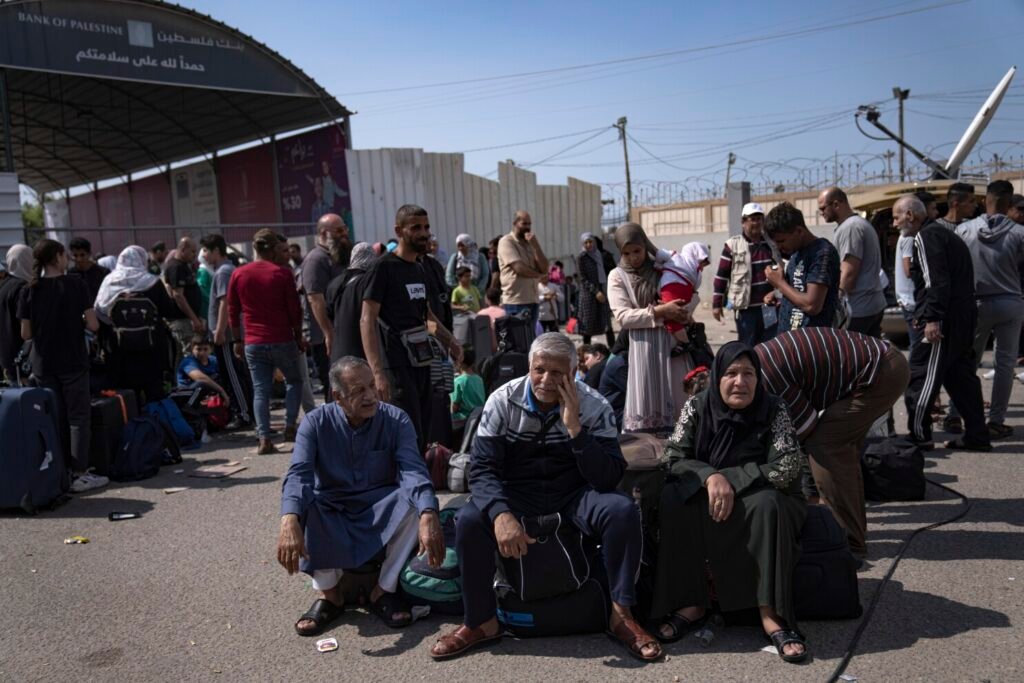
On the ground, talk of peace appears detached from lived reality. Despite a ceasefire announced on October 10, Israel has continued to carry out intermittent attacks, killing more than 442 Palestinians over the past three months alone. Daily life in Gaza remains dominated by siege, displacement, the collapse of basic services, and a pervasive sense that meaningful improvement is nowhere in sight.
For Sami Al-Balousha, a 30-year-old computer programmer from Gaza City, peace is not a political agreement signed in distant meeting rooms, but material security and a predictable daily routine. “Peace is being able to sleep at night knowing you will wake up alive, not dead,” he says. “It’s going to work in the morning, and being confident you will return home safely.” Sami and his family have been displaced seventeen times during the past two years, leaving him unable to plan for the future and focused solely on surviving the present.
“I don’t feel that we are part of international decision-making circles,” he adds. “Those who plan Gaza’s future do not truly understand the needs of the people here, nor do they listen to us seriously.” This sense of exclusion reflects a deep disconnect between international proposals and the realities faced by Gaza’s population.
Excluding Palestinians and Reproducing Control
One of the most significant criticisms of the proposed governance model is that, despite including a Palestinian technocratic committee to manage daily affairs, real authority would remain in the hands of the international Peace Council. Maha Husseini of the Euro-Mediterranean Human Rights Monitor warns that decision-making without genuine participation from those most affected merely reproduces the power structures that enabled occupation in the first place, turning reconstruction into a tool of control rather than recovery.
Husseini emphasizes that peace cannot be reduced to a temporary truce or technocratic management, especially after a war that has killed tens of thousands, estimates place the death toll at around 71,400, and devastated vast areas of the Strip. True peace, she argues, requires justice, accountability, an end to collective punishment, and the restoration of victims’ rights. Without justice, any so-called peace will remain a fragile arrangement built atop unaddressed crimes.
Between Exhaustion and Rejection
Journalist and writer Arwa Ashour from Gaza describes a population deeply exhausted, yet unwilling to accept imposed guardianship. “People want their lives back: schools, hospitals, the ability to travel, a normal life,” she says. Any council or administration that cannot lift the siege, stop Israeli attacks, and restore dignity, she adds, will be meaningless to people on the ground.
In closing, Rami Abdu, chairman of the Euro-Mediterranean Human Rights Monitor, asserts that this bleak moment will not be the final chapter. “The Palestinian people are free and dignified, and they do not accept guardianship,” he says, stressing that no matter how many tools of subjugation are deployed, they will fail in the face of Palestinian resilience.
Ultimately, Gaza’s anger at the Peace Council announcement does not stem from a rejection of peace itself, but from a rejection of externally imposed control that excludes justice and genuine participation. Without ending the occupation, ensuring dignity, and allowing Palestinians to shape their own future, international councils will remain political facades, unable to change the reality of domination or stop Gaza’s ongoing bleeding.