Gaza Herald _ Talks on the second phase of the United States–led Gaza ceasefire plan are underway in Cairo, as Hamas leaders and representatives of other Palestinian factions meet with regional and international mediators amid a fragile truce repeatedly violated by Israel. While diplomatic efforts are framed as a step toward stability and reconstruction, realities on the ground in Gaza continue to reflect occupation, humanitarian collapse, and deep political uncertainty over the future of the besieged enclave.
Hamas announced its conditional support for the establishment of a 15-member Palestinian technocratic committee tasked with administering Gaza during a transitional period. The body would operate under the supervision of a so-called “Board of Peace,” expected to be chaired by US President Donald Trump. Senior Hamas official Bassem Naim described the move as “a step in the right direction,” arguing that it could help consolidate the ceasefire, prevent a return to war, address the catastrophic humanitarian situation, and lay the groundwork for reconstruction.
Despite this apparent consensus, fundamental disagreements persist—most notably over disarmament, Israeli withdrawal, and governance. Taher al-Nunu, adviser to the head of Hamas’s political bureau, said discussions in Cairo are focused on reopening the Rafah crossing, allowing the entry of humanitarian aid currently blocked on the Egyptian side, and securing a full Israeli withdrawal from Gaza. He accused Israel of deliberately attempting to derail the ceasefire while stressing that Hamas is working with mediators to restore calm and normal life in the Strip.
Israeli positions, however, signal little willingness to withdraw fully. Israeli media reported that officials consider the so-called “yellow line,” a buffer zone in eastern Gaza, a strategic area that will remain under Israeli control. Israeli forces currently occupy more than 50 percent of Gaza, undermining ceasefire commitments and casting doubt on any meaningful transfer of authority.
The proposed technocratic committee, expected to be chaired by former Palestinian Authority (PA) official Ali Shaath, would provide public services to Gaza’s more than two million residents. Shaath said the body would be fully integrated with the Palestinian Authority under a “one homeland, one system” framework, with no foreign members and no coordination with Palestinian armed groups. Its authority would expand gradually as Israeli forces withdraw.
Reconstruction plans outlined by Shaath include emergency shelter within six months, repair of desalination plants to restore drinking water, and the rehabilitation of schools and universities. Debris removal, estimated to take nearly three years, would be funded through a World Bank–managed reconstruction fund backed by Arab and international donors. The United Nations estimates total reconstruction costs at more than $50 billion, with limited funding pledged so far.
The United States formally announced the launch of phase two of its Gaza plan this week. Trump’s special envoy Steve Witkoff said the phase aims to establish a transitional technocratic administration and initiate the “full demilitarisation of Gaza,” explicitly calling for the disarmament of Hamas and other armed groups. Witkoff suggested that future talks would involve incentives and potential amnesty programs if Hamas agrees to disarm—while notably omitting any commitment to Israeli withdrawal or unrestricted humanitarian access.
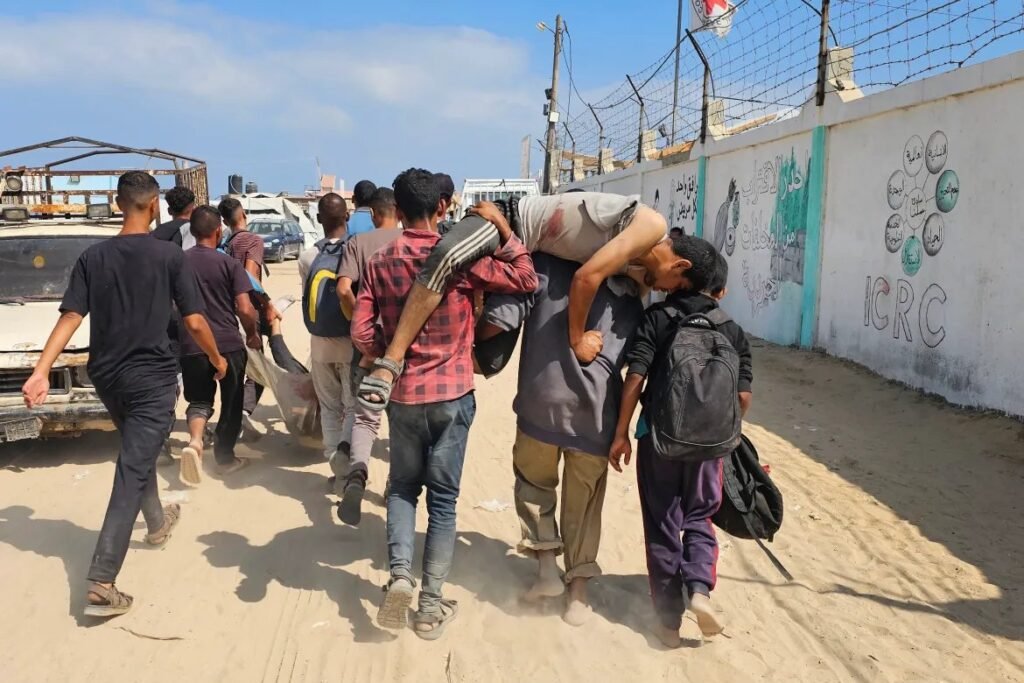
On the ground, conditions remain dire. Al Jazeera correspondents in Gaza report continued Israeli drone activity, explosions from demolitions, and severe shortages of aid. Despite US claims of “historic humanitarian assistance,” journalists and humanitarian agencies confirm that aid levels have never reached agreed minimums, while most of Gaza’s population remains homeless and fully dependent on relief that continues to be restricted.
Political analysts warn that the ceasefire framework is structurally imbalanced. Al Jazeera’s Marwan Bishara described the deal as “rigged,” arguing that US-sponsored peace efforts have consistently favored Israel while placing disproportionate pressure on Palestinians, even amid ongoing occupation and military aggression.
As negotiations continue, Gaza stands at a crossroads. While diplomatic initiatives promise governance reform and reconstruction, the absence of guarantees on Israeli withdrawal, civilian protection, and humanitarian access threatens to reduce the second phase of the ceasefire to another political process disconnected from the lived reality of Palestinians. Without accountability, enforcement, and a genuine end to occupation, efforts billed as a path to peace risk becoming yet another chapter in Gaza’s prolonged cycle of war, deprivation, and broken promises.