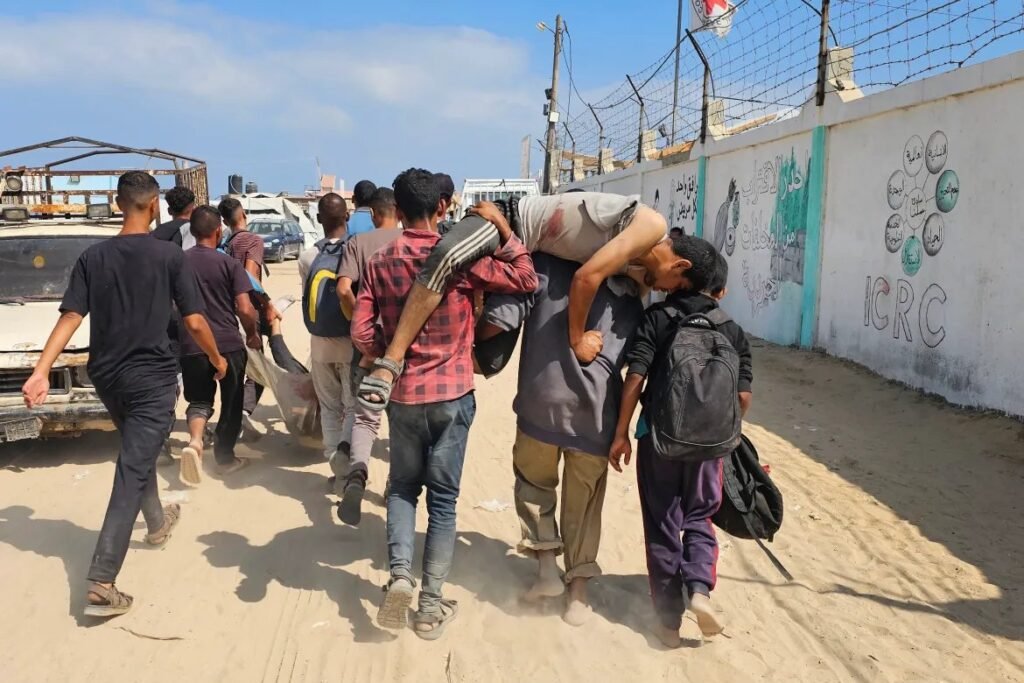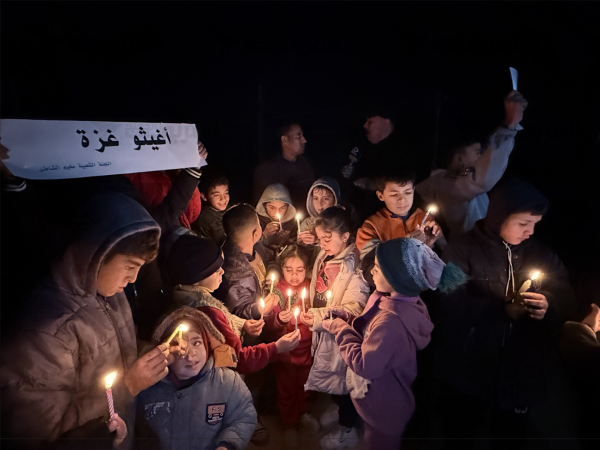
Gaza Herald _Israel’s assault on the Gaza Strip has overturned every known benchmark of modern warfare. Within an extremely confined and besieged territory, mass killing, large-scale destruction, deliberate starvation, and forced displacement have been unleashed with an intensity rarely witnessed in contemporary conflicts. Over the course of two continuous years, Gaza was subjected to relentless firepower, producing devastation on a scale that defies comparison. This is how Rony Brauman, former president of Médecins Sans Frontières (Doctors Without Borders), describes the reality in Gaza, speaking nearly four months after a ceasefire formally came into effect.
A Voice Shaped by Decades of Humanitarian Experience
Brauman’s assessment carries exceptional credibility. He speaks not as a distant observer, but as a physician and humanitarian who has been actively involved in crisis response since 1977. For almost five decades, he has worked in some of the world’s most severe humanitarian emergencies, particularly those marked by mass displacement and armed conflict. His field missions span continents, from Ethiopia and Sudan to Pakistan, Honduras, India, Thailand, Djibouti, Cambodia, Rwanda, Chad, and Uganda, among many others. This extensive history alone underscores the gravity of his conclusions about Gaza.
Leadership, Scholarship, and Global Influence
Between 1982 and 1994, Brauman served as president of Doctors Without Borders, helping shape one of the most influential humanitarian organizations in the world. Beyond operational leadership, he has also contributed extensively to academic and intellectual debates on humanitarianism. He has taught at the Humanitarian and Conflict Response Institute at the University of Manchester and at the Paris Institute of Political Studies (Sciences Po). His published works, including Humanitarian Wars? Lies and Deception, Humanitarian Medicine, Thinking in Emergencies, and Health Utopia are widely regarded as foundational texts in understanding the ethical, political, and practical limits of humanitarian action.
Rethinking Humanitarianism After Gaza
This long and intense career has positioned Brauman as one of the most authoritative figures in global humanitarian thought. Against this backdrop, Gaza Herald spoke with him in Paris to reflect on what Israel’s war on Gaza has revealed about the current humanitarian system. The conversation sought to confront uncomfortable questions: Where do the limits of humanitarian action truly lie? Can humanitarian work ever be separated from politics? Is neutrality still possible, or even ethical, under conditions of mass atrocity? And what future awaits humanitarian funding and access in an increasingly politicized global order?
Israel’s Ban on Humanitarian Organizations
Israel’s announcement that it will prohibit humanitarian activities in Gaza for 37 international non-governmental organizations marks a turning point. Brauman explains that many humanitarian workers had long suspected this outcome. For years, Israeli authorities repeatedly threatened to block their work, while hundreds of humanitarian staff members have already been killed in Gaza. In this sense, the decision did not come as a shock.
Yet predictability does not diminish its gravity. Brauman describes the ban as both shameful and scandalous. It signals that humanitarian actors will only be tolerated if they align themselves with Israeli policies, remain silent about the crimes they witness, and operate strictly within the boundaries imposed by Israeli authorities. In effect, Israel seeks to turn humanitarian work into a tool subordinate to its political and military objectives, objectives that aim to wear down, suffocate, and exhaust the Palestinian population. This, Brauman stresses, is the complete inversion of humanitarian principles.
Global Silence and Political Failure
Equally disturbing, according to Brauman, has been the feeble international response. European governments, where many of the targeted organizations are headquartered, have reacted with notable weakness. Meanwhile, the Arab world has failed to mount meaningful political or practical support for Palestinians facing collective punishment and the systematic dismantling of humanitarian assistance.
Is There Any Way Around the Ban?
When asked whether humanitarian organizations can bypass Israel’s restrictions, Brauman’s answer is unequivocal. There is no viable workaround. Israel maintains full military control over the occupied Palestinian territories, and every movement of people, goods, or aid requires Israeli authorization. Humanitarian access is not merely restricted but deliberately obstructed. Under these conditions, Brauman concludes, the continuation of genuine humanitarian action in Gaza and the wider Palestinian territories has become virtually impossible.
In Gaza, he argues, the destruction of humanitarian space is not a byproduct of war; it is part of the war itself.