
Gaza Herald_ The first time the man who would later become my husband told me he loved me, I was riding in an ambulance headed toward a site where Israeli forces had just attacked in the occupied West Bank. He had sent a voice message. Amid the chaos, I replayed it over and over, trying to catch whether he had really said the words at the end.
The siren screamed as my colleagues argued about which roads were still open and whether we could even reach al-Arroub Refugee Camp. I was momentarily absorbed in that private, tender moment until the burning sensation hit my throat and eyes. Tear gas.
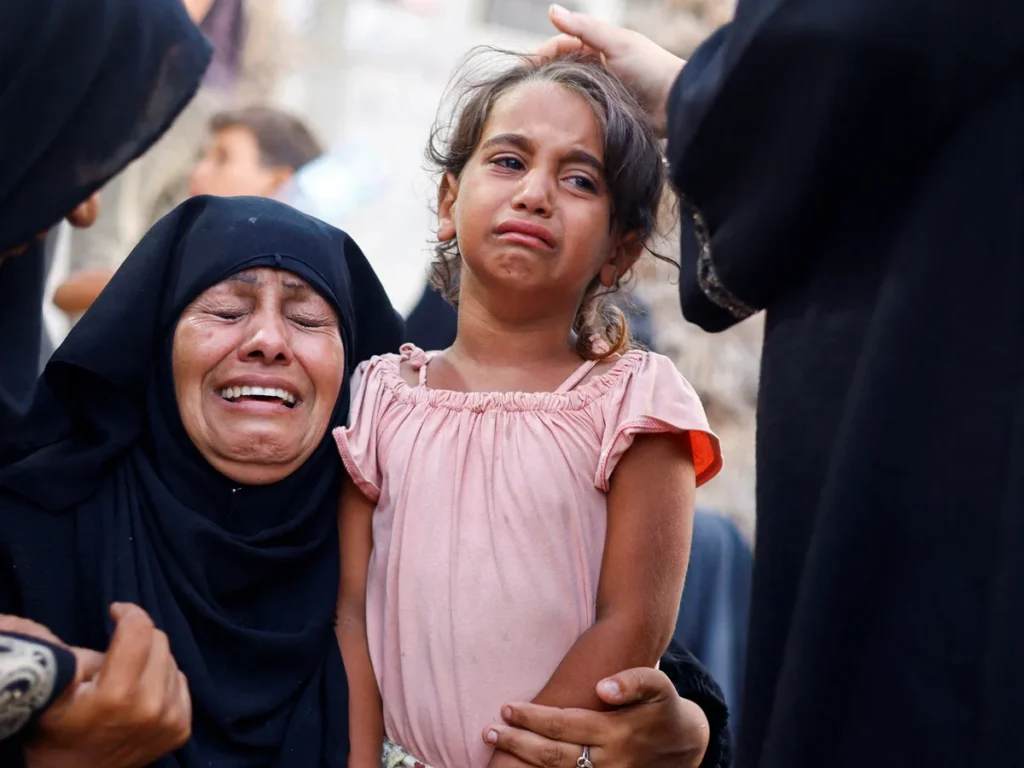
When we opened the ambulance doors, we expected panic. Instead, women stood quietly outside, tears streaming from their eyes, their faces calm. No screaming. No shock. This was familiar to them.
That moment revealed something essential: in Palestine, even the most intimate experiences are never separate from violence. Love, birth, and grief all unfold inside an imposed reality of force.
The abnormal becomes routine. Even I, traveling toward danger, had briefly slipped into the softness of ordinary life. Palestinian women do not have that luxury for long.
Healthcare Under Military Control
I have traveled regularly to the West Bank since 2003. One memory from the Second Intifada remains etched in my mind.
An ambulance was stopped at a checkpoint. Roads were sealed. Women, children, and elderly people waited outside Bethlehem, stranded. We watched as soldiers denied passage to an ambulance carrying a woman in urgent need of care. The vehicle eventually turned away, searching for another hospital.
Moments later, a military jeep arrived. Soldiers ordered everyone to scatter on foot into unmarked terrain.
That was when I fully grasped how healthcare in Palestine is subordinated to military authority , and how quickly daily life can turn deadly.
Violence against Palestinian mothers does not occur only through bombs. It follows their children everywhere: on the way to school, during night raids, at checkpoints, inside prisons, even while they should be sleeping safely at home.
Since 1967, tens of thousands of Palestinian children have been detained under military law. Before October 2023, around 170 children were imprisoned. Since then, more than 1,300 have been arbitrarily arrested, with hundreds still held today.
Each absence fractures a family. These losses cannot be captured by statistics alone.
Motherhood as a Site of Violence
While this reality harms people of all genders, the violence inflicted on children is a uniquely devastating form of gendered harm for mothers. It attacks not only bodies, but identities, bonds, and emotional worlds.
This reflects a broader system that treats Palestinian women as reproductive instruments while disregarding their humanity — their relationships, communities, and futures.
This is the context in which Palestinian women make decisions about pregnancy, birth, and survival.
Between 2000 and 2004, nearly 100 women were forced to give birth at checkpoints. At least 54 newborns died after soldiers delayed or denied passage. Long before the current assault, childbirth itself was already under military control.
Reproductive Genocide in Gaza
What is happening in Gaza today is far more severe.
Recent UN findings document the systematic destruction of reproductive healthcare, the obstruction of maternal and neonatal services, and the use of sexual violence. These actions align with the Genocide Convention’s prohibition against measures intended to prevent births within a targeted group.
“Reproductive genocide” may not be a formal legal category, but it accurately describes what is unfolding: the deliberate dismantling of a population’s ability to reproduce and survive.
Gaza’s main IVF facility has been destroyed, along with thousands of embryos. Maternity wards lie in ruins. Premature infants are dying due to power shortages. Caesarean surgeries are performed without anesthesia. More than 155,000 pregnant and breastfeeding women are being denied adequate care.
Hunger, dehydration, contaminated water, and constant displacement are driving miscarriages and stillbirths. These are not unfortunate side effects. They are foreseeable outcomes of policy.
The Silence Around Palestinian Women
Despite this, global campaigns against gender-based violence have largely excluded Palestinian women.
This omission is not accidental. Violence against Palestinian women is routinely stripped of its political context, treated as separate from occupation, siege, and military rule.
But in Palestine, gender-based violence is inseparable from political violence. It is embedded in checkpoints that block ambulances, bombs that level maternity wards, and policies that starve pregnant bodies.
Reproductive health is not a secondary concern. It is a frontline human rights issue — and its destruction is a clear marker of mass atrocity.
Beyond Resilience
In mobile clinics, I have worked alongside midwives who carry entire communities with almost nothing. Their courage is undeniable. But resilience should never be romanticized or demanded in place of rights.
If the international community is serious about ending gender-based violence, it must name what is happening in Gaza for what it is: a systematic attack on reproductive life. It must center Palestinian women’s voices and hold accountable those responsible for dismantling reproductive healthcare.
The right to give birth safely and to raise children in dignity is fundamental.
The fate of a people is inseparable from the fate of its women.
That moment in the ambulance, the instant shift from love to survival, is not exceptional. It is the daily theft of the ordinary. And the ordinary, too, is a right.
Until Palestinian women can live a day that is simply a day, free from occupation, colonization, and violence that fractures every moment, justice will remain unreachable.

