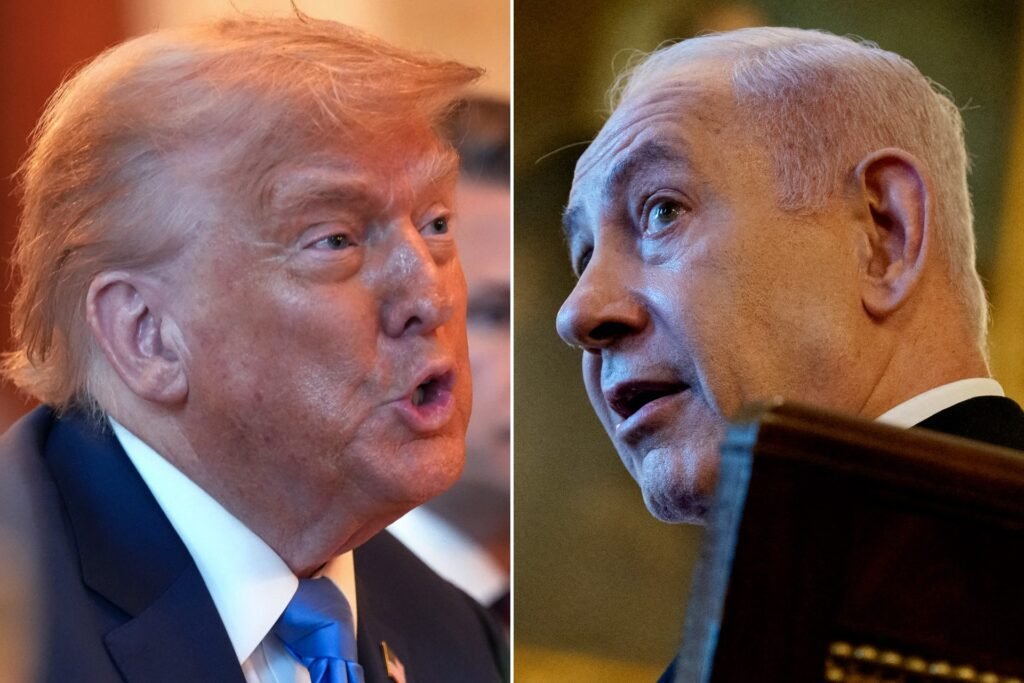
Gaza Herald _ The latest meeting between former U.S. President Donald Trump and Israeli Prime Minister Benjamin Netanyahu in Florida was presented as a diplomatic effort to advance the next phase of the Gaza ceasefire. In reality, it exposed once again the deep moral imbalance that defines U.S. policy toward Palestine. While Gaza lies in ruins after more than two years of devastating war, the discussion was dominated not by accountability, reconstruction, or Palestinian rights, but by threats, coercion, and unconditional political cover for Israel.
Trump’s insistence that Hamas must disarm as a precondition for moving to the second phase of the ceasefire ignores the basic context of occupation, siege, and mass civilian suffering. Disarmament is demanded of a population that has endured systematic destruction. At the same time, the occupying power, armed to the teeth and widely believed to possess an undeclared nuclear arsenal, faces no such conditions, no scrutiny, and no consequences.
Ignoring Reality on the Ground in Gaza
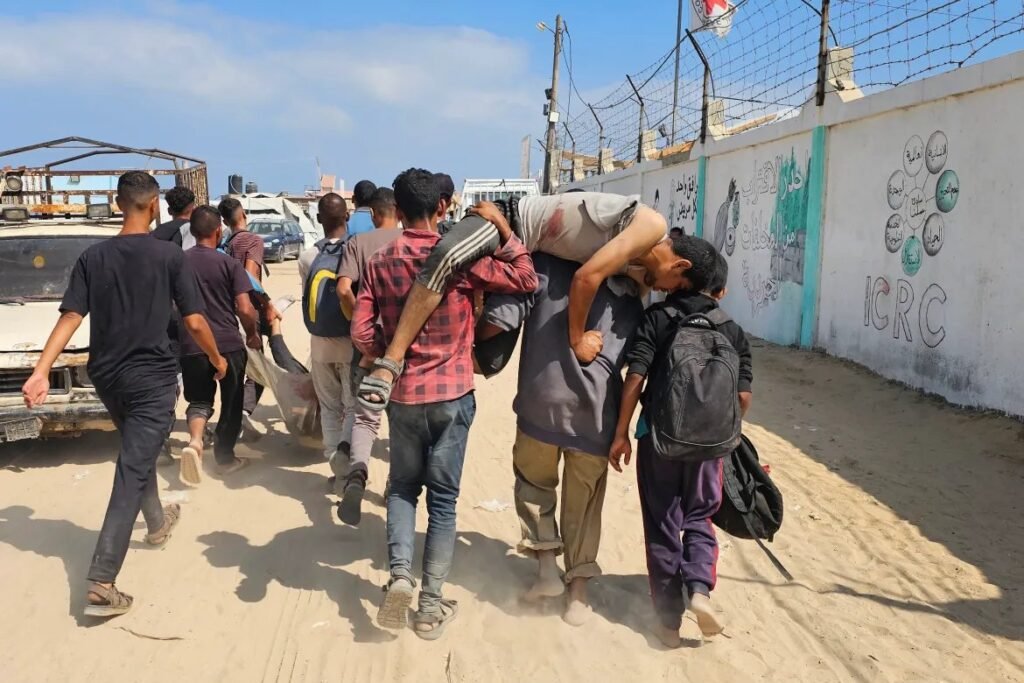
Trump’s claim that Israel is “living up to its commitments 100 percent” under the ceasefire borders on denialism. Since the ceasefire began in October, at least 414 Palestinians have been killed by Israeli fire, according to Gaza’s Health Ministry. Israel continues to restrict the entry of humanitarian aid, including tents and shelter materials, even as Palestinians freeze to death in flooded displacement camps amid winter storms.
These realities were absent from Trump’s remarks. Instead, near-daily ceasefire violations were dismissed, and Israel’s actions were framed as beyond reproach. This narrative effectively erases Palestinian suffering and reframes Israeli violence as a non-issue, no matter how lethal or continuous.
Reconstruction as Leverage, not a Right
Trump suggested that Gaza’s reconstruction could begin “soon,” but only after Hamas disarms. This framing turns basic human recovery, housing, infrastructure, water, and electricity into a bargaining chip rather than an obligation under international law. Reconstruction is not a reward to be granted at Israel’s discretion or conditioned on the political submission of an occupied people. It is a humanitarian necessity after the large-scale destruction of civilian life.
By tying reconstruction to disarmament, Washington reinforces collective punishment, effectively telling Palestinians that relief from devastation will come only after total capitulation.
A “Bromance” Built on Impunity
Overt displays of political intimacy between Trump and Netanyahu marked the Florida meeting. Praise flowed freely. Netanyahu was described as a “hero,” and Trump even floated the idea of a presidential pardon for the Israeli prime minister, who faces corruption charges at home. Netanyahu, in turn, announced that Trump would receive the Israel Prize, a move later disputed by Israel’s own president.
This spectacle of mutual admiration stands in stark contrast to the absence of accountability for Israel’s actions in Gaza. While international human rights groups document potential war crimes and collective punishment, the U.S. response remains unwavering support, military, diplomatic, and rhetorical.
Expanding the Threats: Iran, Lebanon, and Syria
Beyond Gaza, Trump’s rhetoric signaled a willingness to escalate violence across the region. He openly threatened renewed military action against Iran, framing U.S. airstrikes as the reason the Gaza ceasefire exists at all. He also left the door open to further Israeli aggression in Lebanon and spoke casually about Israeli-Syrian “understandings,” even as Israel expands its occupation in southern Syria and carries out raids and abductions.
This approach treats the Middle East not as a region of peoples with rights and sovereignty, but as a chessboard where force is the default solution and Israeli security concerns override all others.
Disarmament for Some, Silence for Others
Perhaps the most glaring contradiction in Trump’s position is the singular focus on Palestinian armed groups while ignoring Israel’s overwhelming military dominance. Hamas is threatened with annihilation if it refuses to disarm, yet Israel’s arsenal, occupation, and repeated violations of international law are never questioned. Iran is warned against missiles and nuclear ambitions, while Israel’s own nuclear capability remains a taboo subject.
This double standard is not accidental; it is the foundation of U.S. policy in the region.
Peace Without Justice Is Not Peace
The Trump-Netanyahu meeting did not advance the cause of peace. It reinforced a familiar reality: ceasefires are managed, not to end Palestinian suffering, but to control it. Gaza is offered survival, not freedom; reconstruction, not accountability; threats, not justice.
True peace will not come from forcing the oppressed to disarm while shielding the powerful from scrutiny. It will come only when Palestinian lives are valued as much as Israeli security narratives, when international law is applied equally, and when Gaza’s future is shaped by the rights and dignity of its people, not by ultimatums issued from luxury resorts in Florida.