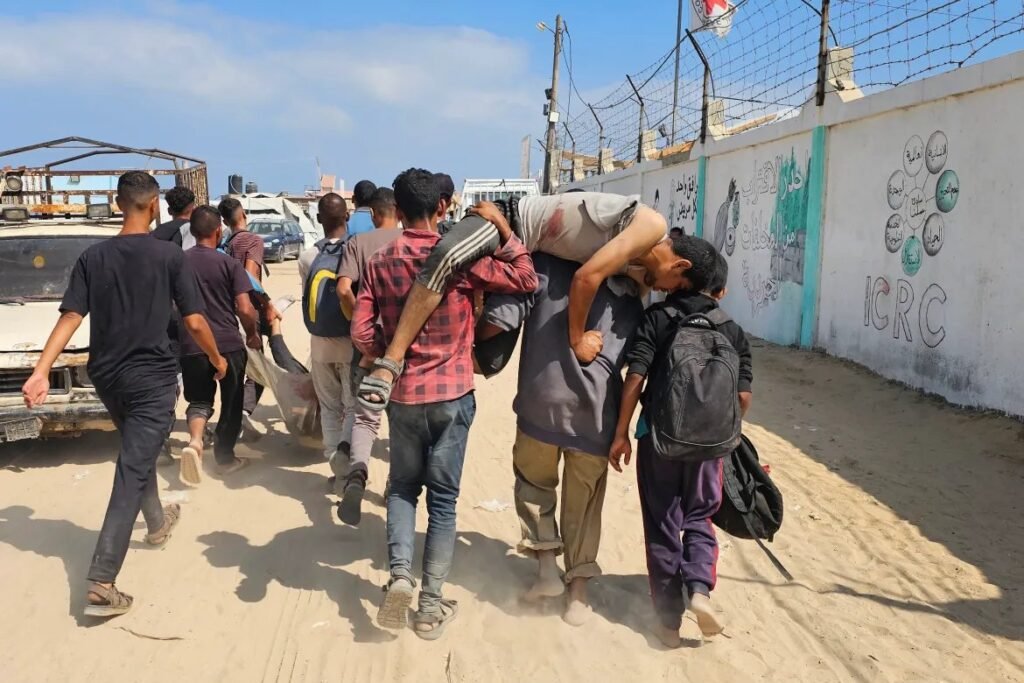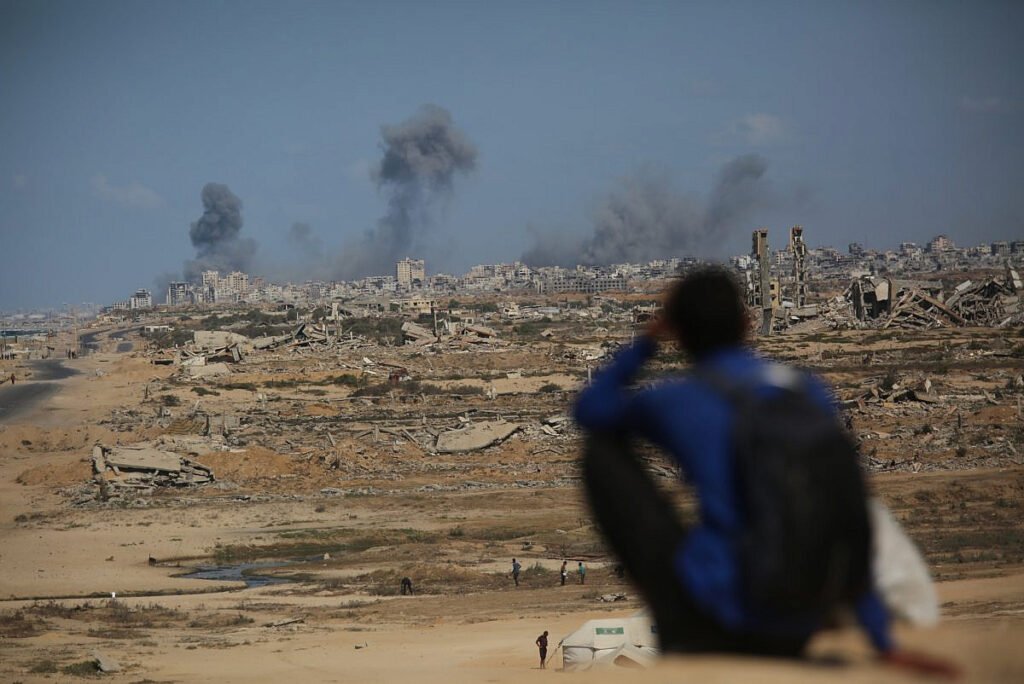
Gaza Herald _ A new policy analysis by the Palestinian Center for Political Studies concludes that the Gaza ceasefire has been systematically stripped of its meaning, transformed by Israel from a pathway to de-escalation into a calculated instrument for managing conflict while preserving occupation control.
Rather than halting the war, the center argues, Israel has treated the ceasefire as a tactical pause — a quieter phase of aggression marked by targeted assassinations, selective air strikes, limited incursions, and the deliberate obstruction of humanitarian aid. These actions, far from incidental, form a coherent strategy aimed at reshaping the agreement to impose unilateral obligations on Palestinians while shielding Israel from reciprocal commitments.
According to the paper, Israel’s understanding of “calm” does not imply an end to military confrontation. Instead, it represents a shift to low-visibility warfare that sustains intelligence dominance, prevents reconstruction, and blocks the Palestinian resistance from moving beyond survival toward recovery and reorganization.
The analysis highlights how Israeli violations function as leverage in negotiations, narrowing the ceasefire’s scope to issues such as prisoners and resistance arms, while systematically sidelining core provisions on withdrawal, the return of displaced civilians, and post-war reconstruction. This hollowing-out of the agreement, the center notes, is enabled by tacit US political backing and the absence of credible international enforcement mechanisms.
Internally, the paper situates this strategy within Israel’s domestic political crisis. Limited escalation, it argues, serves Prime Minister Benjamin Netanyahu by keeping security fears alive, deflecting attention from legal and political pressures, and preventing any outcome that could be framed as a defeat or concession to Palestinians.
The paper also examines the constraints facing Palestinian resistance factions and regional mediators, concluding that mediation efforts have increasingly shifted from conflict resolution to crisis containment. Without decisive American pressure, Arab and international actors remain unable to compel Israel to honor the agreement’s substantive commitments.
Looking ahead, the center outlines three possible trajectories: a conditional and fragile move to a second phase, a second phase emptied of its core obligations, or a complete breakdown that resets the ceasefire to zero. All three, it warns, risk entrenching a permanent condition of “no war and no peace,” leaving Gaza suspended in a state of managed devastation.
The Palestinian Center for Political Studies stresses that this assessment forms part of its broader effort to provide rigorous, field-informed analysis that exposes how ceasefire frameworks are being manipulated to sustain occupation, rather than end violence, in Gaza and across Palestine.