Gaza Herald- The use of sound as a weapon against Palestinians did not begin with the latest broadcast of Benjamin Netanyahu’s address. For years, Israel has relied on amplified audio, military acoustics, and engineered noise to intimidate, break morale, and instill fear among civilians across Gaza and beyond.
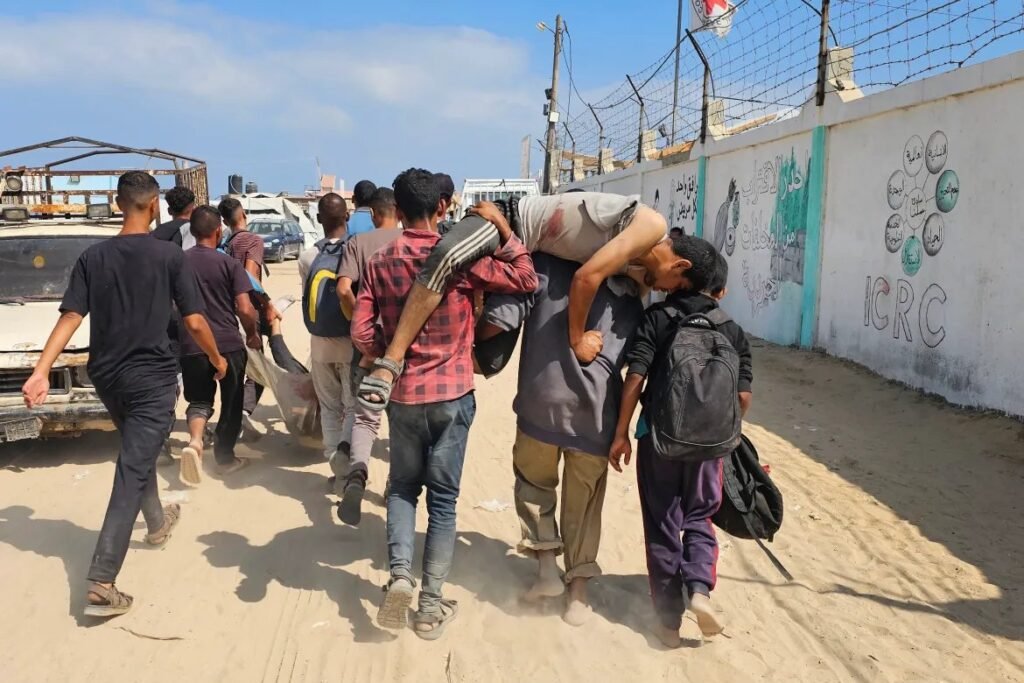
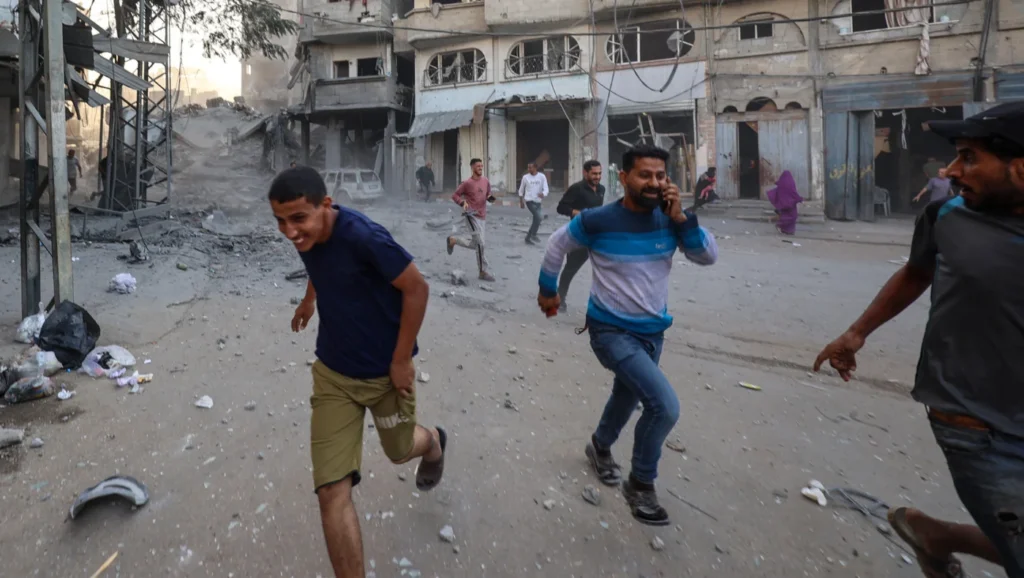
Across the past two years, Gaza’s population has endured an unending barrage of man-made noise: the thunder of bombs and missiles, the constant buzzing of surveillance drones, the crash of collapsing buildings, and the shrill of sirens. These sounds form the destructive soundtrack that UNICEF campaigns have highlighted repeatedly, a sonic world also captured in countless testimonies from Palestinians. Social media and journalists have recorded the voices of men, women, the elderly, and children, crying, screaming, calling out for lost loved ones, wandering through ruins, or racing through mangled hospital corridors. Mohamed Abo Dakka became one of these voices in October 2023 when he sobbed in front of cameras, recounting the killing of eight members of his family in a single strike. Other recordings reveal trapped survivors buried under debris, their cries documented by rescue teams and relatives. One video from November 2023 shows workers digging toward a girl pinned beneath a destroyed home. “Get me out of here … please get me out … I can’t move … why is this happening to us?” she pleads, a question that echoes the fate of the 2,700 Palestinian families wiped out entirely since October that year.
Voices of Grief and the Deafening Landscape of War
How can we listen to this soundscape of genocide with both critical attention and the urgency it demands?
On the morning of September 26, several armored Israeli vehicles moved toward Gaza’s boundary. Attached to them were towering stacks of black speakers as well as circular megaphone-style systems, equipment used to blast Netanyahu’s speech to the United Nations General Assembly. IDF soldiers later admitted that similar sound systems were also installed inside the bulldozed areas of Gaza itself, as part of what they called the “Shout/Scream Operation.”
This display came ten days into Israel’s newly intensified ground invasion. By then, Palestinians were already enduring every form of sensory assault: visible devastation, the physical strain of hunger and displacement, and the enforced exposure to the screams, explosions, and mechanical noise around them. The day of the broadcast alone saw at least 20 Palestinians killed in Israeli attacks by morning, a number that climbed to 60 by nightfall. A 17-year-old boy died of starvation in Al-Aqsa Martyrs Hospital that same day. Doctors Without Borders announced that it was shutting down several activities after its clinics became encircled by Israeli forces.
A Long History of Israel’s Acoustic Aggression
Israel’s use of sound for intimidation long predates this moment, targeting Palestinians in Gaza, the West Bank, and even civilians in Lebanon. “The Scream,” an acoustic weapon that deploys piercing frequencies designed to attack the vestibular system, causing dizziness, nausea, and disorientation, was used on Palestinian protesters as far back as 2005, years before it was turned on Israeli demonstrators.
In Sonic Warfare: Sound, Affect, and the Ecology of Fear (2012), musicologist Steve Goodman details how the Israeli Air Force used low-flying jets to produce “sound bombs” over Gaza, creating deafening sonic booms described by residents as equivalent to the shockwave of a massive explosion. Survivors reported shattered windows, severe ear pain, nosebleeds, panic attacks, insomnia, hypertension, and a lingering feeling of internal trembling.
The sonic dimension of Israel’s aggression has also become the focus of British-Jordanian artist Lawrence Abu Hamdan, who has documented the ongoing aerial violations of Lebanon’s airspace. His interactive database, AirPressure.info, records more than 22,000 Israeli military incursions since 2007. The platform catalogs each incident, aircraft type, timing, and duration — along with sound recordings and civilian-captured footage that expose the acoustic violence endured daily by Lebanese communities.