
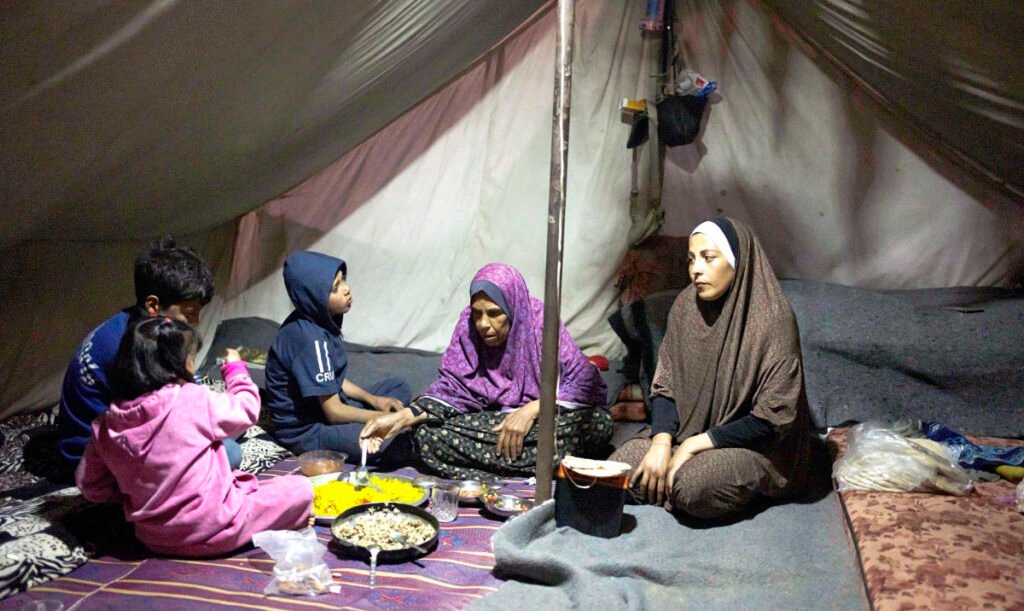
Gaza Herald —The United Nations has sounded the alarm over Israel’s continued refusal to grant entry to humanitarian workers in the Gaza Strip, warning that these restrictions are severely undermining aid operations. According to the UN, Israeli authorities have blocked an average of nearly seven humanitarian personnel per day over the past seven weeks, making access denials a persistent and “serious problem.”
Referencing data from the Office for the Coordination of Humanitarian Affairs (OCHA), UN spokesperson Stéphane Dujarric told reporters that conditions inside Gaza remain catastrophic, with people’s needs far exceeding what aid agencies can deliver because of the ongoing barriers imposed by Israel. He explained that the obstacles confronting aid missions include security restrictions, delays in customs processing, refusals of cargo, blocked crossings, and the very limited number of available routes to move essential supplies inside the besieged enclave.
Dujarric noted that OCHA continues to warn of severe constraints on movement within Gaza. Between October 13 and December 4, Israeli authorities denied participation in UN missions to 295 contractors, 28 UN staff members, and 21 health workers — a total averaging nearly seven denied personnel every single day.
These repeated refusals, he stressed, disrupt operational planning and force the UN and its partners into last-minute changes that weaken the effectiveness of missions. In many cases, entire operations are cancelled because substitute personnel cannot be arranged in time.
He reiterated that the United Nations is again urging Israel to allow unhindered passage of humanitarian aid, lift all restrictions, and permit the scaling up of assistance so that every person in need can be reached.
The current ceasefire between Hamas and Israel, which took effect on October 10 under US President Donald Trump’s initiative, has only partially paused the devastation. It comes after two continuous years of Israeli attacks that killed more than 70,000 Palestinians, the vast majority women and children, and left much of the Gaza Strip in ruins.
The United Nations has sounded the alarm over Israel’s continued refusal to grant entry to humanitarian workers in the Gaza Strip, warning that these restrictions are severely undermining aid operations. According to the UN, Israeli authorities have blocked an average of nearly seven humanitarian personnel per day over the past seven weeks, making access denials a persistent and “serious problem.”
Referencing data from the Office for the Coordination of Humanitarian Affairs (OCHA), UN spokesperson Stéphane Dujarric told reporters that conditions inside Gaza remain catastrophic, with people’s needs far exceeding what aid agencies can deliver because of the ongoing barriers imposed by Israel. He explained that the obstacles confronting aid missions include security restrictions, delays in customs processing, refusals of cargo, blocked crossings, and the very limited number of available routes to move essential supplies inside the besieged enclave.
Dujarric noted that OCHA continues to warn of severe constraints on movement within Gaza. Between October 13 and December 4, Israeli authorities denied participation in UN missions to 295 contractors, 28 UN staff members, and 21 health workers, a total averaging nearly seven denied personnel every single day.
These repeated refusals, he emphasized, disrupt operational planning and force the UN and its partners into last-minute adjustments that compromise the effectiveness of missions. In many cases, entire operations are cancelled because substitute personnel cannot be arranged in time.
He reiterated that the United Nations is again urging Israel to allow unhindered passage of humanitarian aid, lift all restrictions, and permit the scaling up of assistance so that every person in need can be reached.
The current ceasefire between Hamas and Israel, which took effect on October 10 under US President Donald Trump’s initiative, has only partially paused the devastation. It comes after two continuous years of Israeli attacks that killed more than 70,000 Palestinians, the vast majority women and children, and left much of the Gaza Strip in ruins.

