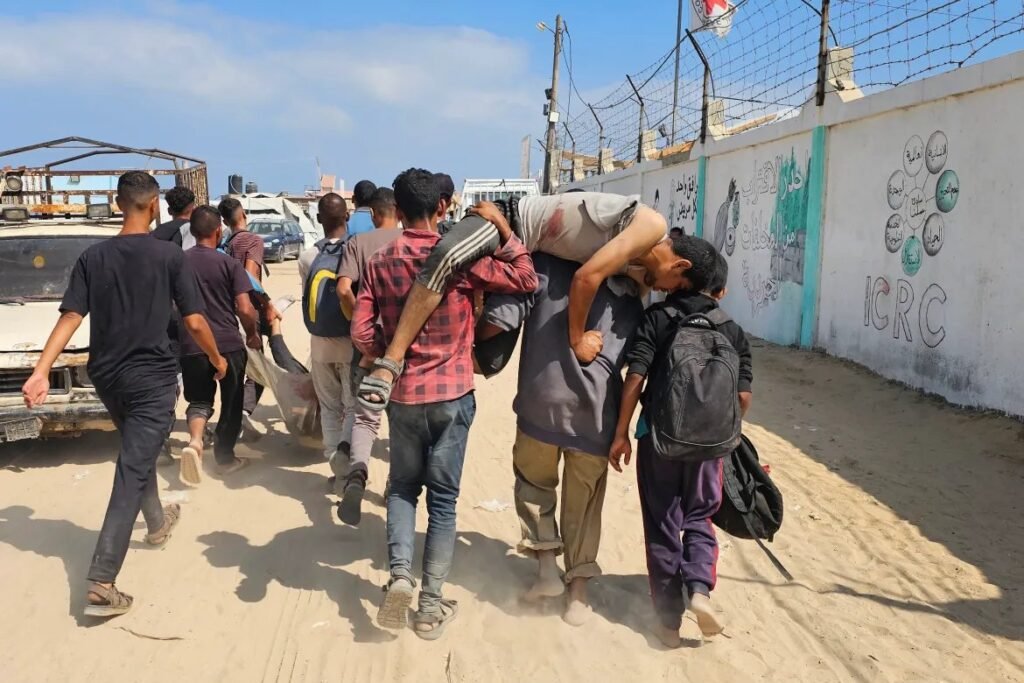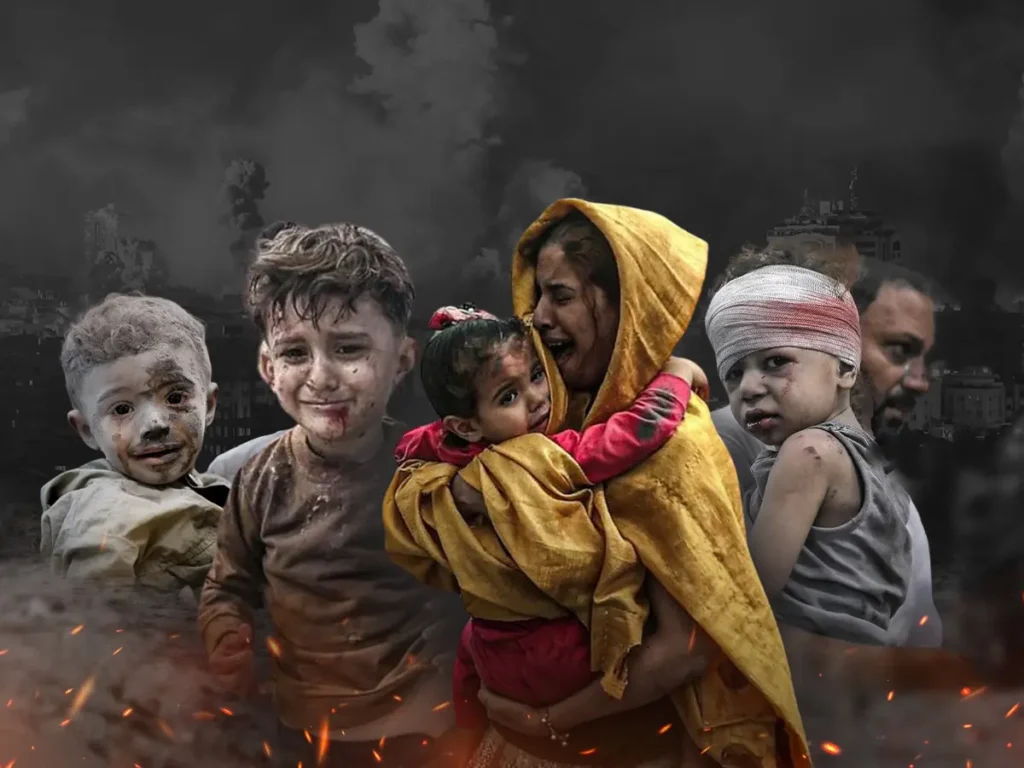
Gaza Herald — The ongoing Israeli genocidal war on Gaza has left children traumatized, withdrawn, and exposed to daily violence. Humanitarian agencies warn that the prolonged conflict, blockade, and destruction of essential services have eroded young Gazans’ sense of stability, leaving deep emotional and psychological scars. Experts insist that children will require sustained, long-term support to recover from the relentless trauma inflicted by the occupation and bombardment.
Aggression, Sadness, and Disrupted Childhoods
According to child protection partner assessments conducted in September, and shared by the UN Office for the Coordination of Humanitarian Affairs (OCHA), the impact on children is severe. Ninety-three percent of children displayed aggressive behaviour, and 90 percent were violent toward younger children. Sadness and withdrawal affected 86 percent, while 79 percent suffered from disturbed sleep, and 69 percent refused to study. The report paints a picture of children living in constant fear, exposed to violence, and struggling to cope with the collapse of schools, playgrounds, and social services.
Violence Every Day
Even amid fragile ceasefires, deadly strikes continue. The Israeli military remains deployed along or east of the so-called “Yellow Line,” which encompasses over half of the Gaza Strip. Ongoing attacks restrict access to public infrastructure, farmland, and humanitarian aid, while Palestinian fishers remain at risk of detention or attack at sea. Daily detonations of homes and buildings continue in areas beyond the line, highlighting that for children in Gaza, there is no true respite from fear and insecurity.
Displacement and Overcrowding
Of Gaza’s 2.1 million residents, nearly one million now live in 862 displacement sites. Khan Younis hosts the majority of these camps, with others in Deir al Balah, Gaza City, North Gaza, and Rafah. Overcrowding compounds risks for children, particularly girls and those with disabilities, who face heightened exposure to violence, neglect, and unsafe water and sanitation conditions. UNRWA reports that around 75,000 people are currently living in its designated shelters and surrounding areas.
Child protection agencies report alarming levels of anxiety, behavioural changes, and stress among young Gazans, intensified by the destruction of safe spaces and schools. In just four weeks since the agreed pause in fighting, humanitarian partners have reached over 132,000 children across Gaza, including nearly 1,600 children with disabilities and 45,000 caregivers. Interventions include individual psychological consultations, group sessions, recreational psychosocial support, stress management activities, and referrals for specialized care. Efforts aim to reach more than 100,000 children each month to address the needs of nearly one million children living under siege.
Humanitarian Aid Struggles Amid Israeli Control
The reopening of Zikim crossing by Israeli authorities after an eight-week closure allows humanitarian cargo to enter, but the process remains tightly controlled. UN teams have repaired roads leading to the crossing inside Gaza and are conducting final checks for explosive hazards to enable cargo movement. While the crossing’s reopening is essential, the protracted siege and constant restrictions demonstrate the larger structural obstacles preventing Gazan children from receiving the protection and services they desperately need.
The war has violently stolen the childhoods of Gaza’s youngest, leaving them to grow up amid rubble, fear, and unending trauma. Their minds and spirits are breaking under the weight of occupation and constant attacks. Gaza Herald insists that no true recovery is possible without ending the siege, holding Israel fully accountable for its crimes, and ensuring safe spaces where Palestinian children can finally heal, thrive, and live the childhood that has been brutally denied to them.