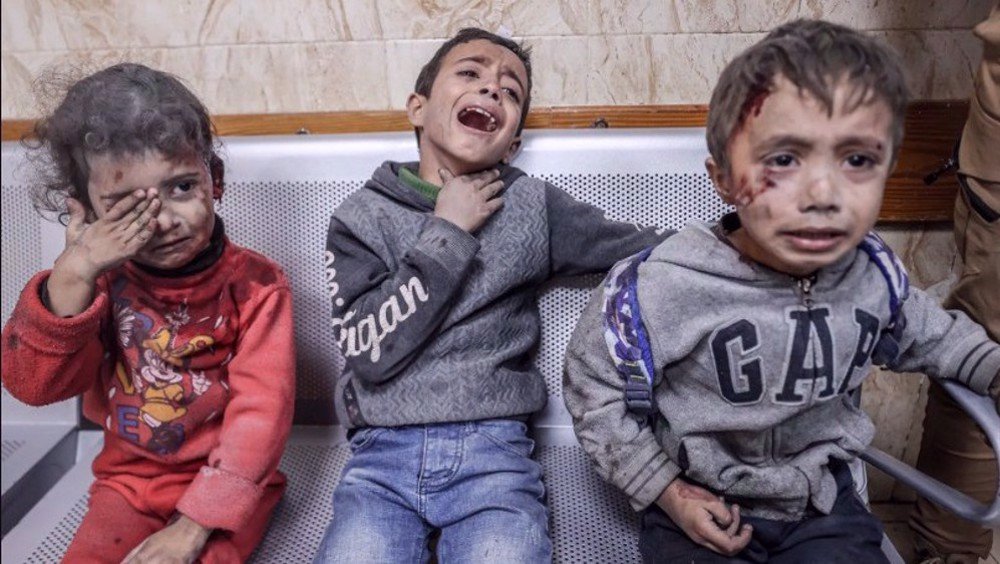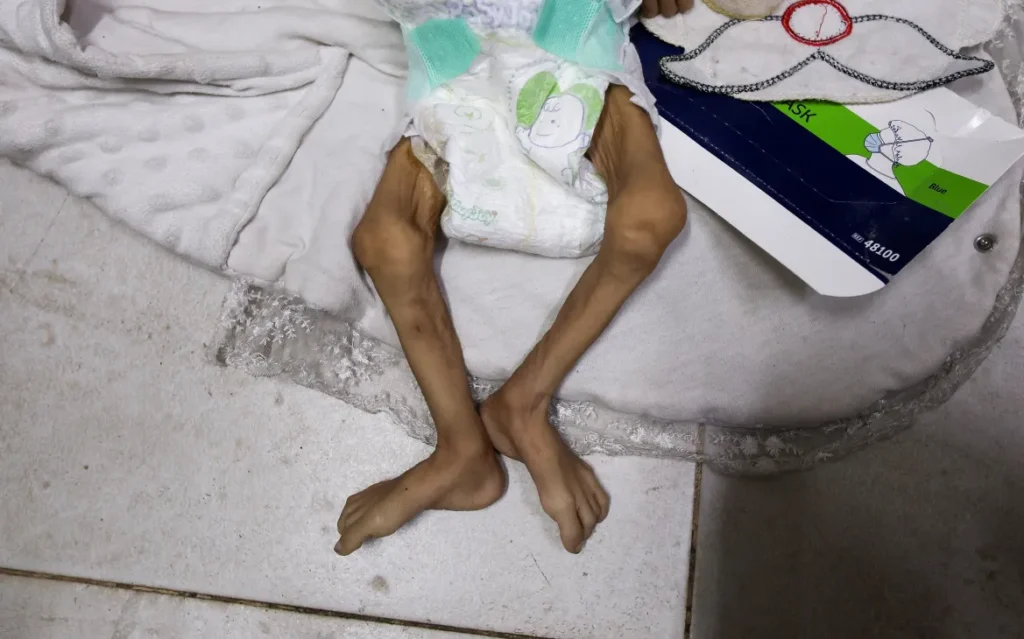
Gaza Herald _ On August 22, the Integrated Food Security Phase Classification (IPC), a UN-backed authority on food security, officially declared that over half a million people in Gaza are facing catastrophic conditions of starvation, destitution, and death. The report warned that at least 132,000 children under five are expected to suffer acute malnutrition through June 2026. This formal declaration of a “man-made famine” is one of the strongest indictments of Israel’s policies since the October 7, 2023, attacks, highlighting the devastating impact of blockade, war, and deliberate food restrictions on the Palestinian population.
Global condemnation meets Israeli denial
The IPC report drew sharp condemnation of the Israeli government’s responsibility. Jeremy Konyndyk, president of Refugees International, described the famine as a “staggering failure,” while UN humanitarian chief Tom Fletcher urged the world to read the report not as statistics, but as “names and lives.” WHO chief Dr. Tedros Adhanom Ghebreyesus warned that the health catastrophe in Gaza will last for generations. Israel, however, has repeatedly denied the existence of famine, claiming the IPC misrepresented the situation and dismissing criticism as politically motivated. Meanwhile, humanitarian aid deliveries remain insufficient and tightly controlled, with UN agencies often restricted from operations inside Gaza.
Food insecurity and obstruction
Despite the theoretical promises of aid under US President Donald Trump’s 20-point plan, the threshold for famine had already been crossed months earlier. Gazans have lived under severe food insecurity since the early months of the war. Experts, including Alex de Waal of Tufts University, note that Israel has deliberately maintained Gaza in a state of near-famine, aware that officially acknowledging famine would have international repercussions. UN reports have documented systematic obstruction of aid, starvation crimes, forced displacement, and attacks on health services, forming a major part of ICC indictments against Israeli leaders.
The biological toll of famine
Famine in Gaza is not simply a matter of hunger, it is a slow, devastating assault on the human body, particularly for children and pregnant women. Starvation occurs in progressive stages. At first, the body draws on glycogen stored in the liver to maintain blood sugar. When these reserves are exhausted, it begins gluconeogenesis, consuming muscle and fat to fuel vital organs. As fat stores run out, the body enters ketogenesis, converting fatty acids into alternative energy sources. When all fat is depleted, the body begins consuming its own proteins, breaking down muscles, organs, and tissues in a desperate attempt to survive. Immunity collapses, muscles weaken, and even minor infections can become fatal. Many die directly of starvation, but even more succumb to starvation-related diseases such as respiratory infections, diarrheal illnesses, or other conditions exacerbated by weakened defenses.
For children, whose smaller bodies have less reserve and whose developing organs are highly sensitive, famine is even more lethal. Malnutrition compounds the damage. Even when children receive sufficient calories, the quality of nutrition, proteins, vitamins, minerals, and micronutrients is often inadequate, impairing growth, cognitive development, and organ function. Chronic malnutrition stunts physical growth and leads to life-long health consequences, including weakened bones, cardiovascular disease, and impaired brain development.
Pregnant women are particularly vulnerable. Dr. Tessa Roseboom’s groundbreaking research on prenatal malnutrition during the Dutch Famine demonstrates that insufficient maternal nutrition damages the developing foetus at a cellular level. Organs like the heart, lungs, and brain form during early gestation; famine compromises their structural and functional integrity. Prenatal malnutrition can leave epigenetic marks, chemical modifications on DNA that alter gene expression without changing the genetic code itself. These changes can increase susceptibility to diseases such as diabetes, hypertension, and mental health disorders, and are often passed down to subsequent generations.
Furthermore, the stress of famine elevates maternal stress hormones, which cross the placenta and expose foetuses to toxic levels of cortisol. This “stress imprinting” increases vulnerability to psychological disorders, anxiety, and hyper-reactivity in later life. In effect, famine does not just kill, it permanently alters the biology of a population. The repercussions will echo across decades, with children born under siege carrying the scars of starvation in both body and mind.
Experts agree that the biological consequences are irreversible without immediate intervention. Nutritional support must prioritise children and pregnant women, but food alone is not enough; safe water, sanitation, and healthcare are critical to prevent starvation from translating into widespread disease and death. Gaza’s population is enduring a biological trauma that will affect generations, making the urgent lifting of the siege not merely a humanitarian imperative, but a matter of survival for the Palestinian people.
Famine as societal collapse
Famine is not merely physiological starvation; it signals the breakdown of society. Health systems, clean water, sanitation, and social structures collapse under extreme deprivation. Roseboom and de Waal emphasise that famine also leaves social and psychological markers on communities, triggering depression, lower participation in labour, increased mortality, and dependence on humanitarian assistance. Social trauma, humiliation, and shame become deeply internalised by victims, leaving long-lasting scars on entire communities.
Catastrophic rates of famine, such as those seen in Gaza, also heighten crime and violence, as desperate populations fight for survival. De Waal notes that famine can destabilise entire societies, eroding trust, weakening communities, and creating conditions where people turn against one another. History shows that famine is not just a physical crisis; it is a moral, social, and political weapon.
Conclusion: Urgent action and accountability
The famine in Gaza is deliberate, sustained, and man-made. Its victims are the most vulnerable: children, pregnant women, and the elderly. The societal damage is profound, with long-lasting biological, psychological, and social consequences. Gaza Herald stresses that any meaningful recovery requires lifting the siege, holding Israel accountable for starvation crimes, and ensuring immediate and unrestricted access to sufficient food, clean water, and healthcare. Without urgent intervention, the consequences of this genocide will echo across generations, leaving Gaza scarred for decades and undermining the very fabric of Palestinian society.