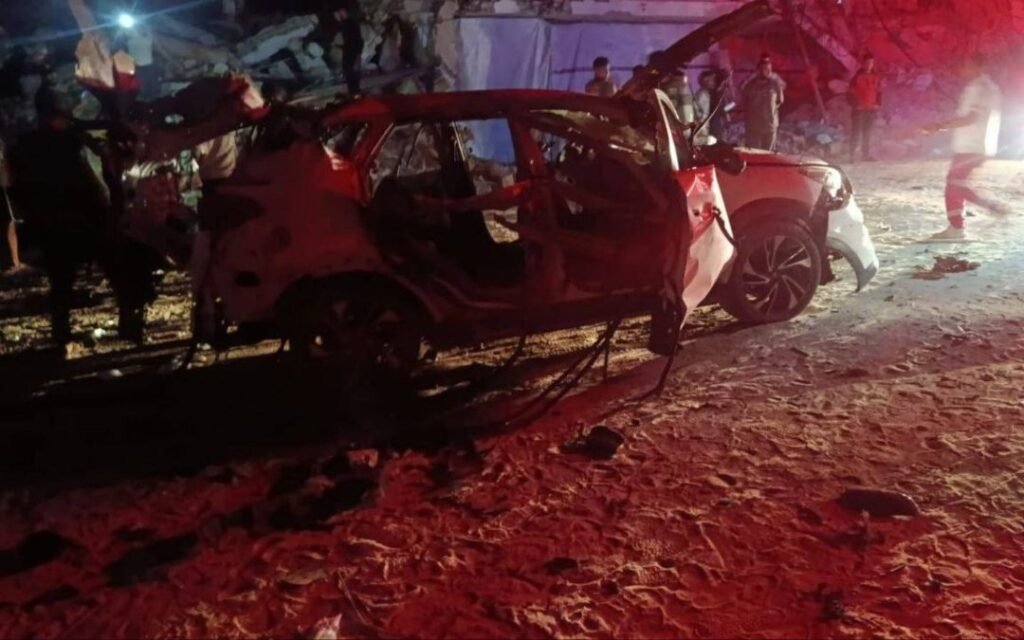
Gaza Herald_ A ceasefire may have formally ended Israel’s latest war on Gaza, but it has not ended the killing. On Sunday, an Israeli airstrike killed four people. Days earlier, another strike hit a motorcyclist. Weeks before that, Israeli warplanes killed at least one person.
These incidents did not even take place inside Gaza; they occurred in Lebanon, where Israel continues to launch attacks despite a ceasefire with Hezbollah that began nearly a year ago. Yet the parallels are unmistakable: Israel’s recent attacks on Gaza after its own ceasefire reveal a calculated effort to “Lebanonise” the Strip to end the war officially, while preserving the right to attack at will.
Permanent conflict as policy
Israeli officials argue that they have the right to strike targets in Lebanon until Hezbollah fully disarms, ceasefire or not. In Gaza, a similar logic now prevails. Analysts say Israel is deliberately engineering a “forever war,” a phase of neither peace nor total conflict, maintained through unrestrained air raids and occupation.
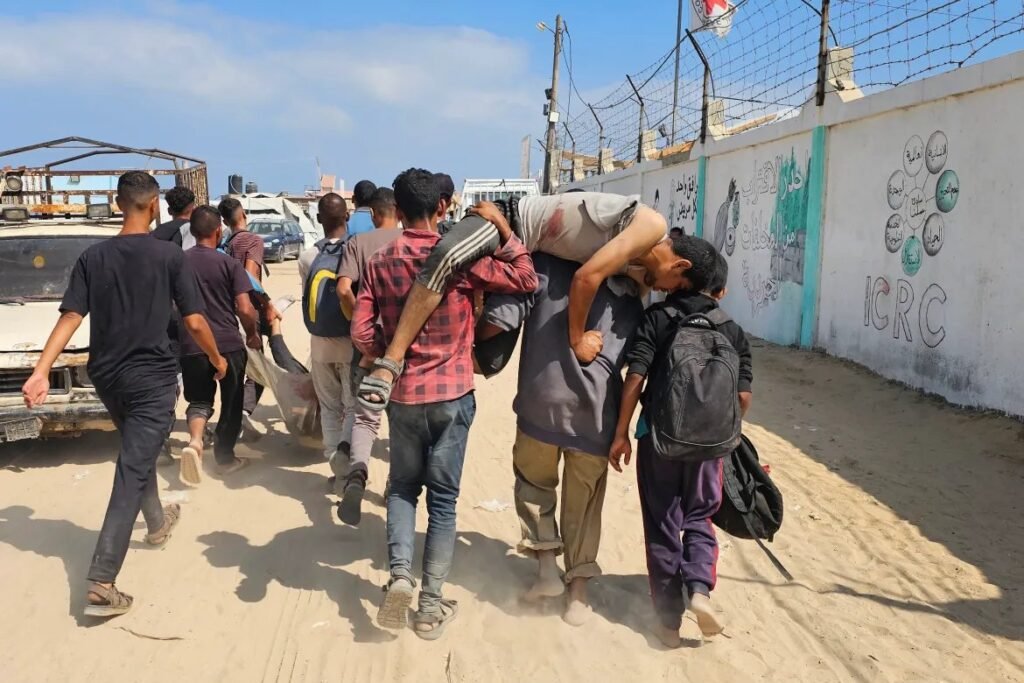
Since the ceasefire began on October 10, Israeli attacks have killed at least 236 Palestinians and injured more than 600 others. “They [the Israelis] don’t want to resolve the conflict,” said Rob Geist Pinfold, an international security scholar at King’s College London. “War is the new norm.”
Before October 7, 2023, both Hamas and Hezbollah were considered credible deterrents against Israeli aggression. “There was a belief that Israel could not sustain prolonged war,” Pinfold explained. “Its economy and society wouldn’t function.” But after Hamas’s October 7 operation, which killed 1,139 Israelis and took more than 200 captives, Israel has embraced endless warfare, striking targets across the Middle East even after ceasefire deals.
From Lebanon to Gaza: exporting a failed model
Lebanon provides the clearest example. Despite the ceasefire agreement with Hezbollah on November 27, 2024, Israel has continued to strike Lebanese territory throughout the year. Prime Minister Benjamin Netanyahu even threatened further escalation unless the Lebanese government disarms Hezbollah, whose military leadership suffered major losses in the war, including the death of Hassan Nasrallah.
For many Lebanese, especially in the south, the so-called ceasefire never took effect. “This war is always here,” said Lebanese journalist Abbas Fakih from Nabatieh. “If you’re from a border village, you can’t visit it; anyone can be targeted at any time.”
No war, no peace
The “Lebanonisation” of Gaza now follows the same pattern. Israel continues to bomb and occupy parts of the Strip while claiming that the war is over. Like in Lebanon, it keeps troops inside Gaza, violates agreements with impunity, and faces little to no international accountability. The United States, which brokered both ceasefires, remains silent as Israel disregards the terms of peace.
Over the past year, Hezbollah has responded to Israeli attacks only once, in December, targeting an Israeli military position. Israel’s retaliation killed 11 people, including a Lebanese security officer. Analysts believe this is the dynamic Israel seeks to impose on Gaza: it will decide when to strike, and any Palestinian response will be used as justification for renewed escalation.
“Netanyahu knows very well there is no excuse for his airstrikes today,” said Mustafa Barghouti, secretary-general of the Palestinian National Initiative. “He is trying to establish a new situation in Gaza where you have no war and no peace, with continuous Israeli military attacks, exactly like in Lebanon.”
The long arc of colonial warfare
Independent researcher Chris Osieck, who has contributed to investigations by Forensic Architecture and Bellingcat, said this pattern is not new. “What they’ve done in Gaza and Lebanon is what they’ve been doing historically in al-Khalil, Dawaymeh, and Jerusalem,” he said, referencing massacres and land seizures dating back to Israel’s founding in 1948. He described the Gaza genocide as now taking a “gradual form,” marked by persistent air raids and an Israeli blockade that prevents any meaningful reconstruction.
Israeli journalists close to Netanyahu’s government openly discuss this new reality. “The new Lebanonisation means having military outposts beyond your borders and striking whenever needed,” said Amit Segal, an Israeli media figure aligned with Netanyahu. “You must be wherever there is danger; that’s the main lesson of October 7.”
Regional domination and collapse
Analysts say Israel’s long-term goal is to maintain regional dominance by keeping its neighbours weak and fragmented. But the question remains whether this “forever war” strategy is sustainable. “Israel cannot bomb the Middle East into a stable new order,” wrote Marc Lynch, a professor of political science at George Washington University, in Foreign Affairs. “Regional leadership requires more than military primacy; it demands consent and cooperation.”
In Gaza, Israel appears determined to remain deep inside the territory, maintaining a military presence and attacking at will. But the deeper it stays, the greater the resistance it will face. “This status quo is more bearable for Hamas than for Israel,” said Pinfold. “The problem is that it directly blocks reconstruction and condemns Palestinians to live under permanent siege.”
As the dust settles on yet another so-called ceasefire, Gaza stands as proof that Israel’s “Lebanonisation” model is not a peace strategy; it is a blueprint for endless domination.