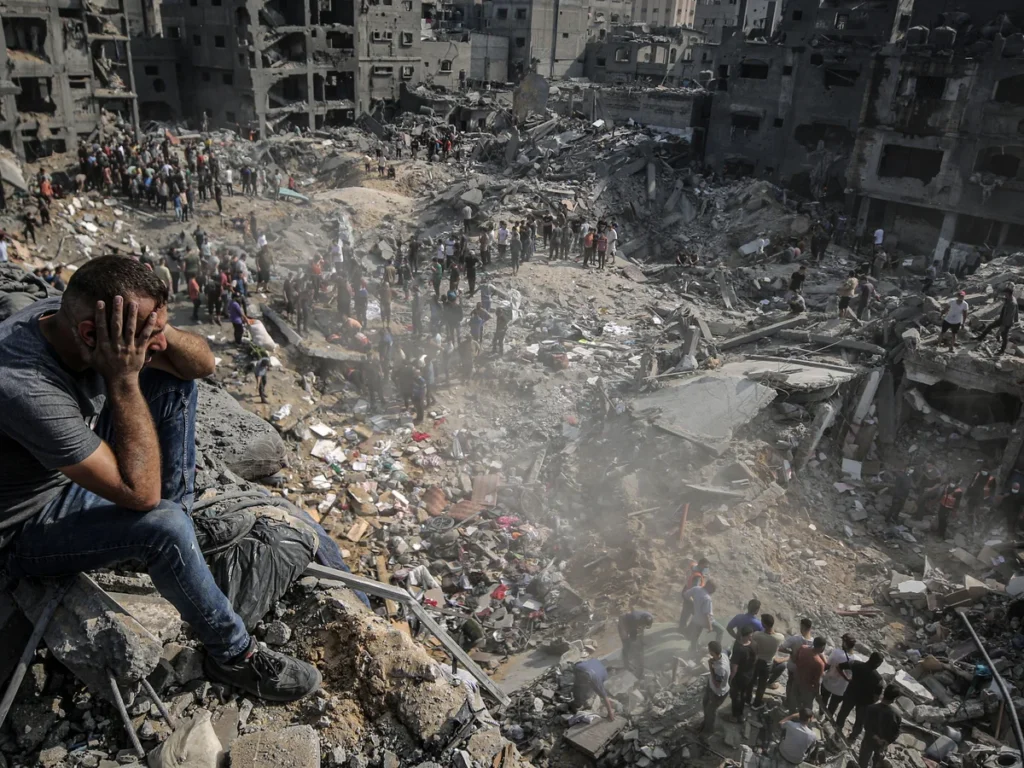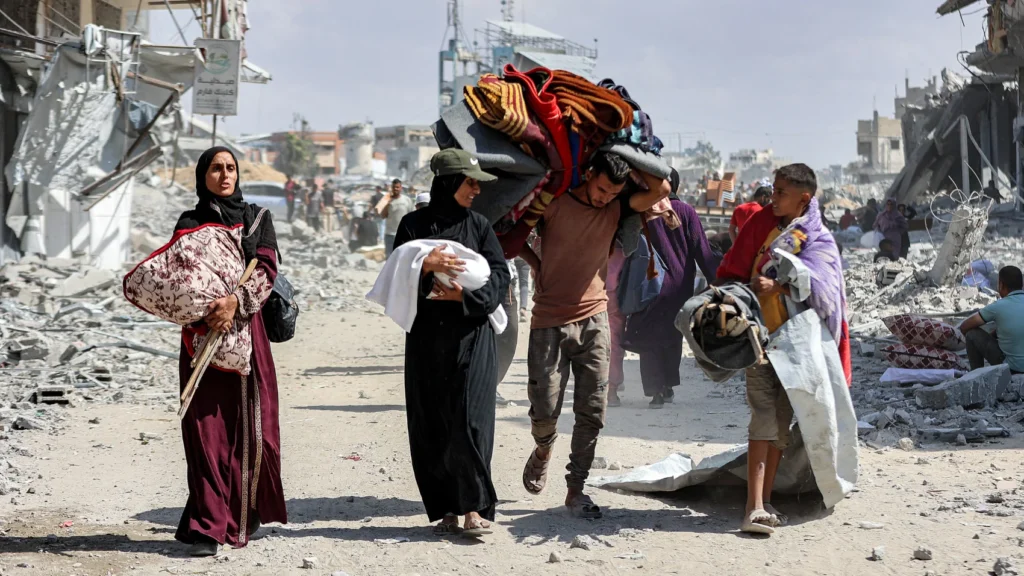
Gaza Herald — Weeks after the ceasefire between Hamas and Israel took effect, the flow of humanitarian aid into Gaza has offered a faint glimmer of hope to millions displaced by months of bombardment. But as trucks slowly cross the borders, reality on the ground tells a different story; the aid trickling into the Strip is a drop in the ocean of need, leaving countless families still struggling to find food, clean water, and shelter amid widespread destruction.
At a distribution site in Khan Younis, crowds of exhausted Palestinians gather daily to collect parcels of rice, canned beans, and oil. The line stretches endlessly, and many leave empty-handed. Those who manage to receive aid say it falls painfully short of meeting even their most basic needs.
“We received this box of aid, but it’s nowhere near enough,” said Nermeen Tramsi, a displaced woman from Gaza City. “Our basic needs go far beyond what’s inside. A family cannot survive on beans and rice alone.”
Ziad Abu al-Jazar, a displaced man from Rafah, said he has watched hundreds of trucks enter Gaza since the ceasefire, yet none of the aid has reached his community. “Since the truce began, we haven’t seen a single organization distributing aid to us,” he said. “We just want to know where all these trucks are going.”
Behind the limited distributions lies a deep crisis of coordination and access. Aid groups cite the collapse of infrastructure, destroyed roads, and Israeli restrictions on movement as major obstacles preventing assistance from reaching those most in need. Meanwhile, the majority of Gaza’s population, now displaced and homeless, survives on minimal rations, often sharing what little food remains in overcrowded shelters.
For Gaza’s displaced, the ceasefire has brought neither peace nor stability. Instead, it has exposed the gaping disconnect between international promises of relief and the grim reality on the ground. Until sustained humanitarian access and reconstruction begin, Gaza’s people remain trapped between devastation and hunger, their hopes for recovery buried beneath the rubble of a war that has yet to end truly.