
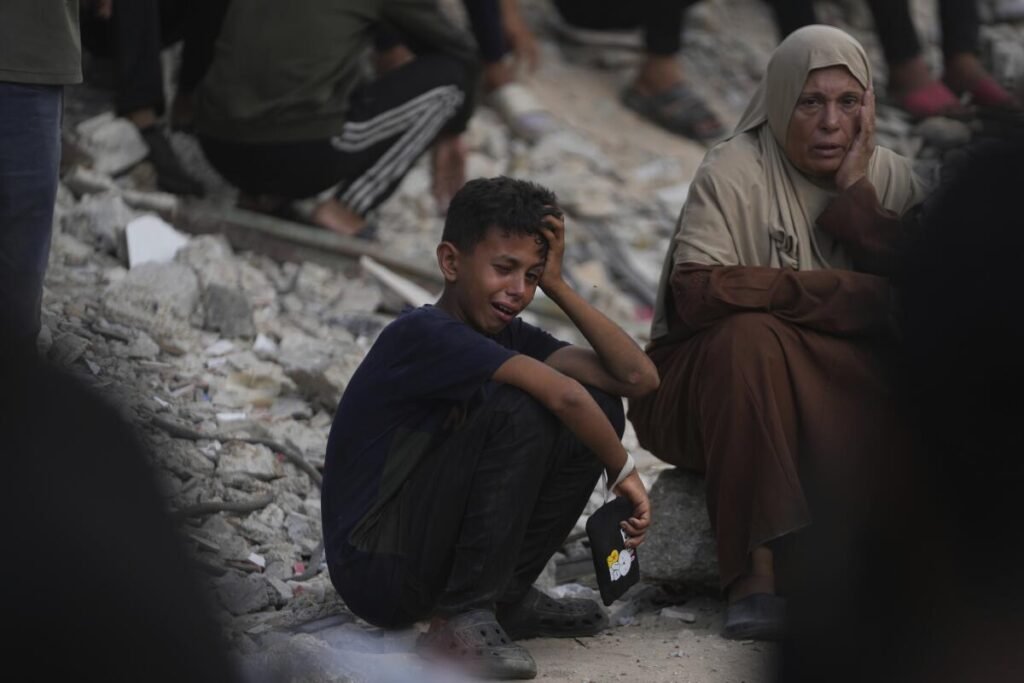
Gaza Herald_ Education is not just a curriculum; it is hope, stability, and a lifeline for Gaza’s children after two years of relentless conflict. Teacher Nada Hamdouna emphasizes that “bringing children back to school must be among Gaza’s highest priorities. Education gives them structure, purpose, and the chance to heal.” After the ceasefire, she expressed a mix of relief and anxiety: the bombing had stopped, yet the possibility of renewed violence remained ever-present.
Before the war, Hamdouna taught English at a girls’ school and a local educational center in Gaza City. Both institutions were destroyed early in the conflict. Forced to flee, she resumed teaching in a tent with no desks or supplies, guiding students aged six to twelve who sat on the ground. Despite harsh conditions, she remained committed to their learning.
Overcoming Scarcity
By late 2024, basic educational materials were almost nonexistent. Pens, notebooks, and books were either unavailable or unaffordable, with a single notebook costing 20 to 30 shekels ($6–$9). Many students attended class with scraps of paper salvaged from rubble or old documents. Sharing a single pen became common practice.
Hamdouna described adapting lessons with oral storytelling, group recitations, and songs, transforming scarcity into creative learning opportunities. “Even under these conditions, the children were eager to learn. Their determination inspired me, even amid the sadness of what we had lost,” she said.
The Urgency of Action
The teacher stresses that education must resume immediately. “Delivering aid is vital, but education is equally essential. Books, pens, and paper are not just supplies—they are tools of survival and resilience,” she explained. Education offers structure, self-confidence, and hope, crucial for recovery from trauma.
Education as a Lifeline
The United Nations Relief and Works Agency (UNRWA) launched the campaign “Education Cannot Wait” to restore schooling for children in Gaza. The agency describes education as a “lifeline” for children who have endured war and displacement for over two years.
UNRWA reports that more than 660,000 children have been out of school. Many want to return even to temporary classrooms or tents. Schools destroyed by Israeli strikes had also served as shelters for displaced families, compounding the deprivation of education.
Bringing Learning to Children Everywhere
UNRWA officials have urged the urgent resumption of schooling, highlighting that thousands of children have been denied the ability to read and write. Commissioner-General Philippe Lazzarini noted that learning is critical to prevent despair and help children regain a sense of normal life.
Prior to the ceasefire, temporary learning spaces provided basic instruction and recreational activities for more than 60,000 children. With areas now accessible, UNRWA aims to expand these spaces and offer informal education across Gaza. Remote lessons in reading, writing, and mathematics will reach an additional 300,000 children.
Urgent Needs and Preparations
Lazzarini warns that rebuilding schools will take time and resources. Winter is approaching, and tents or plastic sheeting are necessary to protect children from the cold. “Education cannot wait,” he said, emphasizing the urgency of ensuring that every child in Gaza has the opportunity to learn, play, and envision a future beyond the war.

