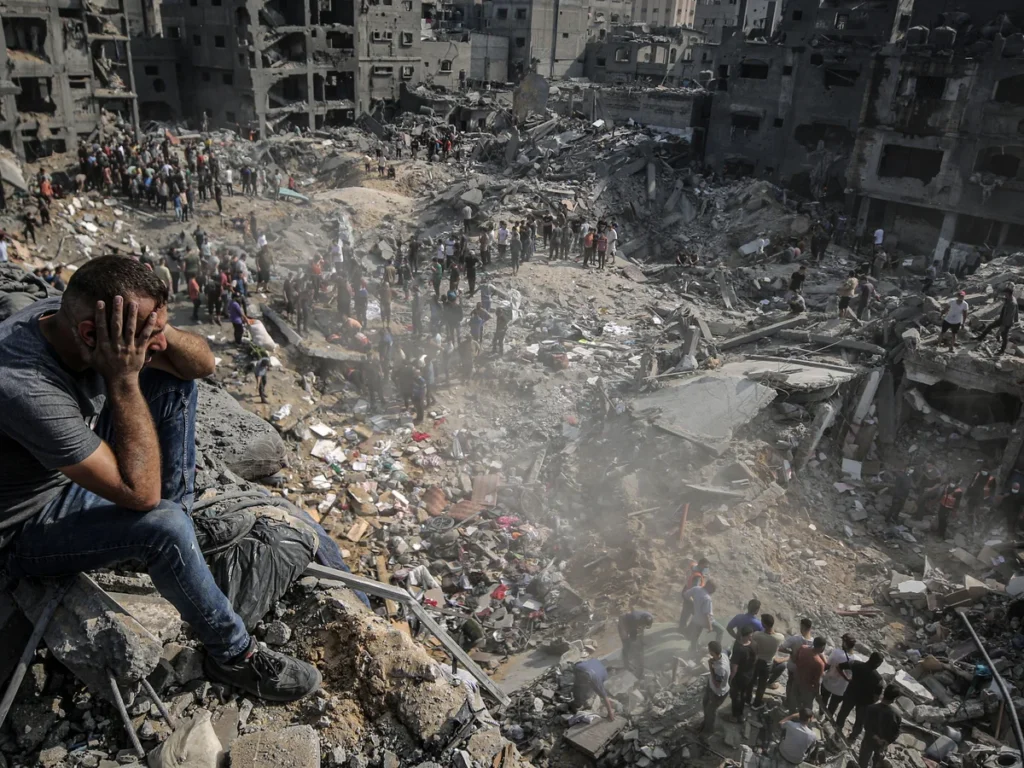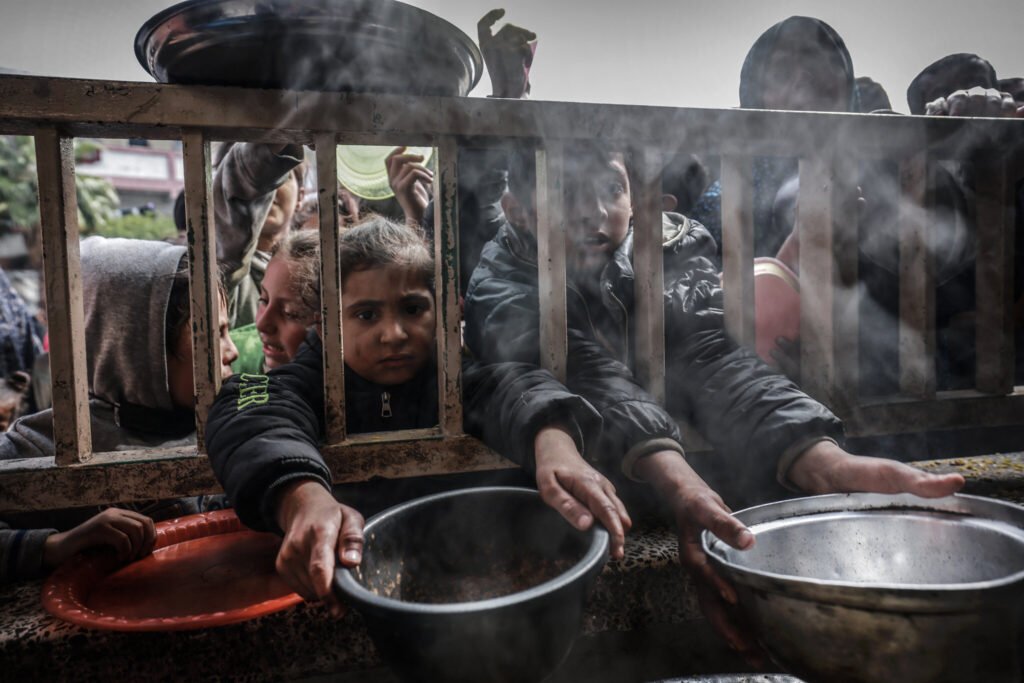
Gaza Herald_ As the world marks World Food Day, millions of Palestinians in Gaza are struggling to find their next meal. Despite a ceasefire agreement that was supposed to bring relief, Israel continues to restrict food aid into the besieged enclave, worsening one of the world’s most severe humanitarian crises.
Ceasefire Promises Broken
Under the terms of the ceasefire deal, Israel was to allow 600 humanitarian aid trucks into Gaza each day. Yet, in clear violation of that agreement, the number has been cut in half, to only 300 trucks daily. Israeli officials claim the reduction is due to delays in recovering the bodies of Israeli captives buried under rubble created by its own airstrikes.
The UN2720 Monitoring and Tracking Dashboard reports that between October 10 and 16, just 216 trucks reached their intended destinations inside Gaza, a fraction of what is needed to sustain the population. Truck drivers say lengthy Israeli inspections are causing major delays, while satellite imagery from October 14 and 15 shows long lines of aid trucks still waiting on the Egyptian side of the Rafah crossing.
‘Palestinians Want Food, Not Promises’
While limited food supplies, such as wheat, rice, sugar, and oil, have trickled in, most Palestinians can no longer afford even the most basic goods after two years of displacement, unemployment, and destruction. Medical equipment, nutritional supplements, and vital medicines remain scarce.
Local distribution centers are expected to open for humanitarian parcels, but people are still waiting. Gaza’s families are desperate not for statements or politics, but for the simple means to feed their children and rebuild their lives. Even the originally agreed 600 trucks a day would not be enough to meet the needs of Gaza’s 2.3 million residents.
‘Food Is Not a Bargaining Chip’
UN humanitarian chief Tom Fletcher urged Israel to open additional crossings and stop weaponizing aid.
“Withholding aid from civilians is not a bargaining chip,” he said. “Ensuring access to food and medicine is a legal obligation under international law.”
As of mid-October, the World Food Programme (WFP) confirmed that 137 aid trucks have entered Gaza since the ceasefire began, supplying bakeries and nutrition centers. But this remains far below what is required to prevent widespread starvation.
Israel Continues to Block UNRWA
The UN Relief and Works Agency (UNRWA), the main provider of food, medical care, and education for Palestinians, remains blocked by Israeli authorities from entering Gaza.
The agency has warehouses packed with food and essential supplies in Jordan and Egypt, enough to sustain Gaza’s entire population for three months. These include food parcels for 1.1 million people, flour for 2.1 million, and shelter materials for 1.3 million displaced residents. Yet, despite the ceasefire agreement, Israel continues to block these vital shipments from entering Gaza.
A Generation at Risk
The UN Office for the Coordination of Humanitarian Affairs (OCHA) has warned that 90 percent of children under the age of two in Gaza consume fewer than two basic food groups each day , often without any source of protein. An estimated 290,000 children between six months and five years old, along with 150,000 pregnant and breastfeeding women, are in urgent need of food and micronutrient supplements. Without immediate humanitarian access, OCHA projects that by mid-2026, at least 132,000 children and 55,000 mothers could suffer from acute malnutrition.
Hunger as a Weapon
As Gaza’s people face starvation under siege, Israel’s control over food, medicine, and aid has turned hunger into a weapon of war. On a day meant to celebrate global unity against famine, Palestinians are left to mark World Food Day under conditions of forced deprivation , a reminder that, for Gaza, peace without sustenance is merely another form of suffering.