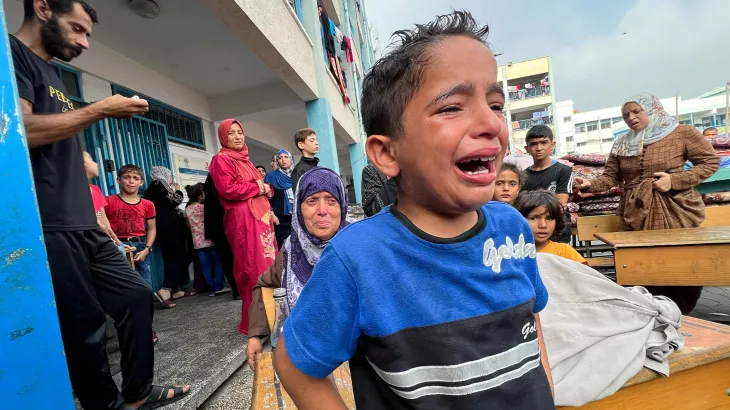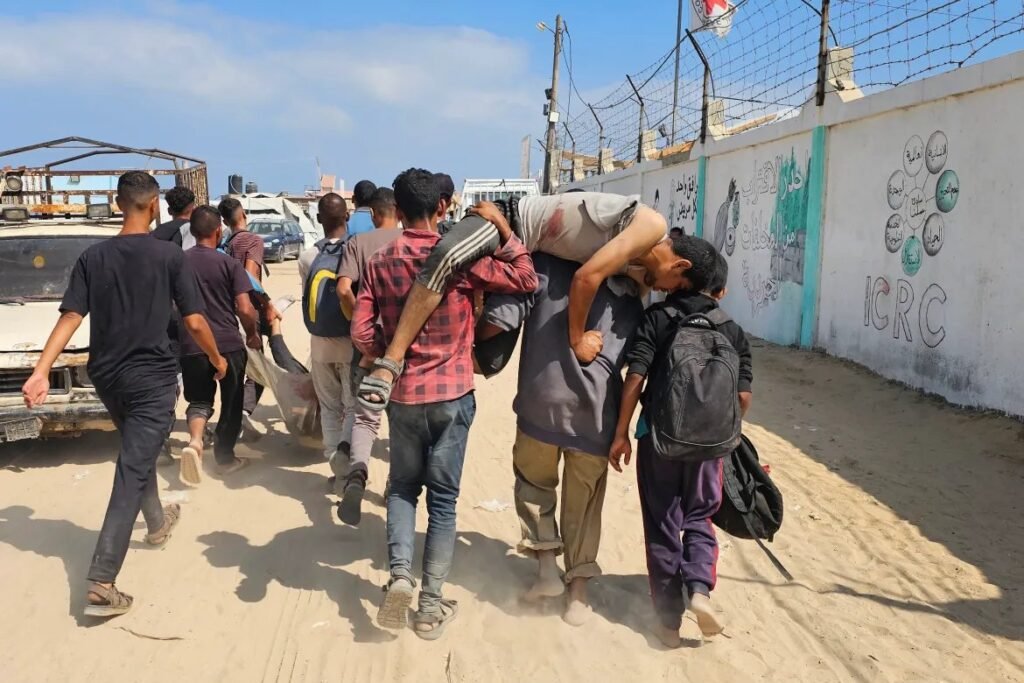
Gaza Herald—The Gaza Civil Defense announced Friday evening that the bodies of sixty-three Palestinians had been recovered from the streets of Gaza City since the ceasefire came into effect earlier in the day. Dozens more remain trapped beneath the rubble or lying in the open, unreachable because Israeli forces continue to occupy parts of the city despite the declared truce
The ceasefire between Hamas and Israel took effect at noon Jerusalem time after four days of indirect negotiations at Egypt’s Sharm el-Sheik resort, with delegations from Qatar, Egypt, and Turkey participating under U.S. mediation. For Gaza’s rescue workers, the pause brought no calm, only a chance to search for the missing and mourn the dead.
Rescue Teams Overwhelmed
Civil Defense spokesperson Mahmoud Basal said that since the ceasefire began, sixty-three martyrs have been recovered from the streets of Gaza City. Many others are still missing, buried under collapsed buildings or lying in areas too dangerous to reach. The continued presence of Israeli troops and unexploded ordnance has made every recovery mission perilous
With equipment destroyed, fuel depleted, and communications crippled, Gaza’s rescue crews dig through debris with their bare hands. Each body they recover is a silent testament to the world’s neglect and to the scale of Israel’s assault. The city’s infrastructure lies in ruins: homes, schools, hospitals, and civil defense centers all reduced to dust.
Health System on the Brink
Dr. Munir al-Barsh, Director General of the Ministry of Health in Gaza, described the medical situation as catastrophic and appealed for urgent international intervention. Speaking from Gaza, he said people are dying in the streets because hospitals are bombed and stripped of supplies. Al-Rantisi Hospital and Sheikh Radwan Clinic suffered extensive damage, while Hamad and the Psychiatric Hospital are barely functioning
According to al-Barsh, the Israeli occupation has destroyed thirty-eight hospitals across the Strip, leaving only twelve partially operational and all in dire need of electricity, fuel, clean water, and essential medicines. Despite the devastation, Gaza’s doctors and nurses continue to work under impossible conditions, treating patients in hallways, tents, and makeshift clinics
Thousands Await Evacuation
The Ministry of Health reports that more than seventeen thousand patients need immediate evacuation, including children with cancer and others suffering from congenital diseases who cannot survive without advanced care. Although the World Health Organization has approved their transfer, Israel continues to block medical evacuation corridors, using health and survival as weapons of war
Al-Barsh called for the opening of humanitarian corridors, the deployment of medical missions, and the establishment of field hospitals across the Strip to relieve pressure on what remains of the health system. He urged international agencies to rebuild hospitals, restore desalination plants, and secure clean drinking water to prevent disease outbreaks. He also emphasized the need for mental health and rehabilitation programs to heal Gaza’s traumatized families
The Struggle to Rebuild
As bodies are pulled from beneath the rubble, Gaza confronts the scale of its devastation. The ceasefire may have paused the bombs, but not the suffering. Entire neighborhoods are erased, hospitals lie shattered, and the wounded have nowhere to turn. For Gaza’s people, this fragile truce is not peace, it is the beginning of another fight: to heal, to rebuild, and to live
Even in the shadow of destruction, Gaza’s resilience endures. The recovery of every martyr and the defiance in every doctor’s eyes are acts of resistance against a war that sought to erase them. The people of Gaza are not asking for charity, they are demanding justice, the restoration of their rights, and the freedom to live on their land without siege or fear
A Call for Justice
Until the world acts to end Israel’s blockade and restore the full operation of agencies such as UNRWA, Gaza’s humanitarian crisis will only deepen. The survival of Gaza depends not on temporary ceasefires or political gestures, but on accountability, sustained support, and the recognition that what is happening is not a natural disaster, it is a man-made atrocity