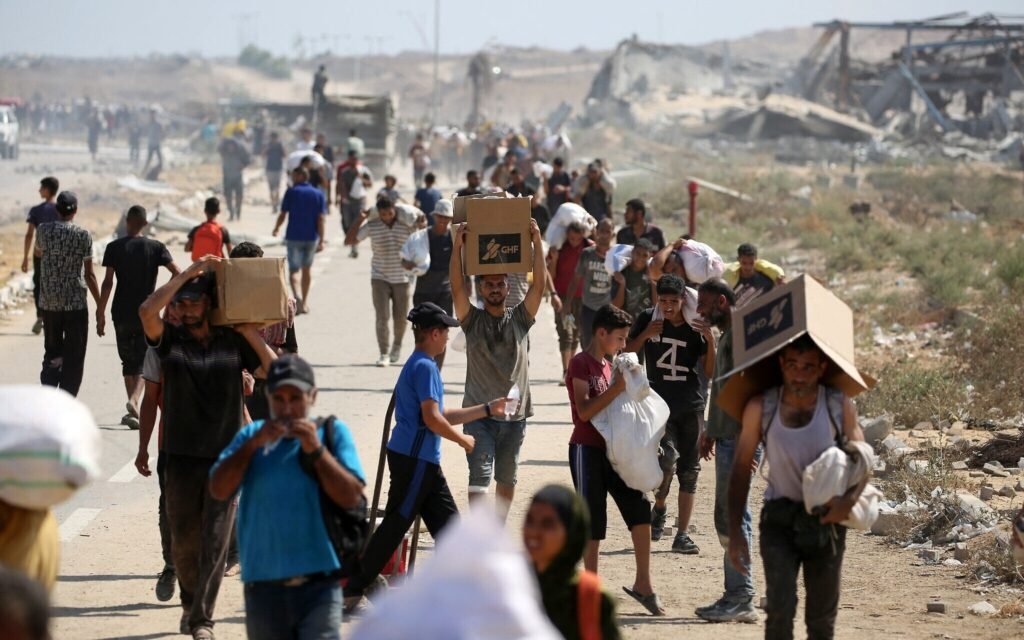
Gaza Herald- Israel has imposed new restrictions on humanitarian assistance to Gaza, declaring that all aid distributed in the besieged enclave through the Gaza Humanitarian Foundation (GHF) must be sourced exclusively from Israeli companies.
GHF, the only organization authorized by Israel to distribute aid inside Gaza, confirmed the measure in comments to the Jewish News Service (JNS). A spokesperson acknowledged that while food packages were once procured and packaged in both Israel and the occupied West Bank, new regulations now stipulate that everything entering Gaza must originate inside Israel.
Neither the office of Israeli Prime Minister Benjamin Netanyahu nor the Defense Ministry responded to inquiries about the new policy.
GHF’s Deadly Record
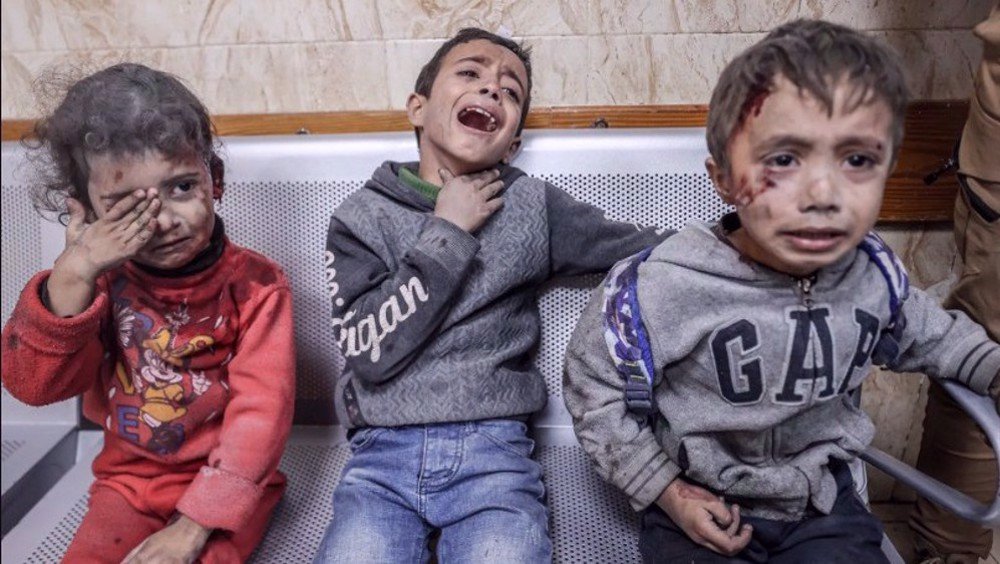
Since its creation in May, GHF has been the subject of deep controversy. Backed by both Israel and the United States, it has presided over catastrophic humanitarian conditions at its aid distribution sites. According to multiple United Nations reports, at least 2,036 Palestinians have been killed and more than 15,000 injured while attempting to collect food or waiting in long queues at GHF centers.
Israeli troops have admitted to deliberately targeting unarmed Palestinians at these gatherings under orders from their commanders. Witnesses have also reported that US-linked contractors opened fire on civilians seeking relief, compounding the deadly risks associated with GHF distribution points.
Economic Fallout in Israel
The announcement comes at a moment of deepening strain on Israel’s own economy. International outrage over its ongoing assault on Gaza has triggered calls for sanctions, divestment and boycotts. Earlier this week, the European Commission proposed suspending Israel’s preferential trade agreement with the EU, its largest economic partner.
In response to mounting concerns, Netanyahu conceded that Israel may be forced to embrace “autarkic characteristics” , a form of economic self-sufficiency, in light of growing isolation and the potential loss of access to international arms markets. The suggestion, made during a finance ministry conference in Jerusalem, spooked business leaders and sent the Tel Aviv Stock Exchange tumbling.
The Israel Business Forum condemned the government’s policies, warning they were driving the nation towards “a political, economic and social abyss.” The head of the powerful Histadrut trade union added that Israeli society was “exhausted” and its international standing “very bad.” Netanyahu later tried to downplay his remarks, calling them a “misunderstanding,” but the damage to investor confidence was already visible.
Manufactured Dependency
By forcing all humanitarian supplies for Gaza to be sourced from within Israel, the Netanyahu government is not only tightening its control over the Palestinian population but also creating a profit pipeline for Israeli companies amid genocide. Critics argue this is another form of collective punishment, stripping Palestinians of the right to receive aid from neutral sources while binding their survival to an occupying power responsible for their suffering.
Human rights advocates stress that under international law, the deliberate use of starvation, deprivation and forced dependency in war zones amounts to a war crime. The new regulations deepen Gaza’s humanitarian catastrophe while exposing Israel’s increasing reliance on control, coercion and profiteering as tools of domination.