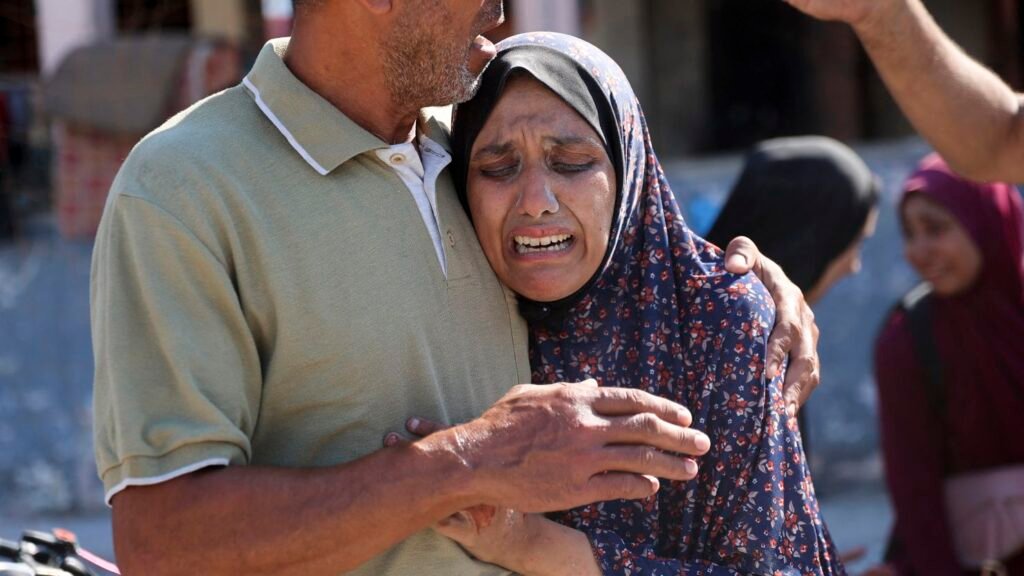
Gaza Herald- US Special Envoy Steve Witkoff arrived Friday at an aid distribution center in Rafah, southern Gaza, amid mounting international outrage over what human rights advocates are calling Israel’s use of starvation as a weapon of war.
At least 159 Palestinians have died from hunger in Gaza, according to local sources, while aid delivery continues to face severe restrictions. Witkoff’s visit comes just one day after dozens were reportedly killed at food distribution sites operated by the controversial US- and Israeli-backed Gaza Humanitarian Foundation (GHF) sites that many Palestinians now refer to as “killing zones.”
The White House confirmed that Witkoff is in the region to inspect the aid delivery process and finalize a plan to accelerate food and supply shipments into the besieged enclave. White House spokesperson Karoline Leavitt told reporters, “The special envoy and the ambassador will immediately brief the president following their visit to secure approval for a final plan to distribute food and aid in the region.”
Witkoff is expected to visit GHF sites despite growing concern even within the US Senate that American nationals could be held liable for the deaths of more than 1,000 Palestinians who died attempting to access aid at these locations. The GHF was established to bypass United Nations agencies, a move widely condemned by humanitarian organizations, which accuse it of violating international aid standards.
While in Israel, Witkoff also met with Prime Minister Benjamin Netanyahu to revive ceasefire negotiations and address the escalating humanitarian disaster. Netanyahu is under pressure both internationally and domestically, not only over the destruction in Gaza but also from the families of Israeli captives who demand a deal that would end the war and secure the return of their loved ones.
Horrific Situation on the Ground
Former US President Donald Trump, speaking Thursday, described the situation in Gaza as “horrific,” responding to remarks by Republican Representative Marjorie Taylor Greene, who labeled Israel’s assault on Gaza a genocide. “People are suffering from extreme hunger,” Trump said, highlighting the financial aid being channeled to address the famine.
Meanwhile, global media outlets such as Al Jazeera continue to report from neighboring countries like Jordan after being banned from operating in Israel and the occupied West Bank, as scrutiny over Israel’s war conduct and its aid policies intensifies.
Witkoff’s visit underscores the urgency of the crisis and the growing divide between Israeli policies on the ground and international expectations for humanitarian access and civilian protection.
Famine Death Toll Mounts in Gaza
At least 159 Palestinians, including 90 children, have now died from hunger in Gaza, according to figures released by the Gaza Health Ministry. The crisis is accelerating rapidly, with the World Health Organization (WHO) reporting that 63 of 74 malnutrition-related deaths in 2025 occurred in July alone. Hospitals and emergency clinics are overwhelmed, lacking the resources to treat the growing number of starvation cases. Nearly 20% of children under five in Gaza City are suffering from acute malnutrition.
Controversy Surrounds GHF Aid Operations
The Gaza Humanitarian Foundation (GHF), backed by the U.S. and Israel, is facing global condemnation for its heavily militarized and restricted approach to aid delivery. Established in May 2025 to bypass United Nations agencies, GHF has shut down over 400 UN-run distribution sites, replacing them with just four guarded hubs in Gaza. Access is often limited to minutes per day, with little notice, sparking deadly stampedes and shootings. Palestinian survivors and aid workers describe these locations as “death traps.”
Aid Sites Become Killing Zones
Over 1,000 Palestinians have reportedly died while trying to access food at GHF-run sites. Independent reports suggest that at least 859 of these deaths occurred in direct proximity to aid hubs, with many victims shot by Israeli forces or U.S. private contractors providing security. Eyewitnesses and former employees allege that some security personnel used live rounds without provocation, describing Palestinians with dehumanizing language and displaying indifference to the lethal outcomes.
Global Diplomatic Backlash
The fallout from the GHF scandal has reached international corridors of power. France’s Foreign Minister, Jean‑Noël Barrot, labeled the operation a “bloodbath” and called for it to be dismantled. In Washington, 21 Senate Democrats have demanded an immediate halt to U.S. funding, citing grave concerns about violations of humanitarian law. GHF received $30 million in U.S. government grants, despite being run by figures with ties to U.S. defense contractors and political lobbying groups.