
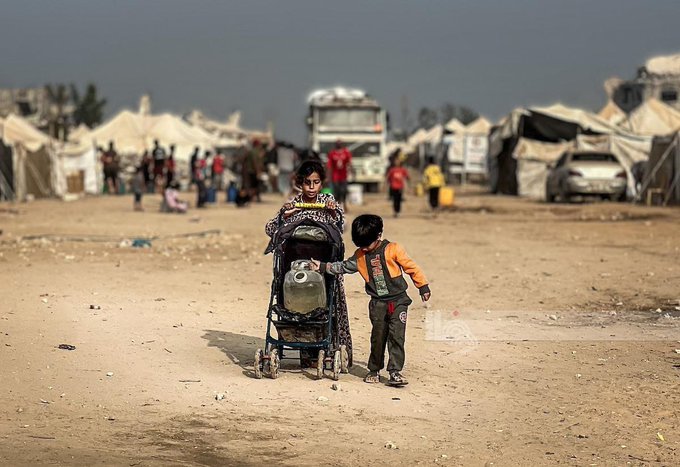
Gaza Herald – Before a few years ago, the Gaza Strip used to witness visible activity during the Hajj season and Eid al-Adha, when livestock markets were busy, families prepared sacrificial animals, and communities shared in religious rituals despite ongoing economic hardship and blockade.
Today, for the third consecutive year, those traditions have largely disappeared amid genocide, displacement, and widespread destruction, turning the Eid season into a period marked by hardship and loss rather than celebration.
Residents say that familiar social scenes linked to the holiday, family gatherings, livestock purchases, and public festivities have been replaced by daily struggles to secure basic needs.
Before the genocide, Eid al-Adha in Gaza involved the slaughter of tens of thousands of livestock, supported by both individual families and charitable organizations that distributed meat to vulnerable households across the Strip.
According to data from Gaza’s Ministry of Agriculture, around 17,000 cattle and 24,000 sheep were slaughtered during Eid al-Adha in 2023, with roughly 130,000 households participating.
That system has since collapsed due to widespread destruction caused by Israeli bombardment, the loss of livestock, shortages of feed and veterinary care, and severe economic deterioration, leaving sacrificial animals largely unavailable or unaffordable.
The situation has been further exacerbated by restrictions on importing live livestock and agricultural inputs, contributing to severe scarcity and sharp price increases in local markets.
Livestock traders say markets that were once active in the weeks leading up to Eid are now largely empty, with many breeders reporting significant losses of animals and livelihoods.
Observers note that the prolonged disruption of religious and social traditions is adding to psychological and social pressure, particularly among children growing up amid displacement and ongoing Israeli attacks.
While Eid al-Adha continues to be celebrated across much of the Muslim world, residents in Gaza face a very different reality, where long-standing traditions have been overtaken by ongoing genocide and humanitarian crisis.

