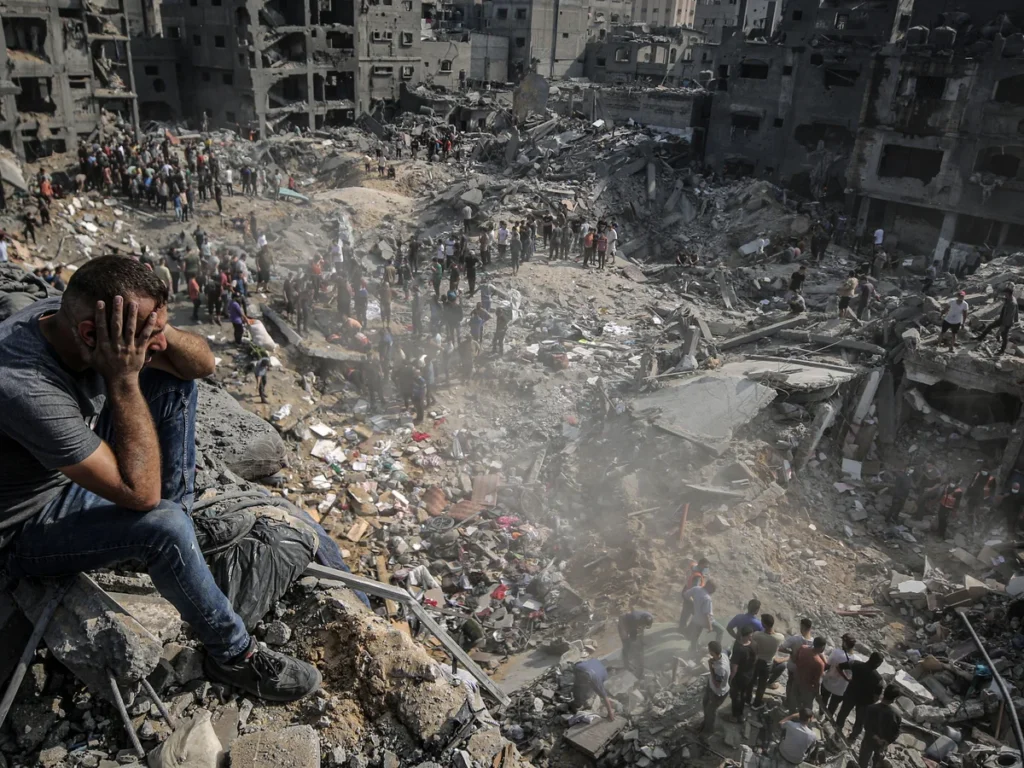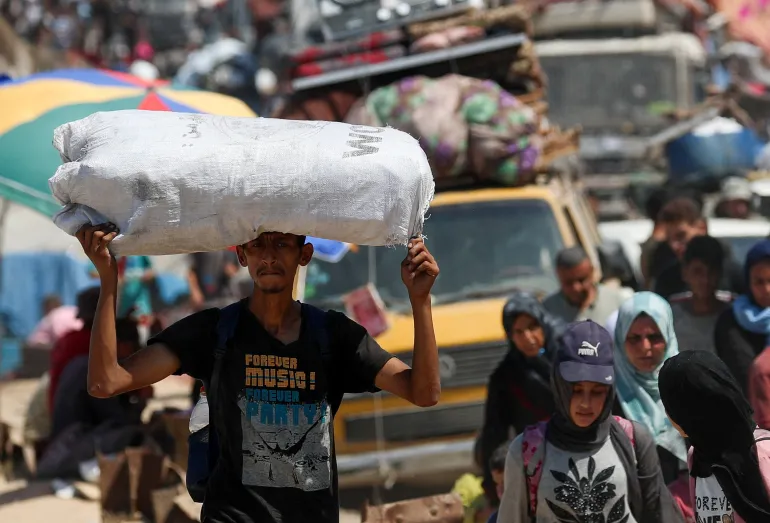
Gaza Herald – The widespread destruction of infrastructure across the Gaza Strip during the ongoing genocide has led to the near-total collapse of the transportation system, forcing Palestinians to adopt informal alternatives that are reshaping mobility, economic activity, and social life.
An analytical study issued by the Palestinian Center for Political Studies revealed that the destruction of roads, vehicles, and transport networks, combined with severe fuel shortages, has paralyzed conventional transportation and drastically reduced its operational capacity. As a result, daily movement has become increasingly difficult, costly, and risky.
The study noted that while the collapse has disrupted normal life, it has also given rise to what it described as an alternative “mobility economy.” This system relies on simple and unregulated means of transport, including handcarts, animal-drawn carts, bicycles, tuk-tuks, and trucks repurposed for group transport.
These shifts extend beyond services, significantly impacting Gaza’s economic and social structures. New occupations have emerged around alternative transport methods, while transportation costs have surged, deepening living burdens and widening disparities in access to essential services.
Transportation has also become a critical factor in the distribution of food and humanitarian aid. Access to basic necessities is now closely tied to individuals’ ability to afford movement, particularly amid a severe liquidity crisis and rising transport costs.
The study concluded that this situation represents a forced model of societal adaptation under collapse, highlighting residents’ resilience and ingenuity, yet remaining fragile in the absence of infrastructure capable of ensuring safe and equitable mobility.
It called for urgent intervention to reorganize the transport sector as part of a comprehensive reconstruction plan, ensuring the restoration of mobility as a fundamental component of humanitarian and economic recovery in the Gaza Strip.