
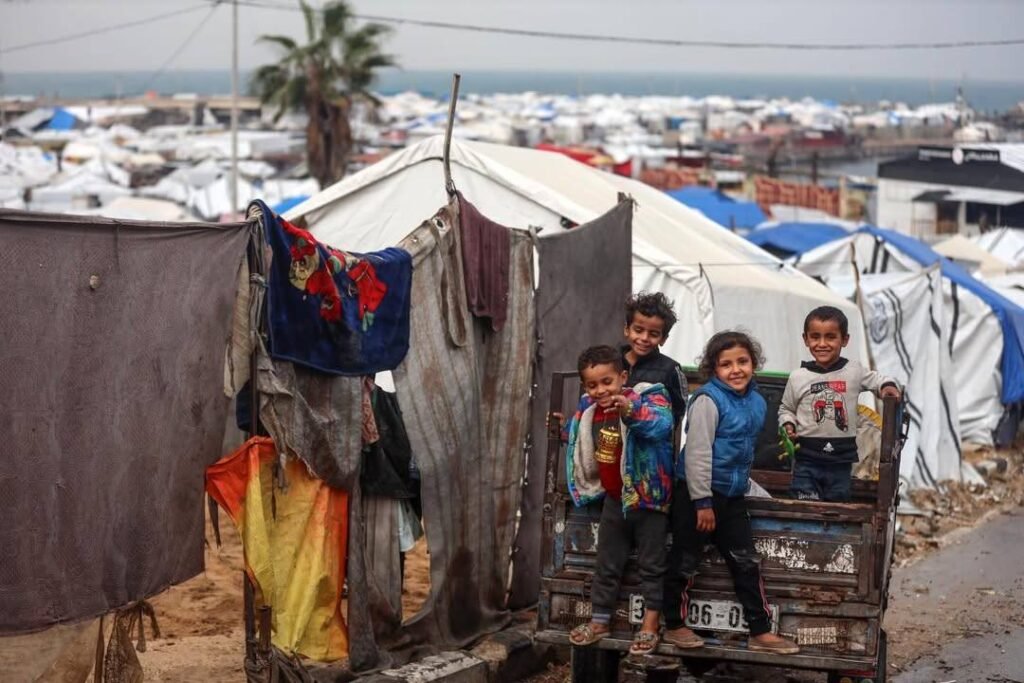
Gaza Herald _Ramadan in the Gaza Strip no longer resembles what residents knew for decades. A month once defined by calm, collective worship and abundant meals is now shaped by the realities of war, marked by mass displacement, widespread destruction, severe shortages of essential resources, and profound changes to daily life.
Communal prayers and Ramadan activities that once filled neighborhoods with movement and spirit have significantly declined. After the destruction of hundreds of mosques, many families now perform their prayers inside shelters or damaged homes, in an atmosphere dominated by fear and uncertainty.
Ramadan tables no longer reflect their traditional abundance. Food shortages and soaring prices have altered both iftar and suhoor, with meals often reduced to whatever aid is available. Power outages and limited access to water have turned basic preparations into an additional burden for families already struggling to survive.
Family visits,once central to the spirit of Ramadan, have also diminished due to displacement and separation. Many families rely on phone calls when possible, while children experience a very different Ramadan, with fewer decorations, celebrations, and moments of joy.
Ghassan: “Ramadan used to bring peace. Now it is filled with stress.”
Ghassan Fayyad, displaced from Beit Lahia and currently sheltering in a UNRWA school in western Gaza, said he no longer feels the arrival of Ramadan as he once did.
“Whenever Ramadan approached, we felt happy,” he said. “Now, all we think about is when our suffering from displacement and life in tents will end.”
He recalled the last Ramadan spent at home: “We cleaned our homes, hung lights on electricity poles, and prepared the mosque for worshippers. Today, there is no mosque, no neighborhood, no loved ones, and no signs of joy.”
He added, “We miss those we lost. Ramadan has lost its family visits, its gatherings, its sweets, and taraweeh prayers. It used to bring peace of mind, now it is only stress and exhaustion.”
Mohammed: “This is our third Ramadan in a tent.”
Mohammed Alian, displaced from Jabalia refugee camp to western Gaza, described a similar reality.
“We miss the beauty of Ramadan traditions before the war. Its arrival used to bring us happiness and security, something we no longer feel,” he said.
“This is our third Ramadan in a tent. There are no traditions left. We used to cook on gas, break our fast under electric lights, and hear the call to prayer clearly. Now we cook over fire, break our fast by phone light, and the call to prayer passes quietly.”
He continued, “There are no decorations, lanterns, or sweets to bring joy to children. Everything has been turned upside down. Ramadan is no longer a season of joy or communal prayer.”
Widad: “The rituals began before the moon sighting, but they are gone.”
Widad Hammouda recalled how preparations once defined the season.
“Ramadan rituals didn’t begin with the moon sighting, but days earlier. We prepared our homes, bought supplies, and planned family visits,” she said.
“Our days started with dawn prayers and Quran reading, followed by trips to the market, and ended with taraweeh prayers.”
But those routines have disappeared.
“Our home was destroyed, loved ones were killed, and those who survived are scattered across displacement camps. Everything that once defined Ramadan has vanished with the war.”

