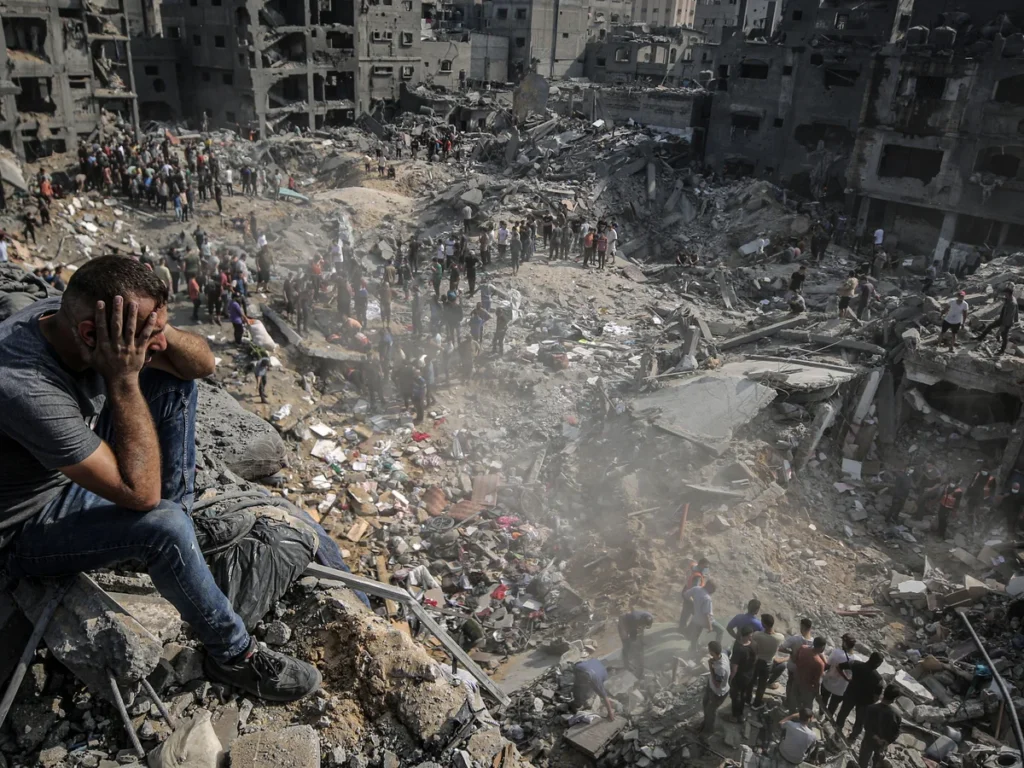
Gaza Herald _Freedom of movement is a fundamental right under international humanitarian law, inseparable from access to life-saving necessities such as healthcare, food, education, and family unity. In Gaza, however, this right has been systematically transformed into an instrument of domination. Through closures, permits, and military-controlled crossings, Israel has reduced movement to a privilege granted selectively, not a right guaranteed by law.
Since the outbreak of Israel’s war on Gaza in October 2023, this system of control has hardened into a central pillar of the siege. Palestinians seeking medical care abroad, students hoping to continue their education, families separated by borders, and the wounded awaiting evacuation all confront the same reality: their fate is decided at Israeli-controlled gates.
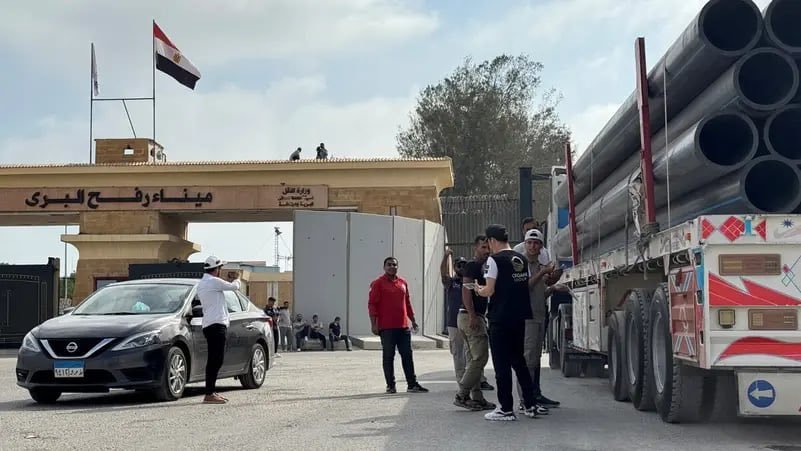
At the heart of this regime stands the Rafah crossing, long perceived as Gaza’s only outlet not directly governed by Israel. Yet in practice, Rafah has been absorbed into the same system of control. When Israel announced it had taken operational control of the Palestinian side of the crossing in May 2024, a critical lifeline for aid and medical evacuations was effectively shut down at the peak of humanitarian catastrophe. Food spoiled in stranded trucks, aid convoys stalled, and survival itself became contingent on military approval.
Movement as a Weapon of Control
Following Rafah’s closure, Israel selectively opened alternative crossings for limited categories of “pre-approved” goods and a small number of patients or aid workers. These routes shifted constantly in response to military developments, creating an unstable and unpredictable aid system. Entire areas, particularly in northern Gaza, were further isolated as roads and internal corridors were sealed, restricting not only entry into Gaza but movement within it.
Humanitarian convoys were subjected to mandatory coordination, requiring repeated military approvals even after entry was granted. Hundreds of missions were delayed, obstructed, or cancelled altogether. This web of restrictions reveals a deliberate policy: the use of movement control as a tool of siege, coercion, and collective punishment, rather than a temporary security measure.
Medical Evacuations: Life Held at the Crossing
Nowhere is this policy more lethal than in the case of medical evacuations. After Rafah’s closure, evacuations were funnelled through a slow, heavily conditioned process involving multiple approvals and security clearances. The result was catastrophic. Over many months, only a fraction of patients in urgent need were allowed to leave, while tens of thousands remained trapped in a collapsing health system.
Official figures show that evacuation numbers rise only when movement routes expand, and collapse again when restrictions tighten. Meanwhile, more than 18,500 patients still require life-saving treatment outside Gaza, and over 1,600 Palestinians have died while waiting for permission to travel. These deaths are not accidental; they are the predictable outcome of policies that deny civilians timely access to care.
Even recent partial reopenings of Rafah have changed little. Crossings remain tightly controlled, numbers severely limited, and Palestinians subjected to multiple layers of screening and interrogation. Israel continues to determine who eats, who is treated, who reunites with family, and who remains trapped.
This system did not begin with the current war. Since 2007, the blockade on Gaza has evolved into a permanent structure governing every aspect of life for more than two million people. It has paralysed the economy, entrenched poverty, fragmented families, and deepened dependence on humanitarian aid. The current restrictions represent not a departure, but an intensification of a long-standing policy.
By controlling food, water, medicine, and movement, Israel has turned freedom of travel into a mechanism for regulating Palestinian survival itself. These practices strike at the core of international humanitarian law, raising serious legal questions about collective punishment, proportionality, and the deliberate use of deprivation as a method of warfare.