
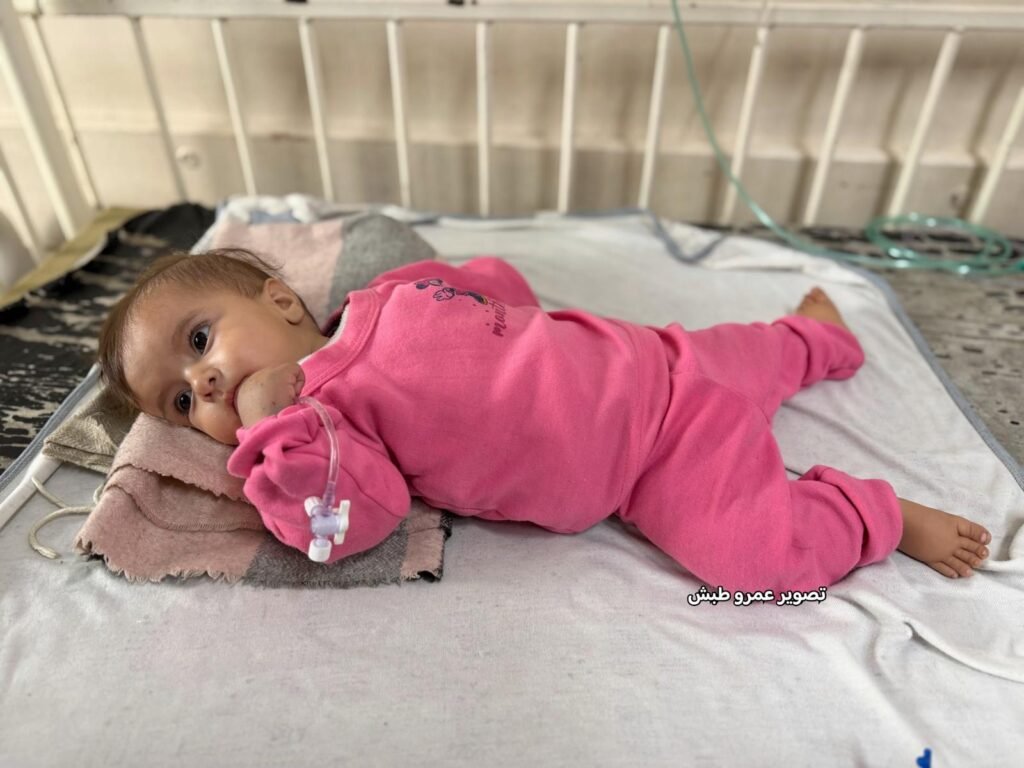
Gaza Herald – Six-month-old Missak Al-Adini suffered severe neurological damage at birth, leaving her unable to control her body. She endured persistent vomiting, chronic diarrhea, severe malnutrition, high fever, and respiratory distress, with a body too weak to feed or move independently.
Medical teams in Gaza reported that local facilities lacked the equipment, medications, and specialized care required to treat her condition. Months of delayed access to treatment under the Israeli blockade left her in critical danger, alongside thousands of other children and patients in urgent need of care.
Hospitals across Gaza continued to operate at discounted capacity following years of conflict, bombings, and resource shortages. Many departments remained closed, essential medicines and devices were unavailable, and healthcare staff were exhausted or missing due to killings and arrests, leaving patients without adequate care.
Doctors estimated that thousands of critically ill patients, including hundreds of children, required urgent treatment outside Gaza. Denied timely medical transfers, many had already lost their lives. Missak’s condition illustrated the acute consequences of restricted movement and a collapsing healthcare infrastructure on the most vulnerable.

