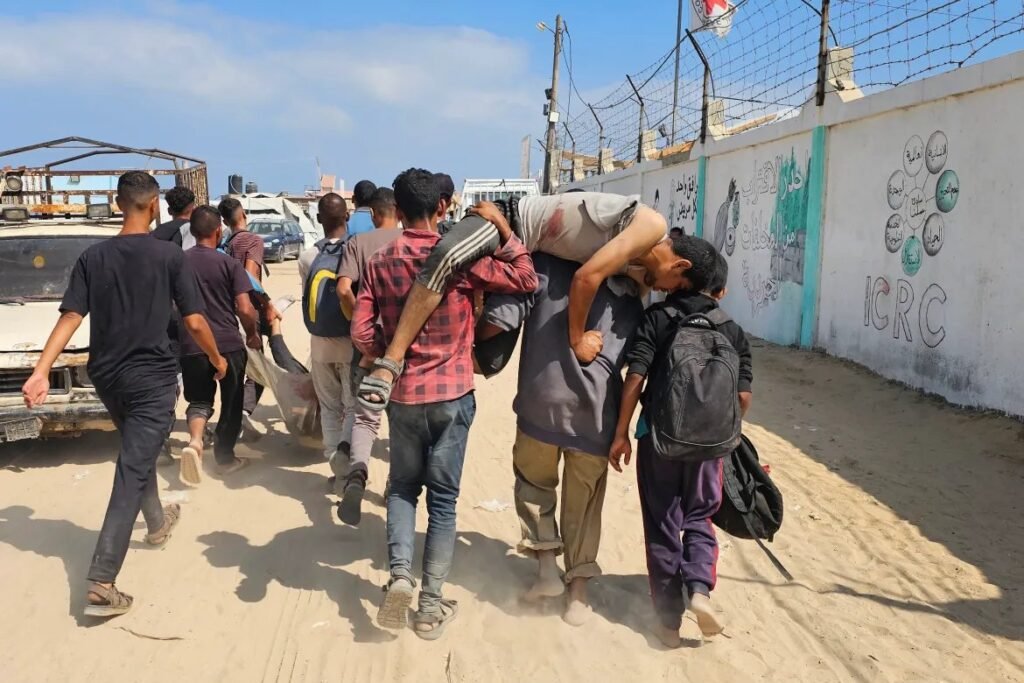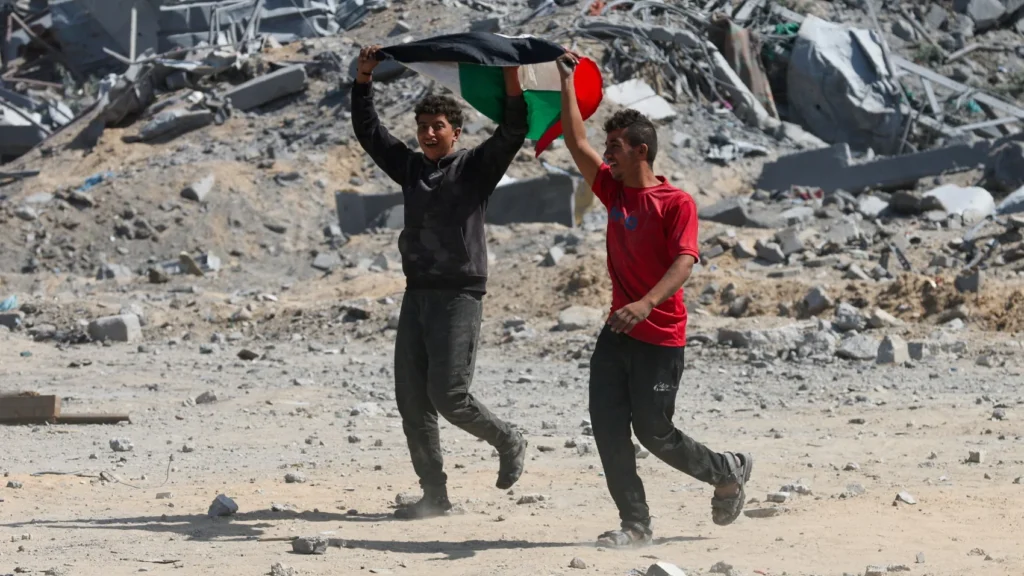
Gaza Herald — The year 2025 marked one of the darkest chapters in Gaza’s modern history, as Israel’s ongoing war continued to devastate the besieged Palestinian territory, leaving behind unprecedented human loss, widespread destruction, and a shattered society struggling to survive. Throughout the year, Gaza endured relentless military assaults, prolonged closures, and systematic deprivation, deepening a humanitarian catastrophe that had already begun in late 2023.
A Population Under Siege
More than 2.4 million Palestinians in the Gaza Strip lived through what Palestinian authorities and human rights organizations describe as a comprehensive genocidal campaign. For 283 days, Gaza was subjected to continuous bombardment and military operations, alongside repeated violations of ceasefire agreements. By the end of the year, approximately 90 percent of Gaza’s urban infrastructure had been destroyed, and Israeli forces had taken control of an estimated 55 percent of the territory. Over 112,000 tons of explosives were dropped on one of the most densely populated regions in the world, transforming entire neighborhoods into uninhabitable ruins.
Massive Civilian Death Toll
The human cost of the war continued to rise throughout 2025. Palestinian officials reported that the total number of martyrs and missing persons reached 29,117 during the year. Of these, more than 25,700 bodies were recovered and brought to hospitals, while over 3,400 people remained missing, many believed to be buried under collapsed buildings. Children and women were among the most heavily affected, with at least 5,437 children and 2,475 women killed. Overall, children, women, and the elderly accounted for roughly half of all fatalities, underscoring the civilian nature of the toll.
Deaths by Starvation and Deprivation
Beyond airstrikes and shelling, hunger emerged as a deadly weapon. At least 475 Palestinians, including 165 children, died from starvation and malnutrition as border closures and restrictions on aid persisted. Infants, pregnant women, and chronically ill patients were among the most vulnerable. Hundreds of kidney patients and thousands of cancer and chronic disease sufferers were deprived of treatment, while thousands of pregnant women faced severe health risks. Even attempts to deliver aid proved deadly, with civilians killed during faulty aid airdrops and chaotic food distribution efforts.
Health System in Collapse
Gaza’s healthcare system, already weakened by years of blockade, effectively collapsed in 2025. At least 22 hospitals were rendered completely out of service, while ambulances and civil defense vehicles were repeatedly targeted. Shortages of fuel, medicine, and medical staff made even basic treatment impossible in many areas. Earlier United Nations assessments had warned of hospitals operating at the brink of failure; by the end of 2025, medical care had become inaccessible for vast segments of the population.
Injuries, Arrests, and Daily Trauma
Tens of thousands of Palestinians were injured during the year, many suffering permanent disabilities. Hospitals recorded more than 62,800 injured patients, often under dire conditions. At the same time, more than 2,700 civilians were arrested, frequently during raids linked to displacement operations. Families were torn apart, and psychological trauma became a defining feature of daily life in Gaza.
Education and a Lost Generation
Education in Gaza was nearly erased. Ninety-five percent of schools were damaged, with dozens completely destroyed. More than 785,000 students were deprived of their right to education, while teachers, academics, and researchers were killed. Many schools were converted into overcrowded shelters, depriving children not only of learning but also of any sense of normalcy or safety.
Destruction of Homes, Culture, and Heritage
The scale of destruction extended far beyond housing. More than 100,000 homes were completely destroyed, with tens of thousands more rendered uninhabitable. Nearly two million people were forcibly displaced, many multiple times. Places of worship, cemeteries, and historical sites were also targeted, erasing cultural and religious landmarks and deepening the sense of loss across generations.
Starvation, Aid Blockades, and Humanitarian Crisis
For much of the year, border crossings remained closed, preventing the entry of food, fuel, and medical supplies. Aid convoys were blocked or attacked, charitable kitchens destroyed, and humanitarian workers killed. Hundreds of thousands of children faced severe hunger, while infants were at risk of death due to the lack of basic nutrition. Thousands of patients were denied permission to leave Gaza for life-saving treatment.
Infrastructure and Economy in Ruins
Gaza’s infrastructure suffered near-total collapse. Water wells, electricity networks, sewage systems, and roads were destroyed on a massive scale, leaving large areas without clean water or sanitation. Agriculture and fishing, once vital sources of food and income, were almost entirely wiped out. Palestinian authorities estimated direct economic losses exceeding $33 billion in 2025 alone, not accounting for the long-term damage to human capital and social stability.
Media, Memory, and the World’s Witness
International media outlets, including Al Jazeera, described Gaza as the deadliest conflict zone ever recorded for journalists, with more than 300 media workers killed since October 2023. Images from 2025 showed long food lines, flooded displacement camps, and entire families wiped out, offering only fragments of the suffering endured by Gaza’s population.
A Year That Redefined Gaza
By the end of 2025, Gaza stood as a symbol of immense human suffering and resilience under siege. United Nations agencies repeatedly warned that civilians were being pushed beyond the limits of survival, as essential systems collapsed and humanitarian access remained severely restricted. For Palestinians in Gaza, the year was not only defined by death and destruction, but by a daily struggle to endure amid conditions that stripped life of its most basic necessities.