Gaza Herald _At a time when Israel has sealed Gaza off from the world, turning the enclave into a blackout zone where even truth struggles to survive, Gaza Herald believes that every outsider who manages to cross the siege line carries not only a notebook but a moral burden.
Jean-Pierre Filiu, a historian, diplomat, and witness, entered Gaza at a moment when foreign journalists, academics, and human rights monitors were barred for more than two years. What he brought back is not just a diary. It is an indictment. It is a reminder that Gaza is not a tragedy that began on October 7, but a place with a long and living history that Israel has tried to erase through fire, starvation, and silence. Filiu’s account, A Historian in Gaza, becomes part of the archive that the occupier attempted and failed to bury.
“Nothing had prepared me for what I saw and experienced in Gaza. Nothing at all. Nothing.”
The opening line of Jean-Pierre Filiu’s extraordinary account is no exaggeration, even coming from a scholar and former diplomat who has witnessed more than his share of conflict zones.
A professor of Middle East Studies at Sciences Po and a former diplomat, Filiu possesses all the credentials to chronicle the 32 days he spent in Gaza a year ago while accompanying Doctors Without Borders. His role as a historian gives his testimony weight at a time when Israel has worked relentlessly to keep independent observers out.
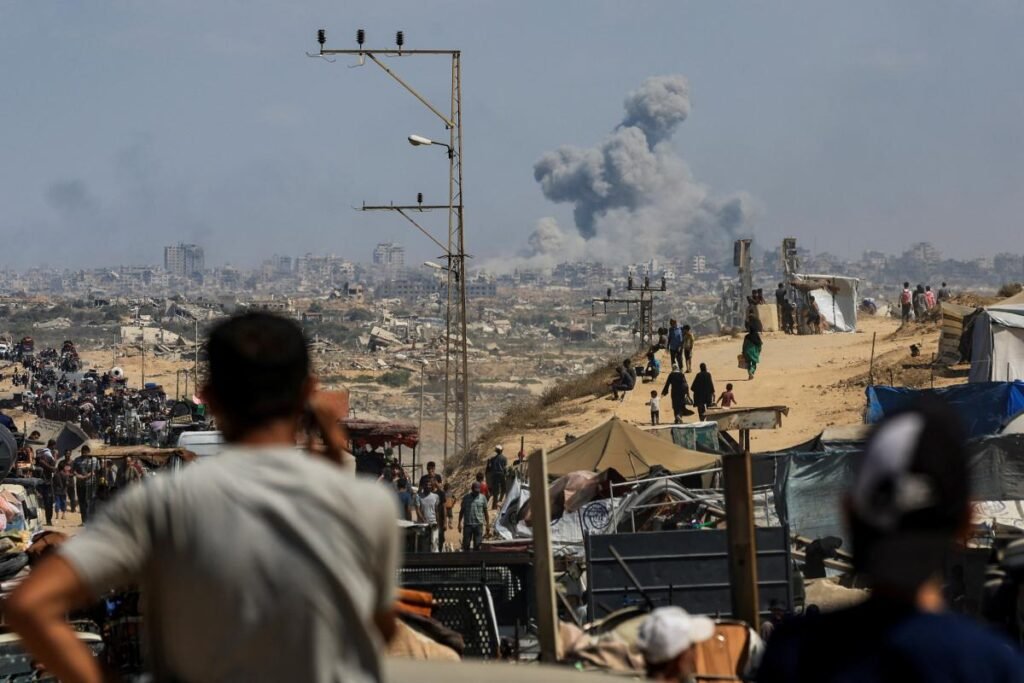
For over two years, Israel has blocked all outside journalists, academics, and human rights organizations from entering Gaza. Yet the story of the occupier’s atrocities has still been documented thanks to medical teams, humanitarian workers, and, above all, Palestinian journalists who report under fire, often at the cost of their own lives. Filiu pays profound tribute to them in A Historian in Gaza.
As an academic, writer, and historian, Filiu delivers a layered narrative, blending personal witnessing with deep historical context. He fills a glaring void in global coverage: the near-total absence of historical understanding. For many distant commentators, Gaza’s story supposedly begins on October 7, a convenient erasure that detaches the genocide from the decades of siege, occupation, and oppression that preceded it.
In contrast, Filiu’s book re-anchors Gaza in its full historical depth, showing how this small strip of land has repeatedly sat at the crossroads of empires, wars, and pivotal global events.
Few outsiders can claim to know Gaza’s history or its people truly. Filiu emphasizes the scale of the current catastrophe, noting that while about 1% of Palestinians were killed during the 1948 Nakba, Israel’s ongoing assault has killed roughly 2.3% of Gaza’s population between October 2023 and January 2025, a level of destruction unprecedented in the modern era.
A month inside a genocide
Each chapter tackles a central theme of life and death in Gaza.
He begins with the absurd, punishing process of entering Gaza via a humanitarian convoy from Jordan, describing Israel’s deliberately obstructive maze of restrictions. Even aid workers may bring only medication for personal use and no more than three kilograms of food.
His chapter on hospitals is exactly as horrifying as expected and worse. He recounts Israel’s attacks on every hospital in Rafah during the May 2024 offensive except the Emirati field hospital, whose survival, he suggests, was likely tied to the political sensitivities of the Abraham Accords.
Filiu devotes another chapter to Gaza’s water crisis, one of the most underreported elements of the genocide. He documents the scarcity, contamination, and even the deadly floods with the winter rains of December 2024, becoming yet another enemy in the fight for survival. That struggle only intensified during the winter of 2025.
People portrayed with humanity and dignity
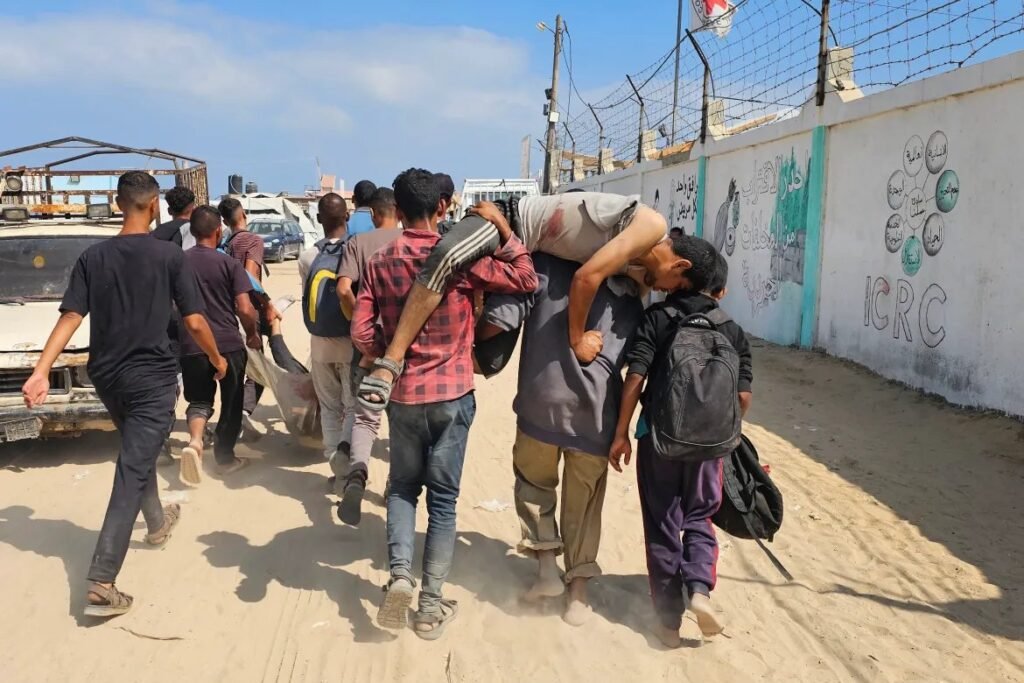
Filiu’s portrayal of Palestinians is profoundly humanizing. He describes real people, full of ingenuity and resilience: three-wheeled vehicles powered by repurposed gas canisters; street vendors running makeshift charging stations via solar panels; and the common saying he hears over and over, “A Palestinian’s only friend is his donkey.”
He is clear about the limits of what he saw. Restricted mostly to the so-called “safe zone” of al-Mawasi, he could not reach Gaza City or many other devastated regions. He acknowledges his relative privilege: he could eat, drink, and leave when necessary. The people he writes about could not.
Still, his account brings Gaza vividly to life even as that life is being systematically destroyed. Spending a month inside an ongoing genocide is an act of courage, and the resulting testimony is a powerful tribute to the endurance of a people who have faced this violence for more than two years.
A final indictment of the world’s silence
Filiu captures the world’s betrayal with one devastating observation: the emaciated donkeys that continue pulling carts, helping families survive, have done far more for Palestinians than international law ever has.