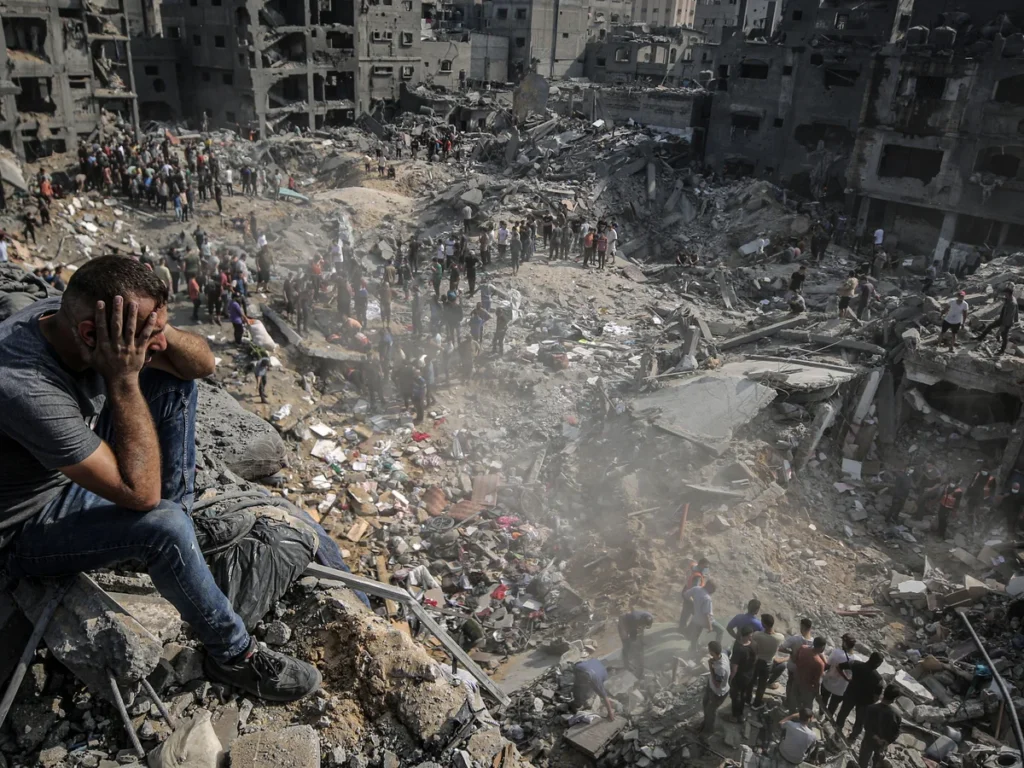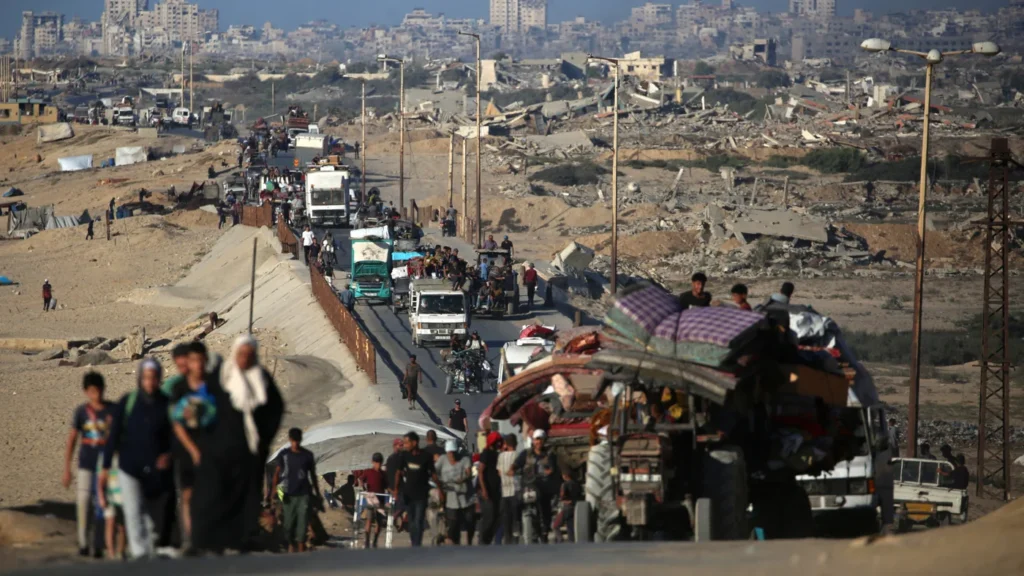
Gaza Herald_Warnings of a full-scale humanitarian and health collapse in the Gaza Strip are intensifying as the consequences of Israel’s ongoing genocidal war continue to unravel. Communities already devastated by months of bombardment are grappling with failing infrastructure, escalating environmental hazards and rapidly deteriorating health conditions that threaten thousands of lives.
In Khan Yunis, residents of the Al Amari neighborhood have been sounding the alarm over rising pools of wastewater mixed with rainwate,r which now threaten to spill into homes and surrounding streets. People in the area fear an emerging environmental disaster as sewage networks remain crippled due to the destruction of essential infrastructure that once supported daily life. The Network of Civil Society Organizations in Gaza stated that the territory is still experiencing what it described as a real famine, noting that the humanitarian aid entering through the available crossings meets no more than a fraction of basic needs. Despite suffering widespread losses, UNRWA remains the backbone of humanitarian efforts across the Strip, although many of its facilities have been severely damaged or rendered inoperable.
Stefanos Fotio who heads the UN Food Systems Coordination Center urged the immediate reopening of Gaza’s border crossings to rebuild the shattered food supply chain and allow the consistent entry of critical humanitarian relief. UNRWA reported that approximately seventy-five thousand displaced Palestinians are currently taking refuge in more than one hundred of its damaged buildings, where overcrowding, minimal access to clean water and food and the spread of disease caused by failing sanitation systems have created conditions that the agency described as extremely harsh. UN officials warned that Gaza is on the brink of an irreversible humanitarian collapse unless decisive international action is taken to protect civilians and restore essential services.
A UN deputy spokesperson stated that eighty-one percent of Gaza’s buildings and structures have been demolished, calling the level of destruction unprecedented in modern history. The United Nations has formally classified Israel’s campaign in Gaza as genocide, underscoring the magnitude and scope of the devastation. Civil Defense spokesperson Mahmoud Basal warned that unexploded munitions scattered across the Strip have become a lethal threat to civilians, describing them as a ticking bomb that requires specialized teams and advanced technical capabilities, which Gaza no longer possesses after months of war.
A detailed investigation by The Guardian described Gaza as now facing what it called the most challenging humanitarian operation in modern warfare. According to the report, roughly sixty-one million tons of rubble blanket the Strip and an estimated ten thousand people remain buried beneath the debris, with the number possibly reaching fourteen thousand. With Israel continuing to prevent the entry of heavy machinery, rescue workers are digging with their bare hands using simple tools such as shovels and pickaxes. During sixteen days of ceasefire, rescue teams managed to retrieve only four hundred seventy two bodies. The report added that seventy-seven percent of Gaza’s road network has been destroyed and that clearing the rubble could take more than seven years, especially with thousands of unexploded munitions that have already caused over a hundred forty deadly incidents since October twenty-twenty three.
On the political front UN Secretary General António Guterres said the organization is working to expand humanitarian access and support efforts to uphold the fragile ceasefire. Speaking at the Doha Social Development Summit he confirmed that the UN Security Council is currently discussing a United States-drafted resolution that would establish an international stabilization force in Gaza. He emphasized that any governing entity or security presence in Gaza must derive its legitimacy from the United Nations and he called for a credible political framework that ends the occupation and advances Palestinian self-determination through a two-state solution. Reports indicate that the United States has proposed that the international force remain in Gaza for no less than two years.
Meanwhile US intelligence chief Tulsi Gabbard arrived in Israel to oversee developments related to the ceasefire agreement and engage in discussions regarding postwar arrangements. Israel Hayom reported that Gabbard met with Prime Minister Benjamin Netanyahu and senior security leaders to address issues such as the northern border with Lebanon, the Iran portfolio and the second phase of the Gaza ceasefire deal. According to Gaza’s Government Media Office, the Israeli military has committed nearly two hundred violations of the ceasefire since it went into effect on October 10, highlighting both the fragility of the agreement and the ongoing suffering endured by Gaza’s population as they face an unparalleled humanitarian disaster.