Gaza Herald_ Hamas has accused Israel of obstructing joint efforts to locate and recover the remains of deceased captives and soldiers in Gaza, deepening a growing dispute over post-ceasefire humanitarian coordination in the war-torn enclave.
A senior Hamas official told Gaza Herald that the Israeli army has refused to permit joint teams of Hamas representatives and the International Committee of the Red Cross (ICRC) to access areas in eastern Gaza that remain under Israeli military control.
“Israel deliberately places obstacles in front of the efforts to search for the bodies of its soldiers in Gaza,” the official said, accusing Tel Aviv of “politicizing a purely humanitarian mission.”
He added that Hamas had formally notified mediating parties and guarantor states about Israel’s actions, urging them to “assume their responsibilities and pressure the occupation to stop misleading public opinion.”
Dispute Over Search Efforts
The disagreement centers on coordination procedures between Hamas and international organizations attempting to locate the remains of individuals still missing after nearly two years of war.
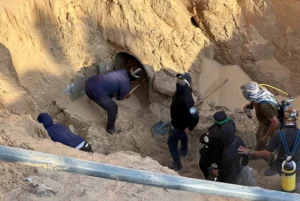 Hamas has argued that Israel’s restrictions prevent the proper recovery of bodies from beneath destroyed neighborhoods and combat zones, particularly in the eastern areas of the Strip where Israeli troops remain stationed.
Field sources say that several proposals were made through mediators, including Egypt and Qatar, to facilitate neutral search operations supervised by the Red Cross. However, no agreement has been reached on guarantees for the safety of local rescue teams or the scope of Israeli involvement.
Earlier reports indicated that Israel had briefly withdrawn troops from a small section of Gaza to enable a limited search for the remains of Lieutenant Hadar Goldin, an Israeli soldier killed during the 2014 war and whose body has remained in Gaza ever since. But sources on the ground say that broader search missions have been blocked by Israeli authorities citing “security considerations.”
Calls for International Involvement
Hamas’s statement comes amid increasing calls from human rights organizations and humanitarian agencies for unrestricted access to all parts of Gaza to assist in recovery efforts.
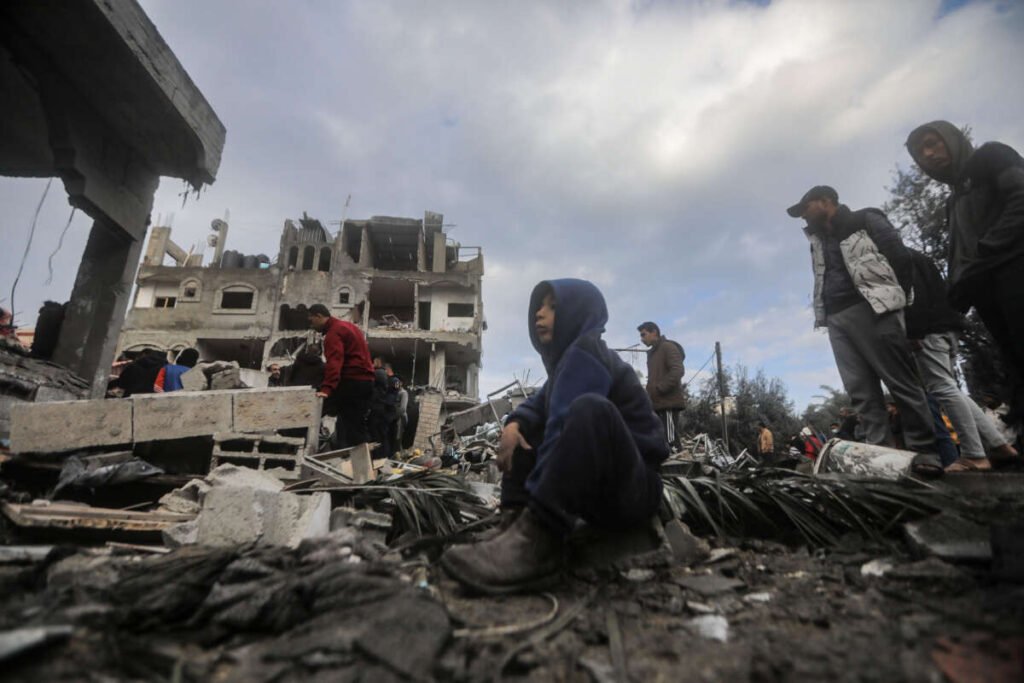
The Palestinian Civil Defence recently estimated that more than 10,000 bodies remain buried under the rubble, and that ongoing restrictions on the entry of heavy equipment are hindering recovery operations for both Palestinians and Israelis alike.
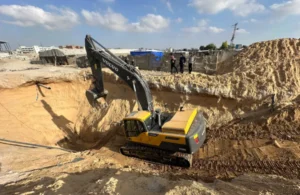 A humanitarian official in Gaza told Gaza Herald that Israel’s refusal to allow neutral search missions “not only delays closure for families of missing persons but also deepens the humanitarian suffering of thousands who continue to live beside mass destruction and uncollected debris.”
The official added that the situation “highlights the double standard” in the treatment of remains, with international resources reportedly dedicated to locating Israeli captives while Palestinian victims remain unrecovered beneath collapsed homes.
Sensitivity of the Issue
The fate of captives and the recovery of bodies have been among the most politically sensitive issues since the announcement of the ceasefire.
Israel maintains that Hamas still holds several living captives, while Hamas asserts that most have died during Israel’s bombardment and ground operations.
Both sides have accused each other of obstructing humanitarian mediation.
For families on both sides, the uncertainty continues to inflict emotional suffering. International mediators have urged both parties to depoliticize recovery efforts and allow the Red Cross to operate freely, warning that continued obstruction could undermine the fragile ceasefire and delay any progress toward post-war reconstruction.
Wider Context
The dispute over the recovery of remains adds another layer to the broader humanitarian crisis in Gaza, where millions remain displaced and essential services are near collapse.
Despite the ceasefire, Israeli drones continue to hover over densely populated areas, and local residents say that frequent air activity and sporadic explosions keep the population in a state of constant fear.
Analysts say Israel’s reluctance to permit broad international access to Gaza , including for journalists, investigators, and aid workers , is part of a larger policy aimed at maintaining control over the flow of information and movement in the enclave.
Outlook
Humanitarian organizations insist that recovering the bodies of all victims , regardless of nationality , is a moral and legal obligation under international humanitarian law.
They have urged both sides to enable transparent cooperation that prioritizes human dignity over political or military calculations.
As the search for closure continues, Gaza remains burdened not only by physical destruction but by the unresolved pain of thousands of families still waiting for answers.