
DaysofPal- Palestinian prisoners have always stood at the core of their nation’s resistance. Long before the current occupation, during the British Mandate, prison walls were the crucible of defiance and the forge of resilience.
Emerging from the Shadows
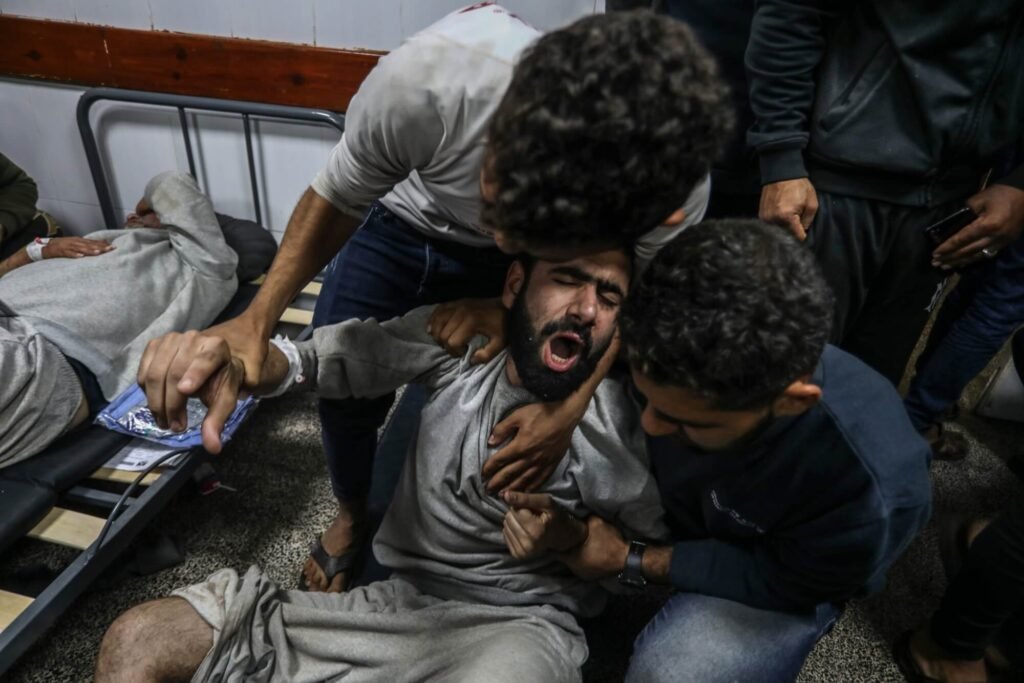
They walked out like phantoms returning to life. On screens worldwide, Western media highlighted twenty freed Israeli men—their names, families, and reunions broadcast in glowing light and endless coverage. Meanwhile, nearly 2,000 Palestinians passed through prison gates that had consumed years of their lives—unseen, unheard, uncelebrated.
No cameras awaited them. No smiling anchors. No headlines. Only hollow faces, trembling hands, and eyes that spoke a language of pain. The disparity was undeniable. For each Israeli released, a hundred Palestinians were freed. For every name known, a hundred remained erased. Their return was met with joy tainted by grief, hugs shadowed by loss, and celebration braided with mourning.
Reunions of Hope and Despair
Among them was Shadi Abu Sido, a photojournalist held for twenty months after being seized at Al-Shifa Hospital. When his wife entered, he embraced her as if clawing his way back from death. Then came his children—small, trembling, reaching for the father they feared lost forever. Falling to his knees, he held them, kissing their faces repeatedly, shouting through tears: “They told me you were all dead. They told me Gaza is gone.”
Ali al-Sayes, released after twenty years, was reunited with his daughter, once a child, now a young woman. He whispered to her, “You are my rose.” Words could never capture the stolen decades: birthdays missed, milestones unseen, lives lived apart.
No One Left to Embrace
For some, no family awaited them. Haitham Salem emerged clutching a bracelet for his daughter’s birthday, only to learn that his wife and all three children had been killed. He collapsed, crying, “My children have died. My children have died. My children have died.”
On the same morning, the father of journalist Saleh Jafarawi buried his son. Hours later, his eldest son, Naji, arrived, dazed and blinking against the sunlight, asking, “Where is Saleh?” His father’s voice broke: “He was martyred yesterday.” Naji collapsed, grief heavier than the chains just lifted, as they wept together in the dust.
Some were released into exile rather than home. Murad Abu Rub, from Ramallah, was deported to Egypt. His sister had bought him a suit, guessing his size since childhood, but he was gone before a final embrace could occur. Others were so weakened they could barely stand. One father fell into the arms of his three crying children, unable to hold them in return.
Contrast of Suffering
Israeli authorities had mobilized trauma teams for returning Israeli captives, only to find them healthy, smiling, walking freely. Palestinians, by contrast, emerged marked by starvation, bruising, and trauma. This suffering was systematic, enforced by far-right minister Itamar Ben Gvir, whose mission is to crush Palestinian prisoners through humiliation, starvation, and violence.
Human rights organizations and the UN document systematic torture: beatings, electric shocks, stress positions, sexual violence, dog attacks, burns, denial of medicine, prohibited prayer, sleep deprivation. The scars are etched on their bodies. Many emerge so altered that even their mothers do not recognize them.
Stories of Horror
A viral video shows a mother failing to recognize her son, Hamza, after two years of imprisonment. When someone whispers his name, she collapses, sobbing, “Hamza! Oh Hamza, habibi.” Years of isolation and abuse had transformed him beyond recognition.
Dr. Adnan al-Bursh, an orthopedic surgeon, was abducted from Al-Awda Hospital and taken to the notorious Sde Teiman prison, a black site of beatings and electric shocks, where he was raped and left for dead. Israeli protesters rallied not against the abuse, but in defense of the guards. Many doctors and paramedics remain missing, seized while performing their duty to save lives. Their only crime: compassion. Their punishment: disappearance.
Bodies Held Hostage
While Israel’s Prime Minister cites returning Israeli bodies to justify ceasefire violations, hundreds of Palestinian bodies remain in Israeli custody. Autopsies of returned Israeli hostages revealed deaths caused by Israeli bombs—the same that flattened Gaza and buried thousands. Returned bodies tell a different story: torture, gunfire, and cruelty.
Global outrage for dead Israeli captives is intense; for kidnapped, tortured, executed Palestinians, there is silence. Mothers scan the newly released, whispering, “Have you seen my son?” Videos show refrigerated trucks and Red Cross vehicles lined up to transport dozens of Palestinian bodies to Gaza. Current deals require Israel to return fifteen Palestinian bodies for every Israeli one. Estimates suggest 600–700 Palestinian bodies are still withheld.
Holding bodies is a tool of psychological warfare, turning mourning into leverage, death into arithmetic.
Prisons as Graveyards
These are not correctional facilities; they are graveyards for the living. Time erodes behind bars. Medicine is contraband, light and prayer are privileges, children are blindfolded, women give birth in handcuffs, journalists vanish, doctors tortured, paramedics beaten. Thousands are held without charges, not for actions, but for identity.
More than 9,100 Palestinians remain imprisoned, including 52 women and nearly 400 children. Over 3,500 are under “administrative detention,” hundreds more under Israel’s “Unlawful Combatant” law—a legal void enabling indefinite imprisonment.
Prison Beyond the Walls
The trauma extends beyond cells into every Palestinian home: the knock at night, the dawn raid, ransacked homes, terrified children, dragged-away loved ones. Prison is a shadow stalking life, disciplining bodies, crushing spirits, colonizing time.
Even the released are not free. They live under siege, under constant threat of re-arrest, hostages in their own land. Celebrating a loved one’s return can bring arrest for family members. Freedom is conditional, fleeting, always under threat.
Language of Oppression
Language reflects bias: Israelis are “hostages,” Palestinians “prisoners.” One evokes innocence and urgency; the other suspicion and guilt. Yet all Palestinians are hostages, held by siege, military occupation, and a carceral system designed to oppress rather than rehabilitate.
The world grieves 19 Israeli captives while ignoring over 10,000 Palestinians buried under rubble, a ratio reflecting a century of dehumanization. Prisoners remain at the heart of the Palestinian struggle. During the British Mandate, prison cells forged resistance, as seen in the executions of Mohammad Jamjoum, Fouad Hijazi, and Ataa Al-Zeir after the Al-Buraq revolt in 1930. Their names echo across generations. Palestinians never forget their prisoners.
A Global Struggle
This struggle transcends Palestine. Across continents, prisons have long been both instruments of oppression and sites of liberation. Nelson Mandela emerged from prison to break apartheid. Bobby Sands and fellow Irish hunger strikers transformed their bodies into weapons of resistance in Long Kesh. From Algeria to Kenya, from South Africa to Ireland, empires built prisons to control, yet prisoners forged revolutions, songs, and manifestos.
For oppressors, prisons erase. For the oppressed, they reflect the collective soul. Each iron door meant to break a people engraves their names deeper in history.
Freedom in Fractured Bodies
The Palestinians released this week carry the thread of a struggle older than today’s occupation, shared by all who have known subjugation. Their broken bodies burn with the same fierce light that drove those who fought apartheid, colonialism, and dictatorship.
The story of the prisoner is never only the individual, it is the story of a people refusing to submit, embodying the unbreakable human will to be free.
As Bobby Sands said: “Our revenge will be the laughter of our children.”

